
Catalogue Search | MBRL


Are you sure you want to remove the book from the shelf?

{{itemTitle}}
852
result(s) for
"Dead Identification."
Sort by:


Missing
Stories of the missing offer profound insights into the tension between how political systems see us and how we see each other. The search for people who go missing as a result of war, political violence, genocide, or natural disaster reveals how forms of governance that objectify the person are challenged. Contemporary political systems treat persons instrumentally, as objects to be administered rather than as singular beings: the apparatus of government recognizes categories, not people. In contrast, relatives of the missing demand that authorities focus on a particular person: families and friends are looking for someone who to them is unique and irreplaceable.
InMissing, Jenny Edkins highlights stories from a range of circumstances that shed light on this critical tension: the aftermath of World War II, when millions in Europe were displaced; the period following the fall of the World Trade Center towers in Manhattan in 2001 and the bombings in London in 2005; searches for military personnel missing in action; the thousands of political \"disappearances\" in Latin America; and in more quotidian circumstances where people walk out on their families and disappear of their own volition. When someone goes missing we often find that we didn't know them as well as we thought: there is a sense in which we are \"missing\" even to our nearest and dearest and even when we are present, not absent. In this thought-provoking book, Edkins investigates what this more profound \"missingness\" might mean in political terms.
eBook


The Body of Evidence
In The Body of Evidence. Corpses and Proofs in Early Modern European Medicine Francesco Paolo de Ceglia offers an overview of the evolution of the science of the 'signs of the corpse', from necromancy to forensic medicine.
eBook

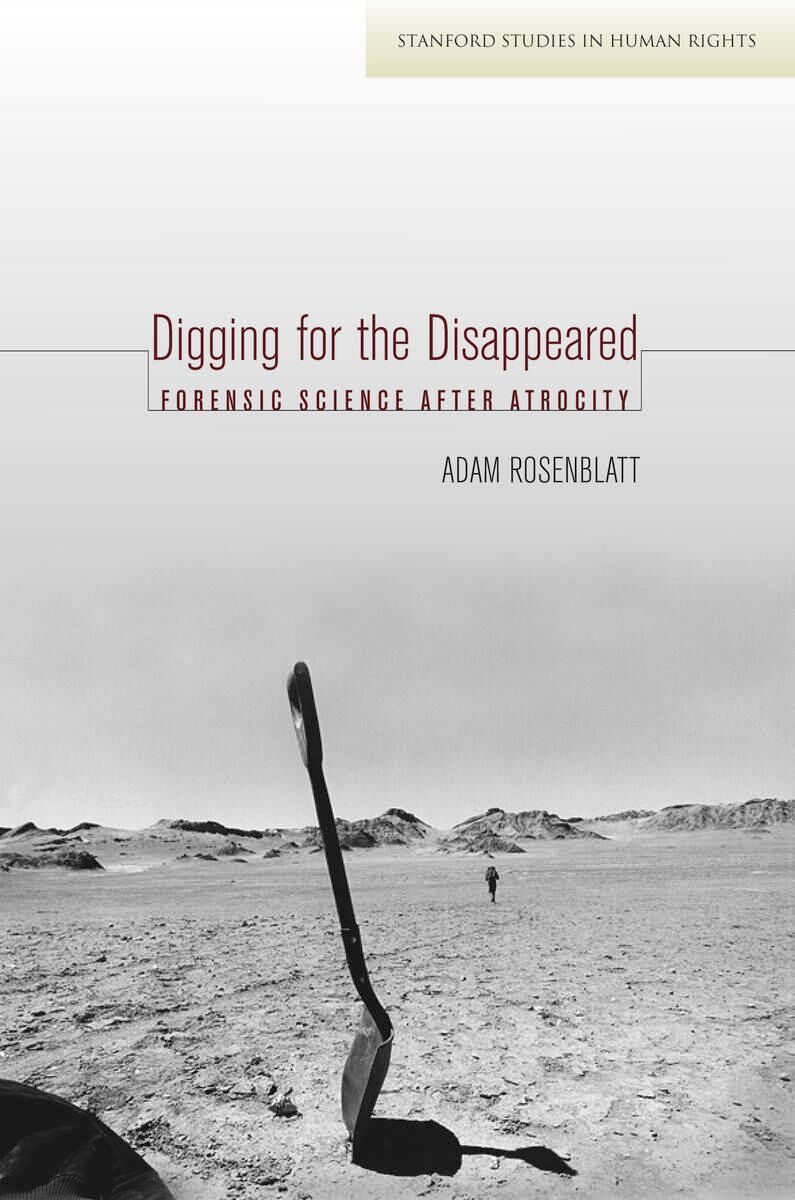
Digging for the disappeared : forensic science after atrocity
The mass graves from our long human history of genocide, massacres, and violent conflict form an underground map of atrocity that stretches across the planet's surface. In the past few decades, due to rapidly developing technologies and a powerful global human rights movement, the scientific study of those graves has become a standard facet of post-conflict international assistance. Digging for the Disappeared provides readers with a window into this growing but little-understood form of human rights work, including the dangers and sometimes unexpected complications that arise as evidence is gathered and the dead are named.
Adam Rosenblatt examines the ethical, political, and historical foundations of the rapidly growing field of forensic investigation, from the graves of the \"disappeared\" in Latin America to genocides in Rwanda and the former Yugoslavia to post–Saddam Hussein Iraq. In the process, he illustrates how forensic teams strive to balance the needs of war crimes tribunals, transitional governments, and the families of the missing in post-conflict nations. Digging for the Disappeared draws on interviews with key players in the field to present a new way to analyze and value the work forensic experts do at mass graves, shifting the discussion from an exclusive focus on the rights of the living to a rigorous analysis of the care of the dead. Rosenblatt tackles these heady, hard topics in order to extend human rights scholarship into the realm of the dead and the limited but powerful forms of repair available for victims of atrocity.
eBook

What remains : bringing America's missing home from the Vietnam War
Nearly 1,600 Americans who took part in the Vietnam War are still missing and presumed dead. Sarah Wagner tells the stories of those who mourn and continue to search for them. Today's forensic science can identify remains from mere traces, raising expectations for repatriation and forcing a new reckoning with the toll of America's most fraught war.-- Provided by publisher
Book

Disaster Victim Identification
Disaster management has become an increasingly global issue, with victim identification receiving greater attention. This volume presents a selection of key historical incidents in the United Kingdom and includes candid discussions of potential areas for improvement in preparedness and future deployment capabilities. Each chapter addresses a specific disaster and covers a number of main points in relation to the incident. Viewing disaster management from a global perspective, the book contains the combined input of academics, forensic specialists, trainers, and law enforcement professionals who focus on actual cases to honestly assess events and provide concrete recommendations.
eBook
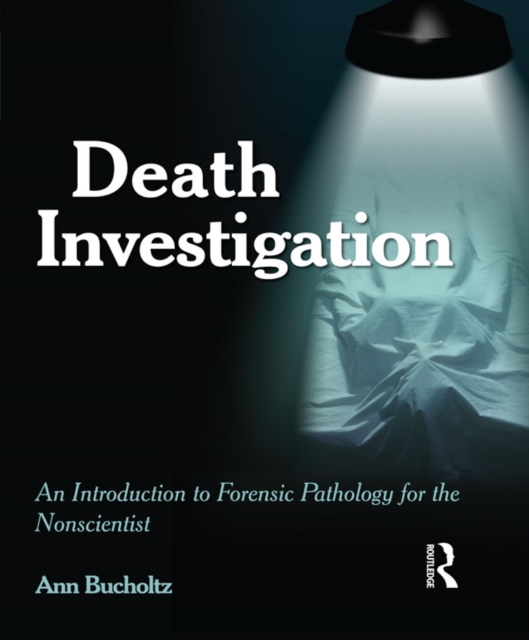
Death Investigation
Death Investigation: An Introduction to Forensic Pathology for the Nonscientist provides students and law enforcement professionals with an accurate, clear overview of forensic pathology. It presents death investigation at the scene and autopsy, providing readers with a broad understanding of forensic pathology and giving them a clear picture of what happens after the examination of the scene. Readers learn what first responders should (and should not) do at the scene, and get a forensic pathologist's perspective on the importance of preserving evidence. Death Investigation methodically explains what happens during autopsy to determine cause and manner of death - including particulars of blunt force trauma, sharp force injuries, asphyxia, and gunshot wounds - and how findings are presented in court. Written for a criminal justice audience by a practicing forensic pathologist and educator, Death Investigation makes challenging forensics concepts& accessible to nonscientists.
eBook

La gestion de cadaveres en situaciones de desastre
Esta guía de campo para personal no especializado ofrece orientaciones prácticas que facilitarán la recuperación, identificación básica, almacenamiento, la disposición, y en conjunto, la gestión adecuada de los cadáveres después de los desastres. También hace sugerencias sobre la forma de brindar ayuda a los familiares y de comunicarse con el público en general y con los medios de comunicación.
eBook