
Catalogue Search | MBRL


Are you sure you want to remove the book from the shelf?

{{itemTitle}}
96
result(s) for
"Death, Apparent."
Sort by:

A second act
In this work, Dr Matt Morgan meets people whose hearts have stopped and have been brought back from clinical death. He shows us how doctors resuscitate people, the shadowy world of ICU, how you can learn to save a life. We meet the patients who have experienced hypothermia, overdoses, cardiac arrests and a heart transplant and see how their lives have transformed and the lessons they want to share. Along the way, Morgan has his own realisations about his life, how to make the most of it and ensure that life is not wasted on the living.
BOOK
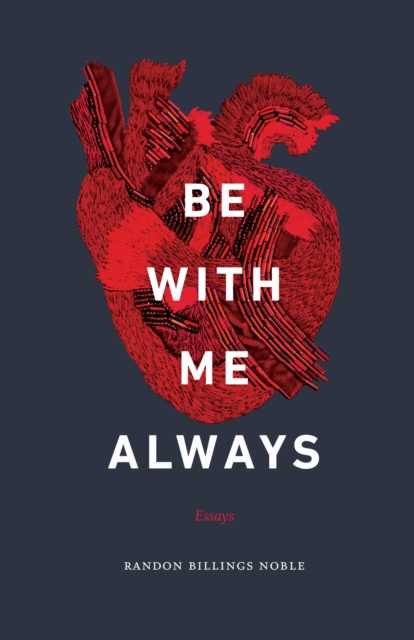
Be with Me Always
\"Be with me always-take any form-drive me mad! only do not leave me in this abyss, where I cannot find you!\" Thus does Heathcliff beg his dead Cathy in Wuthering Heights. He wants to be haunted-he insists on it. Randon Billings Noble does too. Instead of exorcising the ghosts of her past, she hopes for their cold hands to knock at the window and to linger. Be with Me Always is a collection of essays that explore hauntedness by considering how the ghosts of our pasts cling to us. In a way, all good essays are about the things that haunt us until we have somehow embraced or understood them. Here, Noble considers the ways she has been haunted-by a near-death experience, the gaze of a nude model, thoughts of widowhood, Anne Boleyn's violent death, a book she can't stop reading, a past lover who shadows her thoughts-in essays both pleasant and bitter, traditional and lyrical, and persistently evocative and unforgettable.
eBook

Unbury Carol : a novel
\"Carol Evers is a woman with a dark secret. She has died many times...but her many deaths are not final: They are comas, a waking slumber indistinguishable from death, each lasting days. Only two people know of Carol's eerie condition. One is her husband, Dwight, who married Carol for her fortune, and--when she lapses into another coma--plots to seize it by proclaiming her dead and quickly burying her...alive. The other is her lost love, the infamous outlaw James Moxie. When word of Carol's dreadful fate reaches him, Moxie rides the Trail again to save his beloved from an early, unnatural grave. And all the while, awake and aware, Carol fights to free herself from the crippling darkness that binds her--summoning her own fierce will to survive\"--Amazon.com.
Book

The art of life and death : radical aesthetics and ethnographic practice
The Art of Life and Death explores how the world appears to people who have an acute perspective on it: those who are close to death.Based on extensive ethnographic research, Andrew Irving brings to life the lived experiences, imaginative lifeworlds, and existential concerns of persons confronting their own mortality and non-being.
eBook


Only to sleep : a Philip Marlowe novel
\"The year is 1988. The place, Baja California. And Philip Marlowe--now in his seventy-second year--is living out his retirement in the terrace bar of the La Fonda hotel ... In saunter two men dressed like undertakers, with a case that has his name written all over it. For Marlowe, this is his last roll of the dice, his swan song. His mission is to investigate the death of Donald Zinn--supposedly drowned off his yacht, and leaving behind a much younger and now very rich wife. But is Zinn actually alive?\"-- Provided by publisher.
Book

End of life: the humanist view
If humanists do not believe in the truth of religion, can they be harmed by religious rituals they are unaware of? For example, if a priest gives last rites over a humanist who has slipped into terminal unconsciousness, what harm can possibly be done? The claim here is that humanists cannot be harmed by something they don't believe in the power of, and have no awareness of. But it does not follow that because humanists believe death is the end, they also have no interest in, or claim on, what happens after their death. To draw a comparison, I do you an injustice if I slander you behind your back, even if you never find out about it, and I can equally do you an injustice if I slander you after your death. And whether or not a humanist can be wronged after death, a person's wishes still need to be respected after death. Humanists are committed to specific values: a resistance to the dominance of traditional religious forms of ceremony and to the assumption that meaning, purpose, and ethics can be supplied only by religion. Thus for a humanist to consent to any form of religious ceremony is to assert exactly that which humanists oppose, and would constitute a gross disregard for their views. In the wider context of society as a whole, part of the humanist project is to gain recognition that people can live happy, full, and moral lives without recourse to religious dogma and rituals. To do anything to a dead or dying humanist that would undermine this project or fail to show the project proper respect would therefore be inappropriate.
Journal Article

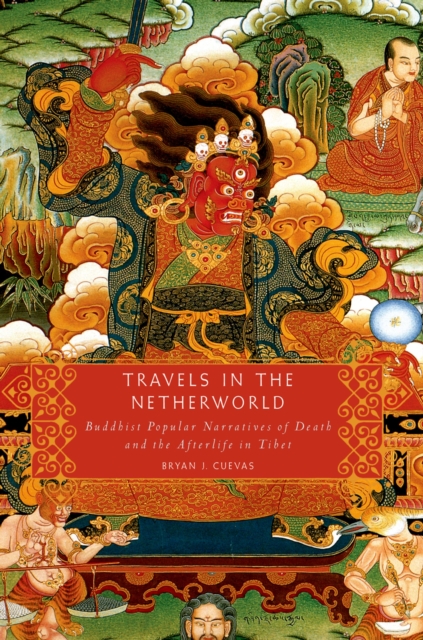
Travels in the Netherworld
This book examines a little-known genre of Tibetan narrative literature about the délok, ordinary men and women who claim to have died, traveled through hell, and then returned from the afterlife. These narratives enjoy audiences ranging from the most sophisticated monastic scholars to pious townsfolk, villagers, and nomads. Their accounts emphasize the universal Buddhist principles of impermanence and worldly suffering, the fluctuations of karma, and the feasibility of obtaining a favorable rebirth through virtue and merit. Providing an analysis of four return-from-death tales, including the stories of a Tibetan housewife, a lama, a young noble woman, and a Buddhist monk, the author argues that these narratives express ideas about death and the afterlife that held wide currency among all classes of faithful Buddhists in Tibet. Relying on a diversity of traditional Tibetan sources, Buddhist canonical scriptures, scholastic textbooks, ritual and meditation manuals, and medical treatises, in addition to the délok works themselves, the author surveys a broad range of popular Tibetan Buddhist ideas about death and dying. He explores beliefs about the vulnerability of the soul and its journey beyond death, karmic retribution and the terrors of hell, the nature of demons and demonic possession, ghosts, and reanimated corpses. The author argues that these extraordinary accounts exhibit flexibility between social and religious categories that are conventionally polarized and concludes that, contrary to the accepted wisdom, such rigid divisions as elite and folk, monastic and lay religion are not sufficiently representative of traditional Tibetan Buddhism.
eBook