
Catalogue Search | MBRL


Are you sure you want to remove the book from the shelf?

{{itemTitle}}
33
result(s) for
"Death (Personification)"
Sort by:

Unclay
\"First published in 1931, the spellbinding novel Unclay glows with an unworldly light. Death has come to the small village of Dodder to deliver a parchment with the names of two local mortals and the fatal word unclay upon it. When he loses the precious sheet, he is at a loss, and also free of his errand. Hungry to taste the sweet fruits of human life, Mr. John Death, as he is now known, takes a holiday in Dorsetshire and rests from his reaping. The startlingly alive natural world basks in summer loveliness, but the village teems with the old sins (lust, avarice, greed)--as well as some loving-kindness. What unfolds is a witty, earthy, metaphysical, and delicious novel of astonishing beauty and moral force\"-- Provided by publisher.
Book
Muerte querida = Dearest death
Muerte Querida (Dearest Death) explores a controversial Mexican folk icon, Santa Muerte, whose popularity has recently exploded amongst the Latin American diaspora. Saint Death, known for her efficiency in granting her devotees’ wishes, has an identity that is multivalent yet ambiguous. This film follows the community of devotees at Templo Santa Muerte, a temple in East Hollywood, who emphasize the protective, healing, and economic roles of the skeletal saint. Muerte Querida (Dearest Death) immerses the viewer in the world of Santa Muerte devotion by investigating personal narratives and rituals of those who worship the Bony Lady in order to improve their lives, illuminating the multiple identities and functions of the saint in a localized context. Using ethnographic methods and interviews, Muerte Querida (Dearest Death) offers an intimate portrait of the budding cult in the United States—a side that has been hidden from view in the news and popular media.
Streaming Video

Mr. Reaper
A wolf learns to love others as he takes care of a dying piglet. A tale of tolerance and adoption told through the lives of a gruff wo lf and a sickly piglet.
Book

Opposition to Idolatry in the Book of Habakkuk
Habakkuk is unique among books in the Twelve in its criticism of foreign cultic practices. Instead of condemning Israel and Judah for the worship of other gods, it criticizes the worship offered to a foreign deity by that deity's own people. This article examines Hab 2:18-19, arguing that the reduction of the pesel or massēkâ to a lifeless object is intelligible in moral rather than ontological terms. The integration of this cultic criticism into a more standard denunciation of a foreign nation's non-cultic transgressions yields a distinctive form of opposition to idolatry. What Habakkuk shows is that disbelief in the reality of idols may owe less to a mocking, debunking rationalism than to a cynicism regarding the uses of ritual.
Journal Article

Death note
Light Yagami is an ace student with great prospects--and he's bored out of his mind. But all that changes when he finds the Death Note, a notebook dropped by a rogue Shinigami (death god). Any human whose name is written in the notebook dies, and now Light has vowed to use the power of the Death Note to rid the world of evil. Will Light's noble goal succeed, or will the Death Note turn him into the very thing he fights against?
BOOK
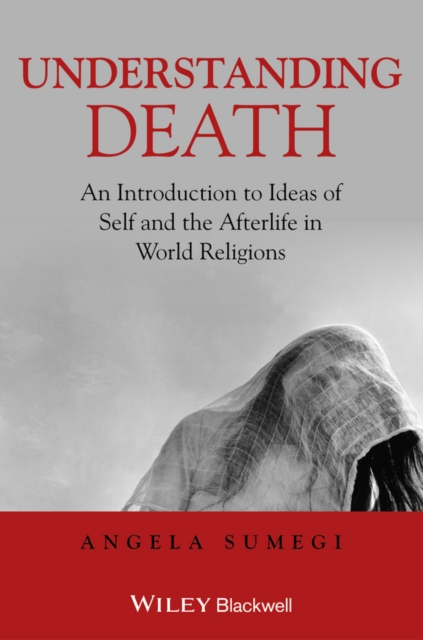
Understanding death
A comprehensive survey of how religions understand death, dying, and the afterlife, drawing on examples from Christian, Jewish, Hindu, Buddhist, and Shamanic perspectives. Considers shared and differing views of death across the world’s major religions, including on the nature of death itself, the reasons for it, the identity of those who die, religious rituals, and on how the living should respond to death Places emphasis on the varying concepts of the ‘self’ or soul Uses a thematic structure to facilitate a broader comparative understanding Written in an accessible style to appeal to an undergraduate audience, it fills major gap in current textbook literature
eBook

Gods of jade and shadow
\"The Mayan God of Death sends a young woman on a harrowing, life-changing journey in this dark fairy tale inspired by Mexican folklore\"-- Provided by publisher.
Book


Odes of Absorption in the Restoration and Early Eighteenth Century
This essay argues for less absolute and instantaneous borders between the Restoration and mid-eighteenth-century phases of the ode form. It locates in the Restoration ode certain characteristics typically associated with the midcentury ode, including moments of inward vision and a blurring of boundaries between the poet's calling voice and the invoked object. Speakers of Restoration odes experience reflexive exchanges with their addressees, taking on qualities of the personified abstractions they summon. Such readings demonstrate the evolution of the ode form in progress and argue that interest in the imagination begins earlier in the period than is often acknowledged.
Journal Article
