
Catalogue Search | MBRL


Are you sure you want to remove the book from the shelf?

{{itemTitle}}
46
result(s) for
"Death Proof and certification."
Sort by:

The undead : organ harvesting, the ice-water test, beating-heart cadavers-- how medicine is blurring the line between life and death
Science writer Dick Teresi examines how death is determined by the medical community and explores organ trafficking, brain death, and near-death experiences.
Book
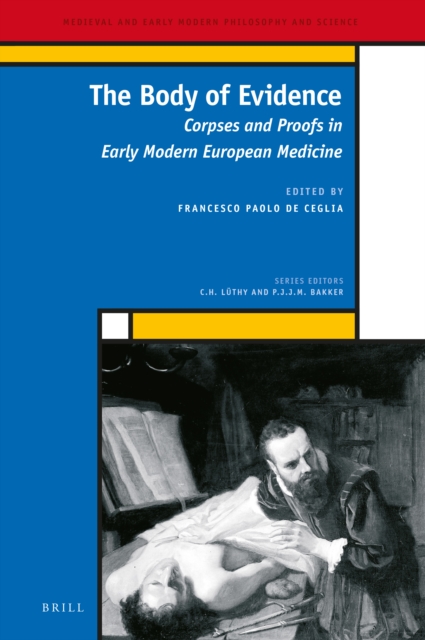
The Body of Evidence
In The Body of Evidence. Corpses and Proofs in Early Modern European Medicine Francesco Paolo de Ceglia offers an overview of the evolution of the science of the 'signs of the corpse', from necromancy to forensic medicine.
eBook

Persons, humanity, and the definition of death
In this riveting and timely work, John P. Lizza presents the first comprehensive analysis of personhood and humanity in the context of defining death. Rejecting the common assumption that human or personal death is simply a biological phenomenon for biologists or physicians to define, Lizza argues that the definition of death is also a matter for metaphysical reflection, moral choice, and cultural acceptance.
Lizza maintains that defining death remains problematic because basic ontological, ethical, and cultural issues have never been adequately addressed. Advances in life-sustaining technology and organ transplantation have led to revision of the legal definition of death. It is generally accepted that death occurs when all functions of the brain have ceased. However, legal and clinical cases involving postmortem pregnancy, individuals in permanent vegetative state, those with anencephaly, and those with severe dementia challenge the neurological criteria. Is \"brain death\" really death? Should the neurological criteria be expanded to include individuals in permanent vegetative state, with anencephaly, and those with severe dementia? What metaphysical, ethical, and cultural considerations are relevant to answering such questions?
Although Lizza accepts a pluralistic approach to the legal definition of death, he proposes a nonreductive, substantive view in which persons are understood as \"constituted by\" human organisms. This view, he argues, provides the best account of human nature as biological, moral, and cultural and supports a consciousness-related formulation of death. Through an analysis of legal and clinical cases and a discussion of alternative concepts of personhood, Lizza casts greater light on the underlying themes of a complex debate.
eBook

The Law of Life and Death
Are you alive? Most people believe that some law defines our status as living (or not) for all purposes. But Foley shows that “not being dead\" isn’t necessarily the same as being alive, in the eyes of the law. The need for more organ transplants and conservation of health care resources is exerting pressure to expand the legal definition of death.
eBook

Postmortem
As elected coroners came to be replaced by medical examiners with scientific training, the American public became fascinated with their work. From the grisly investigations showcased on highly rated television shows like C.S.I. to the bestselling mysteries that revolve around forensic science, medical examiners have never been so visible—or compelling. They, and they alone, solve the riddle of suspicious death and the existential questions that come with it. Why did someone die? Could it have been prevented? Should someone be held accountable? What are the implications of ruling a death a suicide, a homicide, or an accident? Can medical examiners unmask the perfect crime? Postmortem goes deep inside the world of medical examiners to uncover the intricate web of pathological, social, legal, and moral issues in which they operate. Stefan Timmermans spent years in a medical examiner’s office, following cases, interviewing examiners, and watching autopsies. While he relates fascinating cases here, he is also more broadly interested in the cultural authority and responsibilities that come with being a medical examiner. Although these professionals attempt to remain objective, medical examiners are nonetheless responsible for evaluating subtle human intentions. Consequently, they may end—or start—criminal investigations, issue public health alerts, and even cause financial gain or harm to survivors. How medical examiners speak to the living on behalf of the dead, is Timmermans’s subject, revealed here in the day-to-day lives of the examiners themselves.
eBook

End-of-Life Decision Making in Orthodox Judaism: The Case of the 1977 Conjoined Twins
In 1977, conjoined twins were born to an Orthodox Jewish family in Lakewood, New Jersey; they were treated at Children's Hospital in Philadelphia. Following legal deliberations in the American court system, as well as religious deliberations within the Orthodox Jewish, Protestant, and Catholic communities, the twins were separated by surgeon C. Everett Koop, who later became Surgeon General of the United States. Evaluation of the medical decision making process in the 1977 case illustrates the distinctly legal nature of Orthodox Jewish discourse—a feature that sets it apart from Protestant, Catholic, and secular ethics. This legal character of Orthodoxy had been highlighted a decade earlier, in a report issued by a panel that had been convened to study the different approaches to conjoined twins among Jewish, Protestant, and Catholic authorities. Close examination of that report, and of the circumstances of the 1977 case itself, bring to the fore the legal nature of the Orthodox Jewish procedures determining the medical outcomes of the conjoined twins. The distinctive nature of the Jewish approach is thrown into relief even further by comparison with the differing approaches among Catholic, Protestant, and secular authorities and medical caregivers. Following an elaboration and explication of the report and the 1977 case in which I examine the important contrasts between the adherents to different traditions and legal systems, I explore their broader implications for understanding the cultures of Jewish medicine in an increasingly complex scientific and technological landscape.
Journal Article

A Defense of the Whole-Brain Concept of Death
The concept of whole‐brain death is under attack again. Scholars are arguing that the concept of brain death per se—regardless of the focus on “higher,” “stem” or “whole”—is fundamentally flawed. These scholars have identified what they believe are serious discrepancies between the definition and criterion of brain death, and have pointed out that medical professionals and lay persons remain confused about its meaning. Yet whole‐brain death remains the standard for determining death in much of the Western world and its defenders believe this concept best maps onto our everyday conception of death.
Journal Article
The Debate over Death Determination in DCD
\"Organ donation after the circulatory determination of death has become a standard medical practice in the developed world. Despite its widespread acceptance, though, the question of whether the donor is actually dead at the moment of donation persists.\" (Hastings Center Report) This article explores DCD (donation after cardiac death), and details the ethical issue of what constitutes a donor as being dead.
Journal Article
When Is \Dead\?
Younger et al argue that one way to increase the supply of vital organs without violating the dead donor rule is to declare death on cardiopulmonary criteria after withdrawing life support. After doing this, the question becomes how quickly death may be declared.
Journal Article

Beginn und Ende des Lebens als Rechtsbegriffe
Keine ausführliche Beschreibung für \"Beginn und Ende des Lebens als Rechtsbegriffe\" verfügbar.
eBook