
Catalogue Search | MBRL


Are you sure you want to remove the book from the shelf?

{{itemTitle}}
229
result(s) for
"Debito"
Sort by:

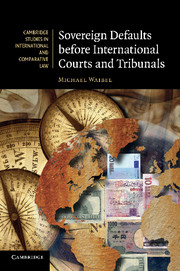
Sovereign Defaults before International Courts and Tribunals
International law on sovereign defaults is underdeveloped because States have largely refrained from adjudicating disputes arising out of public debt. The looming new wave of sovereign defaults is likely to shift dispute resolution away from national courts to international tribunals and transform the current regime for restructuring sovereign debt. Michael Waibel assesses how international tribunals balance creditor claims and sovereign capacity to pay across time. The history of adjudicating sovereign defaults internationally over the last 150 years offers a rich repository of experience for future cases: US state defaults, quasi-receiverships in the Dominican Republic and Ottoman Empire, the Venezuela Preferential Case, the Soviet repudiation in 1917, the League of Nations, the World War Foreign Debt Commission, Germany's 30-year restructuring after 1918 and ICSID arbitration on Argentina's default in 2001. The remarkable continuity in international practice and jurisprudence suggests avenues for building durable institutions capable of resolving future sovereign defaults.
eBook
'La credenza e il pegno'. Vesti e letteratura tra Parigi e Firenze (secoli XIII-XIV)
Nella seconda metà del Duecento connessioni politiche, economiche e letterarie uniscono Parigi e Firenze: i testi letterari e le vesti si diffondono lungo le vie di comunicazione insieme a oggetti, manoscritti, mercanti, soldati, intellettuali e viaggiatori. Gli abiti vengono comprati, rivenduti, scambiati, sottratti, donati, usati come forma di pagamento. Nei testi gli indumenti funzionano come un linguaggio abbreviato che permette di definire velocemente lo status dei personaggi e allo stesso tempo una valuta che si usa in alternativa al denaro. Tra Francia e Italia i protagonisti dei testi si riferiscono di continuo all’abitudine di usare i propri abiti come pegni per garantire un prestito. Come si vedrà nel saggio, il prestito su pegno offre agli autori e al pubblico un’oc- casione per stabilire il valore delle cose e riflettere sui rapporti tra individui, per interpretare episodi della trama e mettere in discussione la verosimiglianza e la credibilità del racconto.
Journal Article

Fare i conti con la morte: un debito di Ungaretti con Jacopone
Il binomio vita-morte è uno dei temi più diffusi della letteratura di tutti i tempi, per questo il presente saggio circoscrive l'indagine a due soli autori, Jacopone da Todi e Ungaretti, e ad un verso in particolare di quest'ultimo, cioè il famoso “La morte / si sconta / vivendo” che chiude la poesia Sono una creatura. L'ipotesi che si vuole dimostrare è che i due poeti condividono lo stesso modo di pensare la morte che è nella vita, tanto che lo esprimono entrambi facendo ricorso al lessico dell'ambito economico.
Journal Article

Smetterla con la guerra dell'Europa ai migranti
The paper denounces Europe’s war against refugees and migrants. It suggests that women could
strategically find their best allies in these groups. Both women and refugees/migrants are “missing citizens” of sorts, and share the interest of deconstructing the curent neoliberal and masculinist
hegemony. Regarding the latter, some abdicating of the subject’s and the ego’s firm entrenchment
in their exclusive interests would help. It requires a political as well as cultural disposition that
may take time to build, but the obvious advantages of which are already visible and widely shared.
L’articolo denuncia la guerra dell’Europa contro i/le rifugiati/e e i/le migranti. Suggerisce che le
donne potrebbero strategicamente trovare i loro migliori alleati in questo gruppo. Donne e rifugiati
sono infatti, in qualche modo, “cittadini mancanti”, e hanno un interesse comune a decostruire
l’attuale egemonia maschile e neoliberale. A questo scopo, sarebbe utile una qualche rinuncia
al radicamento forte del soggetto e dell’ego nel proprio interesse. Ciò richiede una disposizione
culturale e politica che andrà costruita nel lungo termine, ma i cui vantaggi evidenti sono
ormai visibili e largamente condivisi.
Este artículo denuncia la guerra de Europa contra los refugiados y las personas migrantes, y argumenta
que las mujeres pueden encontrar en ambos un aliado en su lucha. Tanto ellas como los
refugiados y migrantes han sido considerados “ciudadanos desaparecidos”, y comparten así su
interés en deconstruir el presente neoliberal y la hegemonía masculina. Para acabar con esta última
deberíamos considerar, por ejemplo, rechazar el vínculo entre el sujeto y el ego. Esto requiere
de una disposición política, a la par que cultural, cuya consolidación llevará mucho tiempo, pero
cuyas ventajas ya se pueden observar y compartir hoy en día.
Journal Article

What We Owe
The euro crisis, Japan's sluggish economy, and partisan disagreements in the United States about the role of government all have at least one thing in common: worries about high levels of public debt. Nearly everyone agrees that public debt in many advanced economies is too high to be sustainable and must be addressed. There is little agreement, however, about when and how that addressing should be done-or even, in many cases, just how serious the debt problem is.
As the former director of the International Monetary Fund's Fiscal Affairs Department, Carlo Cottarelli has helped countries across the globe confront their public finance woes. He also had direct experience in advising his own country, Italy, about its chronic fiscal ailments. In this straightforward, plain-language book, Cottarelli explains how and why excessive public debt can harm economic growth and can lead to crises such as those experienced recently in Italy and several other European countries.
But Cottarelli also has some good news: reducing public debt often can be done without trauma and through moderate changes in spending habits that contribute to economic growth. His book focuses on positive remedies that countries can adopt to deal with their public debt, analyzing both the benefits and potential downsides to each approach, as well as suggesting which remedies might be preferable in particular situations.
Too often, public debate about public debt is burdened by lies and myths. This book not only explains the basic facts about public debt but also aims to bring truth and reasoned nonpartisan analysis to the debate.
eBook