
Catalogue Search | MBRL


Are you sure you want to remove the book from the shelf?

{{itemTitle}}
30,989
result(s) for
"Deception."
Sort by:


Deceit on the Road to War
In Deceit on the Road to War , John M. Schuessler
examines how U.S. presidents have deceived the American public
about fundamental decisions of war and peace. Deception has been
deliberate, he suggests, as presidents have sought to shift blame
for war onto others in some cases and oversell its benefits in
others. Such deceit is a natural outgrowth of the democratic
process, in Schuessler's view, because elected leaders have
powerful incentives to maximize domestic support for war and retain
considerable ability to manipulate domestic audiences. They can
exploit information and propaganda advantages to frame issues in
misleading ways, cherry-pick supporting evidence, suppress damaging
revelations, and otherwise skew the public debate to their benefit.
These tactics are particularly effective before the outbreak of
war, when the information gap between leaders and the public is
greatest.
When resorting to deception, leaders take a calculated risk that
the outcome of war will be favorable, expecting the public to adopt
a forgiving attitude after victory is secured. The three cases
featured in the book-Franklin Roosevelt and World War II, Lyndon
Johnson and the Vietnam War, and George W. Bush and the Iraq
War-test these claims. Schuessler concludes that democracies are
not as constrained in their ability to go to war as we might
believe and that deception cannot be ruled out in all cases as
contrary to the national interest.
In Deceit on the Road to War , John M. Schuessler
examines how U.S. presidents have deceived the American public
about fundamental decisions of war and peace. Deception has been
deliberate, he suggests, as presidents have sought to shift blame
for war onto others in some cases and oversell its benefits in
others. Such deceit is a natural outgrowth of the democratic
process, in Schuessler's view, because elected leaders have
powerful incentives to maximize domestic support for war and retain
considerable ability to manipulate domestic audiences. They can
exploit information and propaganda advantages to frame issues in
misleading ways, cherry-pick supporting evidence, suppress damaging
revelations, and otherwise skew the public debate to their benefit.
These tactics are particularly effective before the outbreak of
war, when the information gap between leaders and the public is
greatest.When resorting to deception, leaders take a calculated
risk that the outcome of war will be favorable, expecting the
public to adopt a forgiving attitude after victory is secured. The
three cases featured in the book-Franklin Roosevelt and World War
II, Lyndon Johnson and the Vietnam War, and George W. Bush and the
Iraq War-test these claims. Schuessler concludes that democracies
are not as constrained in their ability to go to war as we might
believe and that deception cannot be ruled out in all cases as
contrary to the national interest.
eBook


Deception
This volume explores the concept of deception from a multidisciplinary perspective, reflecting how deception is considered across numerous fields ranging from literature and historical cases to psychological science.
eBook
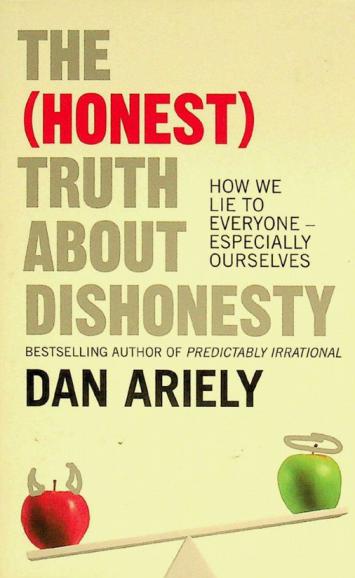
The (honest) truth about dishonesty : how we lie to everyone-especially ourselves
Dan Ariely delves deeper into the dark and murky recesses of contemporary psychology, daring to ask the big questions: What makes us cheat? How and why do we rationalise deception of ourselves and other people, and make ourselves 'wishfully blind' to the blindingly obvious? What affects our infuriatingly intangible willpower and how can we 'catch' the cheating bug from other bad apples? If you've ever wondered how a whole company can turn a blind eye to evident misdemeanours within their ranks, whether people are born dishonest and whether you can really be successful by being totally, brutally honest, then Dan has the answers, and many more.
Book

Dependencia Emocional, Autoengaño y Mitos del Amor Romántico: Negación Patológica en Relaciones de Pareja
RESUMEN Antecedentes/Objetivo: La dependencia emocional es un trastorno que suele pasar desapercibido debido a la creencia social de que no es patológico por su vinculación con la visión idealizada del amor. En este sentido, se diseñó un estudio con el objetivo de conocer la relación entre dependencia emocional, autoengaño y percepción de los mitos del amor romántico. Método: En este estudio participaron 262 personas (113 hombres y 149 mujeres) con edades comprendidas entre los 18 y los 59 años (M = 31.9, DT = 12.37) y con relación de pareja que respondieron a medidas de dependencia, autoengaño patológico (manipulación y mistificación) y mitos sobre el amor idealizado y maltratador. Resultados: Los resultados mostraron una relación positiva entre dependencia emocional, autoengaño y percepción de los mitos del amor romántico. También se han encontrado diferencias en dependencia emocional en función de la edad, pero no del género. Conclusiones: Se concluye que la dependencia emocional se vincula a una visión arquetípica del amor y cursa con mecanismos de autoengaño.
Journal Article
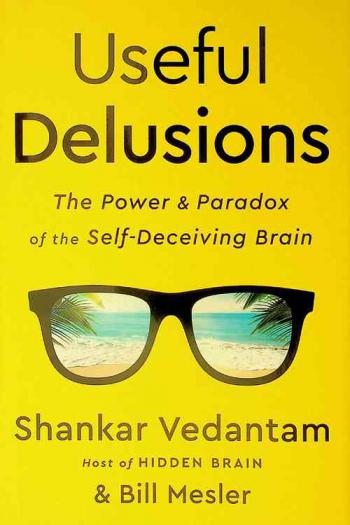
Useful delusions : the power and paradox of the self-deceiving brain
\"From the New York Times-bestselling author and host of NPR's Hidden Brain comes a thought-provoking exploration of deception's role in human success. Everyone agrees that lies and self-deception can do terrible harm to our lives, to our communities, and to the planet. But in Useful Delusions, host of NPR's Hidden Brain Shankar Vedantam argues that, paradoxically, deceiving ourselves and others can also play a vital role in human success and well-being. The lies we tell each other and the lies that we tell ourselves sustain our daily interactions with friends, lovers, and coworkers. They explain why some people live longer than others, why some couples remain in love and others don't, why some nations and tribes hold together while others splinter. Filled with powerful personal stories and drawing on new insights in psychology, neuroscience, and philosophy, Useful Delusions offers a fascinating tour of an upside-down world\"-- Provided by publisher.

Crackers
[...]I was confused by my father's response. When Jem was born and we went to visit, Mum was still in bed, lying flat on her back: a typical pose for a gingerbread woman. The yard was cluttered with car parts and tools for digging, but out front, we displayed the sculptures that Dad collected at garage sales in Stafford Heights. When Jem and I finally reached the car, Mum was sitting in the front passenger seat, staring blankly ahead.
Journal Article


Mass Deception
The attacks of 9/11 led to a war on Iraq, although there was neither tangible evidence that the nation's leader, Saddam Hussein, was linked to Osama bin Laden nor proof of weapons of mass destruction. Why, then, did the Iraq war garner so much acceptance in the United States during its primary stages?Mass Deceptionargues that the George W. Bush administration manufactured public support for the war on Iraq. Scott A. Bonn introduces a unique, integrated, and interdisciplinary theory called \"critical communication\" to explain how and why political elites and the news media periodically create public panics that benefit both parties. Using quantitative analysis of public opinion polls and presidential rhetoric pre- and post-9/11 in the news media, Bonn applies the moral panic concept to the Iraq war. He critiques the war and occupation of Iraq as violations of domestic and international law. Finally,Mass Deceptionconnects propaganda and distortion efforts by the Bush administration to more general theories of elite deviance and state crime.
eBook