
Catalogue Search | MBRL


Are you sure you want to remove the book from the shelf?

{{itemTitle}}
41
result(s) for
"Decolonization Caribbean Area."
Sort by:

The Cambridge companion to Caribbean music
\"The diverse musics of the Caribbean form a vital part of the identity of individual island nations and their diasporic communities. At the same time, they witness to collective continuities and the interrelatedness that underlies the region's multi-layered complexity. This Companion introduces familiar and less familiar music practices from different nations, from reggae, calypso and salsa to tambú, méringue and soca. Its multidisciplinary, thematic approach reveals how the music was shaped by strategies of resistance and accommodation during the colonial past and how it has developed in the post-colonial present. The book encourages a comparative and syncretic approach to studying the Caribbean, one that acknowledges its patchwork of fragmented, dynamic, plural and fluid differences. It is an innovative resource for scholars and students of Caribbean musical culture, particularly those seeking a decolonising perspective on the subject. nanette de jong is a senior lecturer at the International Centre for Music Studies, Newcastle University. Her work on the Caribbean has focussed primarily on Curaçao, exploring themes of identity, ritual and cultural memory. Her monograph, Tambú: Curaçao's African-Caribbean Ritual and the Politics of Memory (Indiana University Press, 2012), was shortlisted for the 2013 Albert J. Raboteau Prize for Best Book in Africana Religions. She has worked more recently as an ethnomusicologist consultant for various NGOs and local organisations across the Caribbean and Southern Africa. De Jong is also an accomplished classical and salsa\"-- Provided by publisher.
Book

Caribbean Literature and the Public Sphere
Bringing together the most exciting recent archival work in anglophone, francophone, and hispanophone Caribbean studies, Raphael Dalleo constructs a new literary history of the region that is both comprehensive and innovative. He examines how changes in political, economic, and social structures have produced different sets of possibilities for writers to imagine their relationship to the institutions of the public sphere. In the process, he provides a new context for rereading such major writers as Mary Seacole, José Martí, Jacques Roumain, Claude McKay, Marie Chauvet, and George Lamming, while also drawing lesser-known figures into the story. Dalleo's comparative approach will be important to Caribbeanists from all of the region's linguistic traditions, and his book contributes even more broadly to debates in Latin American and postcolonial studies about postmodernity and globalization.
eBook


After the Postcolonial Caribbean
'A book of rare beauty’ - Bill Schwarz, Professor at Queen Mary University of London
Across the Anglophone Caribbean, the great expectations of independence were never met. From Black Power and Jamaican Democratic Socialism to the Grenada Revolution, the radical currents that once animated the region recede into memory. More than half a century later, the likelihood of radical change appears vanishingly small on the horizon. But what were the twists and turns in the postcolonial journey that brought us here? And is there hope yet for the Caribbean to advance towards more just, democratic and empowering futures?
After the Postcolonial Caribbean is structured in two parts, 'Remembering', and 'Imagining.' Author Brian Meeks employs a sometimes autobiographical form, drawing on his own memories and experiences of the radical politics and culture of the Caribbean in the decades following the end of colonialism. And he takes inspiration from the likes of Edna Manley, George Lamming and Stuart Hall in reaching towards a new theoretical framework that might help forge new currents of intellectual and political resistance.
Meeks concludes by making the case for reestablishing optimism as a necessary cornerstone for any reemergent progressive movement.
eBook

Worldmaking after empire : the rise and fall of self-determination
\"Decolonization revolutionized the international order during the twentieth century. Yet standard histories that present the end of colonialism as an inevitable transition from a world of empires to one of nations--a world in which self-determination was synonymous with nation-building--obscure just how radical this change was. Drawing on the political thought of anticolonial intellectuals and statesmen such as Nnamdi Azikiwe, W.E.B Du Bois, George Padmore, Kwame Nkrumah, Eric Williams, Michael Manley, and Julius Nyerere, this important new account of decolonization reveals the full extent of their unprecedented ambition to remake not only nations but the world.Adom Getachew shows that African, African American, and Caribbean anticolonial nationalists were not solely or even primarily nation-builders. Responding to the experience of racialized sovereign inequality, dramatized by interwar Ethiopia and Liberia, Black Atlantic thinkers and politicians challenged international racial hierarchy and articulated alternative visions of worldmaking. Seeking to create an egalitarian postimperial world, they attempted to transcend legal, political, and economic hierarchies by securing a right to self-determination within the newly founded United Nations, constituting regional federations in Africa and the Caribbean, and creating the New International Economic Order.Using archival sources from Barbados, Trinidad, Ghana, Switzerland, and the United Kingdom, Worldmaking after Empire recasts the history of decolonization, reconsiders the failure of anticolonial nationalism, and offers a new perspective on debates about today's international order.\"--Jacket flap.
Book

Sexing the Caribbean
This unprecedented work provides both the history of sex work in this region as well as an examination of current-day sex tourism. Based on interviews with sex workers, brothel owners, local residents and tourists, Kamala Kempadoo offers a vivid account of what life is like in the world of sex tourism as well as its entrenched roots in colonialism and slavery in the Caribbean.
Kamala Kempadoo is a Professor at York University in Ontario. She was the Acting Director and Lecturer at the Centre for Gender and Development Studies at the University of West Indies--Mona in Jamaica. She is the editor of Global Sex Workers (Routledge, 1998) and Sun, Sex and Gold (1999).
eBook
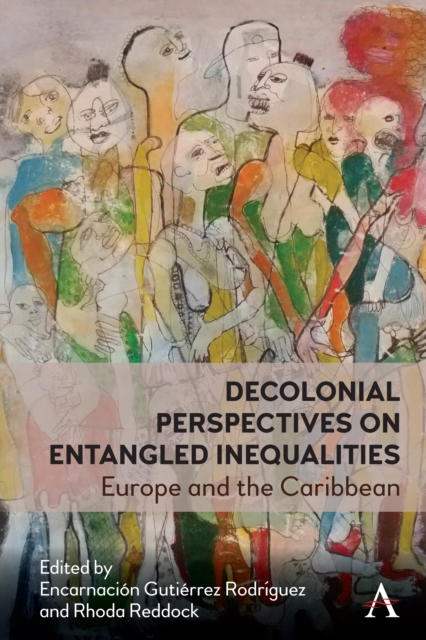
Decolonial Perspectives on Entangled Inequalities
This edited collection aims to contribute to the decolonial social and cultural analyses of global entangled inequalities by focusing on their local articulations. Drawing on empirical research conducted by scholars in Germany, Trinidad and Tobago, Australia and in Canada, the book engages with the conceptual framework of global inequalities and the methodological perspective on entanglement. It does so by approaching global inequalities and their local articulations: (a) global political economy, structural violence, entangled inequalities; (b) financial inequalities and state injustice; (c) inequality within and beyond race and ethnicity; (d) decolonial struggles against inequality; and (e) decolonial futurities. It is on these grounds that this edited volume aims to contribute to the analysis of entangled global inequalities by mobilizing a decolonial framework paying attention to the intersections of race, gender, labour, finances and the State.
eBook

Doing mobile ethnography
This paper explores and discusses the experimental, critical and self-reflective use of differing methods in urban studies. In the context of frequent calls to investigate urban processes in a planetary and comparative perspective, the empirical groundedness of research is among the particularly complex challenges urban scholars are confronted with. The key question is: how can qualitative-empirical methods, such as ethnography or qualitative mapping, be adapted to explore contemporary urban conditions? This paper seeks to contribute to current debates by introducing a specific methodological design of a mobile ethnography that enables an analysis of large and heterogeneous urban territories, in three main ways: first, by offering a theoretically informed and empirically grounded transductive research design; second, by proposing a complementary set of cartographic, historiographic and comparative methods of which mobile ethnography is a part; and third, by suggesting post- and decolonial methodological perspectives, both conceptually by engaging with Latin American urbanisms, as well as empirically by furthering collaborative ways of knowledge production. To conclude, the paper stresses the need to continually develop new inventive methods for comparative urban research, for two main reasons: (1) to enable scholars to question established geographical representations and parochial imaginaries of urban space, and (2) to problematise methodological and theoretical dogmas with situated knowledge. By suggesting different representations of the urban, the paper thus emphasises how important it is to transductively entangle empirical and theoretical conceptualisations to further decentre and pluralize urban knowledge production
本文探讨和讨论了不同方法在城市研究中的实验性、批判性和自我反思性的使用。在频繁呼吁以行星和比较的角度研究城市过程的背景下,研究的经验基础是城市学者面临的特别复杂的挑战之一。关键问题是:如何调整定性经验方法(如人种学或定性测绘)以研究当代城市条件?通过引入流动民族志的特定方法设计,本文试图促进当前的探讨。该设计能够以三种主要方式分析大型和异质的城市地区:首先,提供具有良好理论和经验基础的转导研究设计;第二,提出一套互补的制图、历史和比较方法,流动民族志是其中的一部分;第三,提出后殖民化和非殖民化的方法论观点(从概念上,是通过结合拉丁美洲城市化,从实证上,是通过推进合作的知识生产方式)。总之,本文强调需要不断开发新颖方法进行比较城市研究,主要有两个理由:(1)使学者能够质疑已建立的地理表征和城市空间的狭隘想象,以及(2)以适当的知识对教条化的方法论和理论提出问题。本文对城市的不同表述提出了建议,从而强调了将经验和理论概念化进行转导性结合、以使城市知识生产进一步去中心化和多元化的重要性。
Journal Article

Caribbean Migrations
With mass migration changing the configuration of societies worldwide, we can look to the Caribbean to reflect on the long-standing, entangled relations between countries and areas as uneven in size and influence as the United States, Cuba, Hispaniola, Puerto Rico, and Jamaica. More so than other world regions, the Caribbean has been characterized as an always already colonial region. It has long been a key area for empires warring over influence spheres in the new world, and where migration waves from Africa, Europe, and Asia accompanied every political transformation over the last five centuries. In Caribbean Migrations, an interdisciplinary group of humanities and social science scholars study migration from a long-term perspective, analyzing the Caribbean's \"unincorporated subjects\" from a legal, historical, and cultural standpoint, and exploring how despite often fractured public spheres, Caribbean intellectuals, artists, filmmakers, and writers have been resourceful at showcasing migration as the hallmark of our modern age.
eBook
