
Catalogue Search | MBRL


Are you sure you want to remove the book from the shelf?

{{itemTitle}}
7
result(s) for
"Decolonization-Algeria-History-20th century"
Sort by:
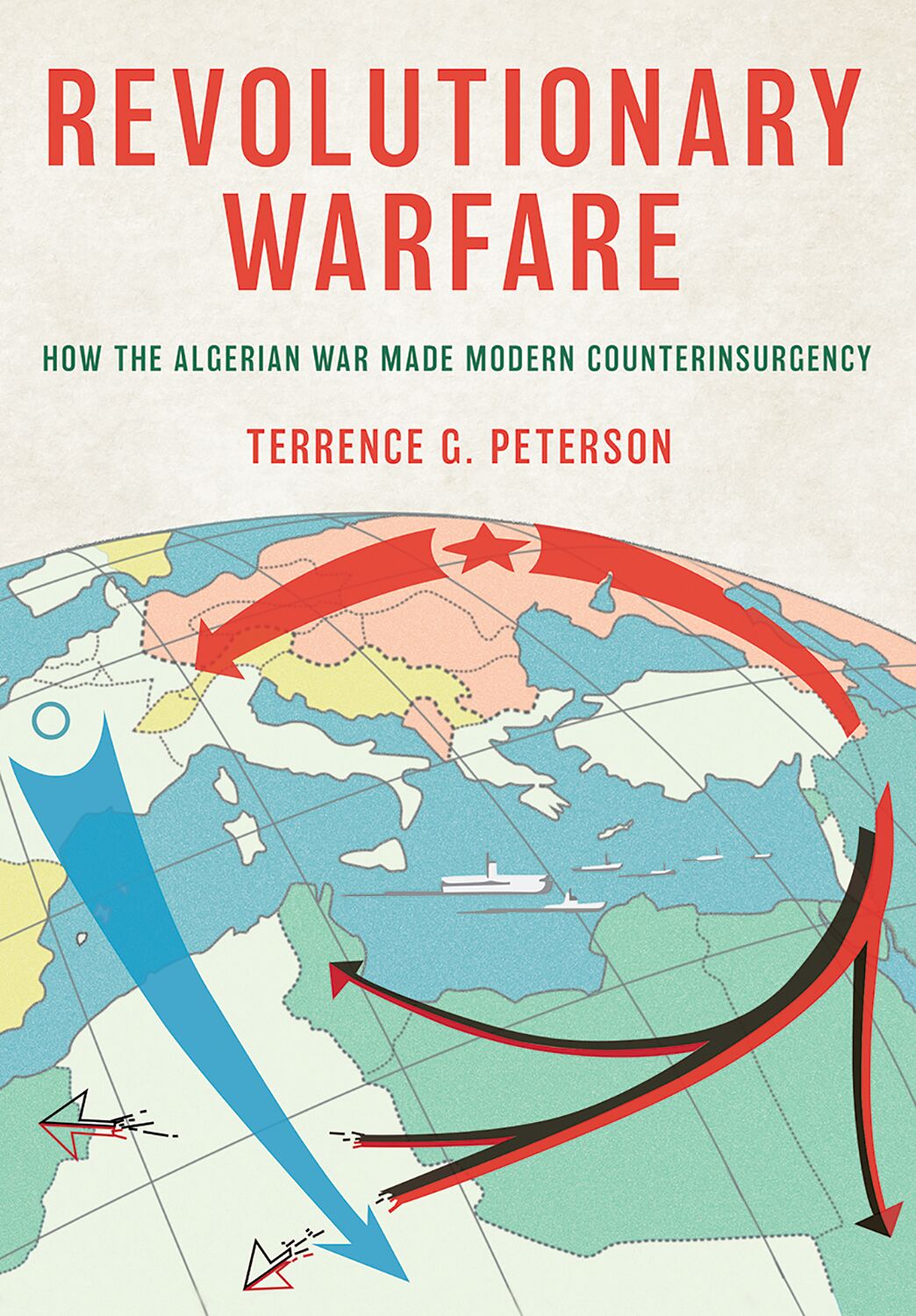
Revolutionary Warfare
Revolutionary Warfare
investigates how efforts to counter a revolution could also
be revolutionary. The Algerian War fractured the French
Empire, destroyed the legitimacy of colonial rule, and helped
launch the Third Worldist movement for the liberation of the Global
South. By tracing how French generals, officers, and civil
officials sought to counter Algerian independence with their own
project of radical social transformation, Terrence G. Peterson
reveals that the conflict also helped to transform the nature of
modern warfare.
The French war effort was never defined solely by repression. As
Peterson details, it also sought to fashion new forms of
surveillance and social control that could capture the loyalty of
Algerians and transform Algerian society. Hygiene and medical aid
efforts, youth sports and education programs, and psychological
warfare campaigns all attempted to remake Algerian social
structures and bind them more closely to the French state. In
tracing the emergence of such programs, Peterson reframes the
French war effort as a project of armed social reform that sought
not to preserve colonial rule unchanged, but to revolutionize it in
order to preserve it against the global challenges of
decolonization.
Revolutionary Warfare demonstrates how French officers'
efforts to transform warfare into an exercise in social engineering
not only shaped how the Algerian War unfolded from its earliest
months, but also helped to forge a paradigm of warfare that
dominated strategic thinking during the Cold War and after:
counterinsurgency.
eBook

Algeria revisited : history, culture and identity
\"On 5 July 1962, Algeria became an independent nation, bringing to an end 132 years of French colonial rule. Algeria Revisited provides an opportunity to critically re-examine the colonial period, the iconic war of decolonisation that brought it to an end and the enduring legacies of these years. Given the apparent centrality of violence in this history, this volume asks how we might re-imagine conflict so as to better understand its forms and functions in both the colonial and postcolonial eras. It considers the constantly shifting balance of power between different groups in Algeria and how these have been used to re-fashion colonial relationships. Turning to the postcolonial period, the book explores the challenges Algerians have faced as they have sought to forge an identity as an independent postcolonial nation and how has this process been represented. The roles played by memory and forgetting are highlighted as part of the ongoing efforts by both Algeria and France to grapple with the complex legacies of their prolonged and tumultuous relationship. This interdisciplinary volume sheds light on these and other issues, offering new insights into the history, politics, society and culture of modern Algeria and its historical relationship with France\"-- Provided by publisher.
Book

The Battle for Algeria
InThe Battle for AlgeriaJennifer Johnson reinterprets one of the most violent wars of decolonization: the Algerian War (1954-1962). Johnson argues that the conflict was about who-France or the National Liberation Front (FLN)-would exercise sovereignty of Algeria. The fight between the two sides was not simply a military affair; it also involved diverse and competing claims about who was positioned to better care for the Algerian people's health and welfare. Johnson focuses on French and Algerian efforts to engage one another off the physical battlefield and highlights the social dimensions of the FLN's winning strategy, which targeted the local and international arenas. Relying on Algerian sources, which make clear the centrality of health and humanitarianism to the nationalists' war effort, Johnson shows how the FLN leadership constructed national health care institutions that provided critical care for the population and functioned as a protostate. Moreover, Johnson demonstrates how the FLN's representatives used postwar rhetoric about rights and national self-determination to legitimize their claims, which led to international recognition of Algerian sovereignty.
By examining the local context of the war as well as its international dimensions, Johnson deprovincializes North Africa and proposes a new way to analyze how newly independent countries and nationalist movements engage with the international order. The Algerian case exposed the hypocrisy of selectively applying universal discourse and provided a blueprint for claim-making that nonstate actors and anticolonial leaders throughout the Third World emulated. Consequently,The Battle for Algeriaexplains the FLN's broad appeal and offers new directions for studying nationalism, decolonization, human rights, public health movements, and concepts of sovereignty.
eBook


Remembering French Algeria : Pieds-Noirs, identity, and exile
\"Colonized by the French in 1830, Algeria was an important French settler colony that, unlike its neighbors, endured a lengthy and brutal war for independence from 1954 to 1962. The nearly one million Pieds-Noirs (literally \"black-feet\") were former French citizens of Algeria who suffered a traumatic departure from their homes and discrimination upon arrival in France. In response, the once heterogeneous group unified as a community as it struggled to maintain an identity and keep the memory of colonial Algeria alive. Remembering French Algeria examines the written and visual re-creation of Algeria by the former French citizens of Algeria from 1962 to the present. By detailing the preservation and transmission of memory prompted by this traumatic experience, Amy L. Hubbell demonstrates how colonial identity is encountered, reworked, and sustained in Pied-Noir literature and film, with the device of repetition functioning in these literary and visual texts to create a unified and nostalgic version of the past. At the same time, however, the Pieds-Noirs' compulsion to return compromises these efforts. Taking Albert Camus's Le Mythe de Sisyphe and his subsequent essays on ruins as a metaphor for Pied-Noir identity, this book studies autobiographical accounts by Marie Cardinal, Jacques Derrida, Hâelلene Cixous, and Lei;la Sebbar, as well as lesser-known Algerian-born French citizens, to analyze movement as a destabilizing and productive approach to the past. \"-- Provided by publisher.
Book
