
Catalogue Search | MBRL


Are you sure you want to remove the book from the shelf?

{{itemTitle}}
98
result(s) for
"Deconstructivism (Architecture)"
Sort by:
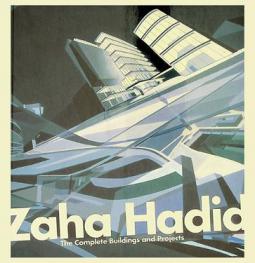
Zaha Hadid : the complete buildings and projects
For over twenty years, Zaha Hadid, the Iraqi-born, English-educated architect, has symbolised the vanguard of contemporary architecture. This book offers a complete overview of both her programmatic and aesthetic concerns.
Book

Deconstruction and the Postcolonial
As postcolonial studies shifts to a more comparative approach one of the most intriguing developments has been within the Francophone world. A number of genealogical lines of influence are now being drawn connecting the work of the three figures most associated with the emergence of postcolonial theory – Homi Bhabha, Edward Said, and Gayatri Spivak – to an earlier generation of French (predominantly ‘poststructuralist’) theorists. Within this emerging narrative of intellectual influences, the importance of the thought of Jacques Derrida, and the status of deconstruction generally, has been acknowledged, but has not until now been adequately accounted for. In Deconstruction and the Postcolonial, Michael Syrotinski teases out the underlying conceptual tensions and theoretical stakes of what he terms a ‘deconstructive postcolonialism’, and argues that postcolonial studies stands to gain ground in terms of its political forcefulness and philosophical rigour by turning back to, and not away from, deconstruction.
eBook

Dis-enclosure
This book is a profound and eagerly anticipated investigation into what is left of a monotheistic religious spirit?notably, a minimalist faith that is neither confessional nor credulous. Articulating this faith as works and as an objectless hope, Nancy deconstructs Christianity in search of the historical and reflective conditions that provided its initial energy. Working through Blanchot and Nietzsche, re-reading Heidegger and Derrida, Nancy turns to the Epistle of Saint James rather than those of Saint Paul, discerning in it the primitive essence of Christianity as hope. The ?religion that provided the exit from religion,? as he terms Christianity, consists in the announcement of an end. It is the announcement that counts, however, rather than any finality. In this announcement there is a proximity to others and to what was once called parousia. But parousia is no longer presence; it is no longer the return of the Messiah. Rather, it is what is near us and does not cease to open and to close, a presence deferred yet imminent.In a demystified age where we are left with a vision of a self-enclosed world?in which humans are no longer mortals facing an immortal being, but entities whose lives are accompanied by the time of their own decline?parousia stands as a question. Can we venture the risk of a decentered perspective, such that the meaning of the world can be found both inside and outside, within and without our so-immanent world?The deconstruction of Christianity that Nancy proposes is neither a game nor a strategy. It is an invitation to imagine a strange faith that enacts the inadequation of life to itself. Our lives overflow the self-contained boundaries of their biological and sociological interpretations. Out of this excess, wells up a fragile, overlooked meaning that is beyond both confessionalism and humanism.
eBook

Theory at Yale: The Strange Case of Deconstruction in America
This book examines the affinity between \"theory\" and \"deconstruction\" that developed in the American academy in the 1970s by way of the \"Yale Critics\": Harold Bloom, Paul de Man, Geoffrey Hartman, and J. Hillis Miller, sometimes joined by the French philosopher Jacques Derrida. With this semi-fictional collective, theory became a media event, first in the academy and then in the wider print media, in and through its phantasmatic link with deconstruction and with \"Yale.\" The important role played by aesthetic humanism in American pedagogical discourse provides a context for understanding theory as an aesthetic scandal, and an examination of the ways in which de Man's work challenges aesthetic pieties helps us understand why, by the 1980s, he above all had come to personify \"theory.\" Combining a broad account of the \"Yale Critics\" phenomenon with a series of careful re-examinations of the event of theory, Redfield traces the threat posed by language's unreliability and inhumanity in chapters on lyric, on Hartman's representation of the Wordsworthian imagination, on Bloom's early theory of influence in the 1970s together with his later media reinvention as the genius of the Western Canon, and on John Guillory's influential attempt to interpret de Manian theory as a symptom of literature's increasing marginality. A final chapter examines Mark Tansey's paintings \"Derrida Queries de Man\" and \"Constructing the Grand Canyon\", works that offer subtle, complex reflections on the peculiar event of theory as-deconstruction in America.
eBook

Adoration
Adoration is the second volume of the Deconstruction of Christianity, following Dis-Enclosure. The first volume attempted to demonstrate why it is necessary to open reason up not to a religious dimension but to one transcending reason as we have been accustomed to understanding it; the term \"adoration\" attempts to name the gesture of this dis-enclosed reason. Adoration causes us to receive ignorance as truth: not a feigned ignorance, perhaps not even a \"nonknowledge,\" nothing that would attempt to justify the negative again, but the simple, naked truth that there is nothing in the place of God, because there is no place for God. The outside of the world opens us in the midst of the world, and there is no first or final place. Each one of us is at once the first and the last. Each one, each name. And our ignorance is made worse by the fact that we do not know whether we ought to name this common and singular property of all names. We must remain in this suspense, hesitating between and stammering in various possible languages, ultimately learning to speak anew. In this book, Jean-Luc Nancy goes beyond his earlier historical and philosophical thought and tries to think-or at least crack open a little to thinking-a stance or bearing that might be suitable to the retreat of God that results from the self-deconstruction of Christianity. Adoration may be a manner, a style of spirit for our time, a time when the \"spiritual\" seems to have become so absent, so dry, so adulterated. The book is a major contribution to the important strand of attempts to think a \"post-secular\" situation of religion.
eBook

Politics of Deconstruction
The book offers a new introduction to Jacques Derrida and to Deconstruction as an important strand of Continental Philosophy. From his early writings on phenomenology and linguistics to his later meditations on war, terrorism, and justice, Jacques Derrida (1930–2004) achieved prominence on an international scale by addressing as many different audiences as he did topics. Yet despite widespread acclamation, his work has never been considered easy. Rendering accessible debates that marked more than four decades of engagement and inquiry, Susanne Lüdemann traces connections between the philosopher's own texts and those of his many interlocutors, past and present. Unlike conventional introductions, Politics of Deconstruction offers a number of personal approaches to reading Derrida and invites readers to find their own. Emphasizing the relationship between philosophy and politics, it shows that, with Deconstruction, there is much more at stake than an \"academic\" discussion, for Derrida's work deals with all the burning political and intellectual challenges of our time. The author's own professional experience in both the United States and in Europe, which particularly inform her chapter on Derrida's reception in the United States, opens a unique perspective on a unique thinker, one that rewards specialists and newcomers alike.
eBook
Identity Politics in Deconstruction
Identity politics dominates the organisation of liberation movements today. In this book Carolyn D'Cruz investigates the nexus between what David Birch describes as 'the seemingly impossible of high theory and the seemingly accessible possibilities of popular discourse', as encountered in liberation movements based on identity. D'Cruz reworks the logic of such movements through the unique combination of Derridean deconstruction, Foucauldian discourse and Levinasian ethics. Moving both within and between the domains of philosophy, politics and 'postmodern culture' this book offers both a clear explication of complex philosophical issues and an understanding of how they relate to the political practicalities of everyday life.
eBook
Power and Politics in Poststructuralist Thought
This book explores the impact of poststructuralism on contemporary political theory by focussing on problems and issues central to politics today.
Drawing on the theoretical concerns brought to light by the 'poststructuralist' thinkers Foucault, Derrida, Lacan, Deleuze and Max Stirner, Newman provides a critical examination of new developments in contemporary political theory: post-Marxism, discourse analysis, new theories of ideology and power, hegemony, radical democracy and psychoanalytic theory. He re-examines the political in light of these developments in theory to suggest new ways of thinking about politics through a reflection on the challenges that confront it.
This volume will be of great interest to students of postmodernism and poststructuralist theory in political science, philosophy, sociology, philosophy and cultural studies.
eBook

Eco-Deconstruction
The contributors are an impressive group of philosophers and literary and cultural theorists.The first book to comprehensively explore the possibilities deconstruction has to offer to environmental thought and practice.Eco-Deconstruction: Derrida and Environmental Philosophylaunches a new mode of philosophical and ethical reflection with respect to the challenges posed by the degradation of the natural environment, including habitat loss, species extinction, and climate change. While the work of French philosopher Jacques Derrida (1930-2004), with its relentless interrogation of the anthropocentric metaphysics of presence, has already proven highly influential in posthumanism and animal studies, the present volume, drawing on published and unpublished work by Derrida and others, builds on these insights in addressing and responding to the most pressing environmental issues of our time. The volume brings together 15 scholars, many of which have achieved world renown, from a wide variety of related fields, including eco-phenomenology, eco-hermeneutics, new materialism, posthumanism, animal studies, vegetal philosophy, science and technology studies, environmental humanities, eco-criticism, earth art and aesthetics, and analytic environmental ethics. Overall, eco-deconstruction offers an account of differential relationality explored in a non-final, non-totalizable ecological context, both quasi-ontologically and quasi-normatively, with attention to diagnosing our times. Accordingly, the book is divided into four sections-Diagnosing the Present, which suggests that our times are marked by a facile, flattened-out understanding of time and thus in need of deconstructive dispositions; Ecologies, which mobilizes the spectral ontology of deconstruction to argue for an originary environmentality, the constitutive ecological embeddedness of mortal life; Nuclear and Other Biodegradabilities, in which contributors reflect on the remains, by-products, and disintegrations of human culture, including nuclear waste, environmental destruction, and species extinctions; and Environmental Ethics, which seeks to uncover a demand for justice, including human responsibility for suffering beings, that emerges precisely as a response to original differentiation, and the mortality and unmasterable alterity it installs in living beings. As such, the book may resonate with readers not only in philosophy, but across the humanities and the social and natural sciences.
eBook
Derrida and theology
Jacques Derrida: a name to strike fear into the hearts of theologians.His ideas have been hugely influential in shaping postmodern philosophy, and its impact has been felt across the humanities from literary studies to architecture.However, he has also been associated with the specters of relativism and nihilism.
eBook