
Catalogue Search | MBRL


Are you sure you want to remove the book from the shelf?

{{itemTitle}}
21,642
result(s) for
"Deep ecology."
Sort by:

The deep ocean : life in the abyss
The deep ocean comprises more than 90 percent of our planet's biosphere and is home to some of the world's most dazzling creatures, which thrive amid extreme pressures, scarce food supplies, and frigid temperatures. Living things down here behave in remarkable and surprising ways, and cutting-edge technologies are shedding new light on these critically important ecosystems. This beautifully illustrated book leads you down into the canyons, trenches, and cold seeps of the watery abyss, presenting the deep ocean and its inhabitants as you have never seen them before.
Book
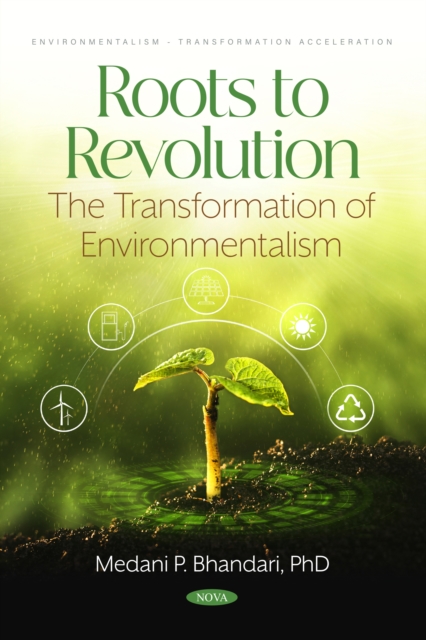
Roots to Revolution - the Transformation of Environmentalism
\"This book addresses the intertwined environmental, social, economic, and political dimensions of transformation in the context of escalating ecological crises such as climate change, biodiversity loss, and resource depletion. It investigates how environmentalism has evolved, examining the intersections with social justice, cultural shifts, technological advancements, and global governance. The opening chapter offers a historical overview, tracing environmentalism's development from the 19th-century conservation movements to the contemporary climate action movement. This context reveals how environmental priorities and strategies have adapted over time, particularly in response to industrialization and globalization. Subsequent chapters explore the theoretical foundations of environmentalism, highlighting various frameworks such as deep ecology, ecofeminism, and political ecology. These theoretical insights provide a basis for understan
eBook

The blobfish book
Introduces a variety of fish that live in the deepest zones of the ocean, including viperfish, jellyfish, jewel squid, and the blobfish.
Book

A Study on the Possibility of Religious Governance of New Religions in Korea: Focusing on the Ecological Worldview of Donghak and Won Buddhism
The most serious threats to humankind today are environmental and ecological problems. The global warming in particular is generally perceived as a serious threat to the survival of humanity and this sense of urgency has given us a chance to consider our place in the ecosystem and question our anthropocentrism. Various faiths acknowledge human obligations to protect the environment and preserve biodiversity. In the Korean context, while the eco-friendly worldviews of Buddhism are well-known, very little is known about other Korean religions’ views on the environment. This paper examines whether representative new religions of Korea, namely Donghak and Won Buddhism, can contribute as “religious mechanisms” in alleviating ecological problems. The paper particularly focuses on the former’s doctrine of samgyeong or “the Threefold Respect” and the latter’s philosophy of saeun or “the Fourfold Grace,” examining their relevance for religious governance. The paper argues that these two doctrines are permeated with an ecological view implying the need for all living things, including humans, animals and plants as well as the natural environment, to coexist. The paper also argues that these two religions, complete with guidelines for actions or practices, provide a path for building the possibility of religious governance through religious awakening of believers, mutual respect and mutual trust, and mutual communication and reflective cooperation.
Journal Article


Mensch Oder Erde
Das Klima ist allgegenwartig. Rund um den Globus gehen Menschen auf die Strae, Politik und Wirtschaft propagieren Klimaschutz , das gesamte Leben soll in dessen Namen reformiert werden. Nach der Umweltrevolution der 1960er- und 1970er-Jahre scheint eine neue Phase angebrochen zu sein in der Geschichte der Okologie. Der Philosoph Markus Jansen zeigt, dass diese Geschichte es in sich hat. Was seit Dekaden als unbefragbares Projekt der Weltrettung inszeniert wird, beruht zum Teil auf dubiosen Grundlagen und verfolgt mitunter fragwurdige Ziele. In Mensch oder Erde wird erstmals die Geschichte einer verfehlten Okologie erzahlt, fur die Raumschiff Erde , Gaia , Nachhaltigkeit oder Geoengineering beispielhaft stehen. Sich davon abgrenzend formuliert Jansen eine Tiefenokologie, deren Leitbilder unter anderem Nichteingreifen und Postwachstum hei en und die ebenso vor der desolaten Wirklichkeit der Digitalisierung die Augen keineswegs verschlie t. Mensch oder Erde ist eine bestechende Auseinandersetzung mit den gro en Fragen der Okologie, eine langst uberfallige Aufklarung, die in zukunftstrunkener Zeit auf Geistesgegenwart setzt.
eBook


Wavelengths of Your Song
At night we swim / following the fence: / diverted / we enter the net / shaped like a heart / and in the heart the hook / guides us to the back A stunning unfolding of memory, Wavelengths of Your Song juxtaposes a childhood in the northern Canadian wilderness with the adventures of an international creative life. Genuine environmentalism is at the heart of this collection. Migrations of birds and humans lend their songs to the vivid writing and a tangible, sensory reality emerges from their sounds. Music by Beethoven and Rzewski, paintings by Norval Morrisseau and Kandinsky, and writing by Kafka and Celan, inspire Eleonore Schönmaier's poetry. She takes the reader on unexpected journeys skiing across frozen lakes, cycling along Dutch canals, or hiking in Malta and New Zealand. With surprising, at times breathtaking connections, she illuminates hot air ballooning, canoe camping, planting trees on Vienna rooftops, and the bathing of a black horse in the North Sea. In poems that travel extensively around the globe, in lists for living well, and in love letters, Eleonore Schönmaier takes the reader on a journey along the wavelengths of the ocean, sound, and the physics of light.
eBook

Radical environmentalism : nature, identity and more-than-human agency
Environmentalism is a contest about the meaning of nature and the social construction of activism, deviance and harm. The contests that are the subject of this book are fought on the margins, in spaces where what is deviant and what is criminal are fluid concepts. Forest activists engaged in Tasmania's old-growth forests, and Sea Shepherd Conservation Society activists campaigning in the Southern Ocean to protect whales tell powerful and moving stories about their encounters with nature. These are profound experiences that fundamentally alter how they understand themselves and their world. What emerges in this book is a perspective that recognises the personhood of non-humans and which gives rise to a strong moral obligation to defend nature from harm. Providing a unique account of environmentalism, one that highlights the voices of the activists and the nature they defend, Radical Environmentalism: Nature, Identity and More-than-human Agency will be of great interest to students and academics of green criminology, environmental sociology and nature-human studies more broadly.
Book

Corporate Accountability Towards Species Extinction Protection: Insights from Ecologically Forward-Thinking Companies
This paper contributes to biodiversity and species extinction literature by examining the relationship between corporate accountability in terms of species protection and factors affecting such accountability from forward-thinking companies. We use triangulation of theories, namely deep ecology, legitimacy, and we introduce a new perspective to the stakeholder theory that considers species as a ‘stakeholder’. Using Poisson pseudo-maximum likelihood (PPML) regression, we examine a sample of 200 Fortune Global companies over 3 years. Our results indicate significant positive relations between ecologically conscious companies that are accountable for the protection of biodiversity and species extinction and external assurance, environmental performance, partnerships with socially responsible organizations and awards for sustainable activities. Our empirical results appear to be robust in controlling for possible endogeneities. Our findings contribute to the discussion on the concern of species loss and habitat destruction in the context of corporate accountability, especially in responding to the sixth mass extinction event and COVID-19 crisis. Our results can also guide the policymakers and stakeholders of the financial market in better decision making.
Journal Article