
Catalogue Search | MBRL


Are you sure you want to remove the book from the shelf?

{{itemTitle}}
38,211
result(s) for
"Deities"
Sort by:

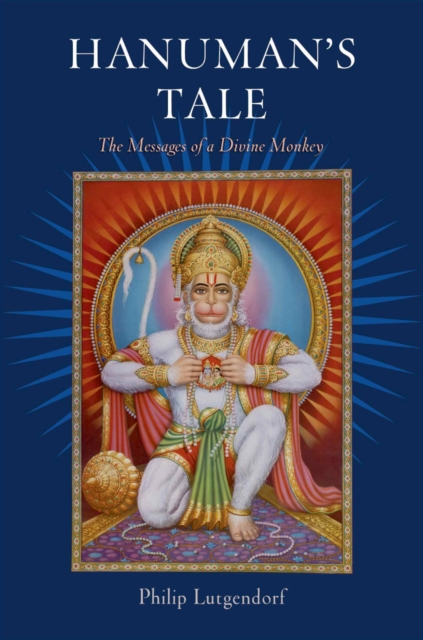
Hanuman's tale : the messages of a divine monkey
This book offers a comprehensive introduction to one of the most beloved and widely worshiped of Hindu deities: the “monkey-god” Hanuman. It details the historical expansion of Hanuman's religious status beyond his role as helper to Rama and Sita, the divine hero and heroine of the ancient Ramayana storytelling tradition. Additionally, it surveys contemporary popular literature and folklore through which Hanuman's mythological biography is celebrated, and describes a range of religious sites and practices that highlight different aspects of his persona. Emphasizing Hanuman's role as a “liminal” deity who combines animal, human, and divine qualities, and as a “middle-class” god within the Hindu pantheon, the book argues that such mediatory status has made Hanuman especially appealing to upwardly-mobile social groups as well as to Hindus of many sectarian persuasions.
eBook

Echo the copycat
In order to fit in at Mount Olympus Academy, new girl and forest-mountain nymph Echo copies the mannerisms of all the other students, but instead of ingratiating herself to her classmates, it only seems to grate on them.
Book

NUMA E LA VITE NON POTATA. ANTROPOLOGIA DI UNA LEX REGIA
The contribution aims to examine one of the rules that Roman tradition attributed to king Numa Pompilius and which forbade offering libations to the gods with wine from unpruned vines. The sources that pass on the provision are collected and discussed and an anthropological interpretation is proposed, deepening the notion of pruning and examining the profile and role of the pruner in Roman culture.
Journal Article


The song of Aglaia
\"Aglaia is a simple sea nymph. One day, a Merman seduces Aglaia, forever altering her life's course. She is cast out of Oceanid by her chauvinistic father, forcing her to wander many days and nights, until one day she finds herself at the benefit of one Mr. Kite, whose traveling circus welcomes her (including the star attraction, a waltzing Horse named Henry) and once again alters her fate, sending her down many more unexpected paths. The Song of Aglaia is the first solo graphic novel by cartoonist Anne Simon, presenting a beautifully crafted female spin on the classic heroic myths of Greek literature, tracing the journey of a victimized and then almighty woman with a graceful understanding of human relationships and loving nods to the Bronte sisters, David Bowie, and the Beatles\"-- Amazon.com
Book

Sacred Britannia. The Gods and Rituals of Roman Britain
La autora se esfuerza en estas páginas en mostrar la armonización de lo céltico prerromano con lo romano con sus conflictos o choques culturales, explorando «the great diversity of ancient British religious beliefs that flourished against the kaleidoscopic background of mixed cultures and peoples that populated the Roman Empire, including its army and its governance, with all the tensions, anxieties, misrepresentations, hostilities, tolerances and acceptances that drove religion into so many different avenues and directions at the edge of the known world» (p. 7). The World of the Druids, London, Thames, 1992, del que hay versión española El mundo de los druidas, Akal, 2010, editorial que ya había sacado una traducción de Celtic Myths, British Museum Press, 1993 = Los mitos célticos, Akal, 2001. Se siente como pez fuera del agua cuando estudia, por ejemplo, los orígenes del cristianismo en Britannia (vid. pp. 177-195, capítulo que titula «The Coming of Christ»). Así, cuando la autora no encuentra explicación filológica -rama que tampoco domina en absoluto- en algunos teónimos hallados en inscripciones militares de Britannia, sugiere que tales dioses eran «inventos romanos» (p. 78), asumiendo la sugerencia de una nota publicada por Webster «the absence of evidence for these British divinities in preRoman contexts might mean that Roman soldiers were deliberately inventing local gods, being careful to ascribe to them British in order to ensure their well-being in an alien and hostile environment» (p. 238 n. 55, apud G. Webster, «The divine diaspora: problematizing Celtic deities on Hadrian's Wall», 4thAnnual Colloquium an Thinking about Celtic Mythology in the 2iSt Century, with special reference to Archaeology, Edinburgh, 2016, pp. 19-20), estudio donde, por cierto, también chirría el concepto de «diáspora divina». ¡¿Para qué consultar obras que no estén escritas en inglés?! Hubiera sido de gran ayuda a la autora haber leído, por ejemplo, el libro de G. Zecchini, I druidi e l'opposizione celtica a Roma, Milán, Jaca Books, 1984, del que hay versión española, Los druidas, Madrid, Alderabán, 2002, para haber enfocado correctamente el tema del druidismo como una forma de resistencia política, y armada, a Roma.
Journal Article

Bemused
\"Living in a quiet seaside village with their overprotective mother, teenaged sisters Calliope, Clio, Melpomene, Terpsichore, and Thalia are talented performers with no audience. If Calli had her way, she'd pursue her dream of writing epic stories in the city of Thebes. But family comes first, and as the eldest, she'd never leave her beloved sisters behind. Then, following a disastrous public music performance, their mother reveals a shocking secret: she is Mnemosyne, the Goddess of Memory, and for nearly two decades, she's been on the run from the gods of Mount Olympus, desperate to keep her daughters safe from their machinations. Before she can share more, she is kidnapped . . . and though the girls don't know it yet, the villain pulling the strings is none other than Hades, fiery God of the Underworld. Under Calli's leadership, the sisters embark on a journey to save their mother and to learn more about their own divine origins. But the path ahead is filled with mythical trials and tribulations, and they'll need to rely on both their individual talents and the strength of their sisterhood to ensure that they ascend from \"zeroes\" to \"heroes\"--or more accurately, heroines.\"-- Provided by publisher.
BOOK

The Flowing Pantheon: A Study on the Origins of the Wutong Deity and the Five Road Deities of Wealth, with a Discussion on the Pluralistic Harmony of Daoism
The origin of the Wutong deity, a controversial figure in Chinese folk religion, has long been an unresolved academic issue, hindering a clear understanding of its complex godhead and its derivative cults, such as the Five Road Deities of Wealth. This study aims to provide a comprehensive etymological solution to this long-standing problem. Through a systematic investigation combining cross-cultural linguistic analysis, comparative mythology, and socio-historical contextualization, this paper traces the deity’s evolution from its prototype to its final forms. The study argues that the Wutong deity’s prototype is the Buddhist Yakṣa General Pañcika, known in early China as the “Wudao Dashen” (Great Deity of the Five Paths). Its core godhead was formed by inheriting Pañcika’s attribute as a wealth deity, while degrading his myth of prolificacy into a licentious characteristic by conflating it with indigenous stereotypes of Yakṣas. Its name resulted from an orthographic corruption of “Wudao” to “Wutong,” and its “one-legged” image from a phono-semantic misreading of its transliterated name, “Banzhijia (半支迦).” This transformation was catalyzed by the severance of the Tangmi (唐密) lineage and the concurrent rise of commercialism in Song-dynasty Jiangnan. This evolutionary chain reveals the complete process by which a foreign deity was seamlessly integrated into the indigenous Chinese belief system, a “Flowing Pantheon,” through misreading and reconstruction, vividly illustrating the pluralistic and harmonious nature of Chinese religion.
Journal Article