
Catalogue Search | MBRL


Are you sure you want to remove the book from the shelf?

{{itemTitle}}
455
result(s) for
"Delacroix, Eugene (1798-1863)"
Sort by:

Exiled in Modernity
Notions of civilization and barbarism were intrinsic to Eugène
Delacroix's artistic practice: he wrote regularly about these
concepts in his journal, and the tensions between the two were the
subject of numerous paintings, including his most ambitious mural
project, the ceiling of the Library of the Chamber of Deputies in
the Palais Bourbon. Exiled in Modernity delves deeply into
these themes, revealing why Delacroix's disillusionment with
modernity increasingly led him to seek spiritual release or
epiphany in the sensual qualities of painting.
While civilization implied a degree of control and the
constraint of natural impulses for Delacroix, barbarism evoked
something uncontrolled and impulsive. Seeing himself as part of a
grand tradition extending back to ancient Greece, Delacroix was
profoundly aware of the wealth and power that set
nineteenth-century Europe apart from the rest of the world. Yet he
was fascinated by civilization's chaotic underbelly. In analyzing
Delacroix's art and prose, David O'Brien illuminates the artist's
effort to reconcile the erudite, tradition-bound aspects of
painting with a desire to reach viewers in a more direct,
unrestrained manner. Focusing chiefly on Delacroix's musings about
civilization in his famous journal, his major mural projects on the
theme of civilization, and the place of civilization in his
paintings of North Africa and of animals, O'Brien links Delacroix's
increasingly pessimistic view of modernity to his desire to use his
art to provide access to a more fulfilling experience.
With more than one hundred illustrations, this original, astute
analysis of Delacroix and his work explains why he became an
inspiration for modernist painters over the half-century following
his death. Art historians and scholars of modernism especially will
find great value in O'Brien's work.
eBook

Exiled in Modernity
Notions of civilization and barbarism were intrinsic to Eugène Delacroix's artistic practice: he wrote regularly about these concepts in his journal, and the tensions between the two were the subject of numerous paintings, including his most ambitious mural project, the ceiling of the Library of the Chamber of Deputies in the Palais Bourbon. Exiled in Modernity delves deeply into these themes, revealing why Delacroix's disillusionment with modernity increasingly led him to seek spiritual release or epiphany in the sensual qualities of painting.
While civilization implied a degree of control and the constraint of natural impulses for Delacroix, barbarism evoked something uncontrolled and impulsive. Seeing himself as part of a grand tradition extending back to ancient Greece, Delacroix was profoundly aware of the wealth and power that set nineteenth-century Europe apart from the rest of the world. Yet he was fascinated by civilization's chaotic underbelly. In analyzing Delacroix's art and prose, David O'Brien illuminates the artist's effort to reconcile the erudite, tradition-bound aspects of painting with a desire to reach viewers in a more direct, unrestrained manner. Focusing chiefly on Delacroix's musings about civilization in his famous journal, his major mural projects on the theme of civilization, and the place of civilization in his paintings of North Africa and of animals, O'Brien links Delacroix's increasingly pessimistic view of modernity to his desire to use his art to provide access to a more fulfilling experience.
With more than one hundred illustrations, this original, astute analysis of Delacroix and his work explains why he became an inspiration for modernist painters over the half-century following his death. Art historians and scholars of modernism especially will find great value in O'Brien's work.
eBook
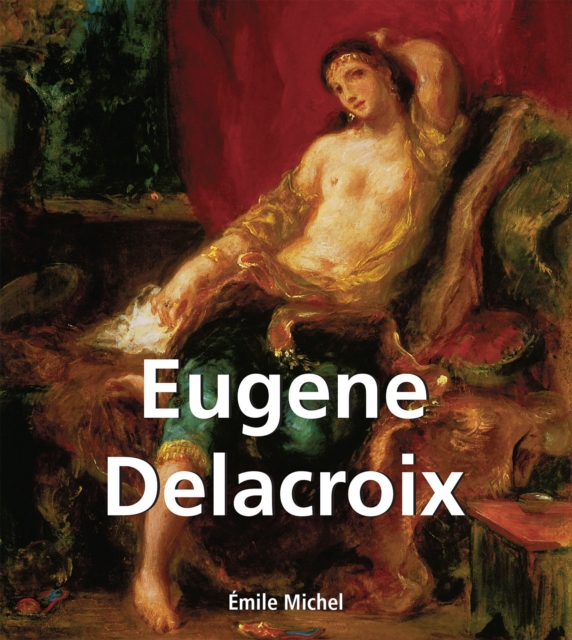
Eugene Delacroix
Ferdinand Victor Eugène Delacroix (Saint-Maurice, 1798 – Paris, 1863). Delacroix fut l'un des plus grands coloristes du XIXe siècle. La couleur était pour lui un moyen d'expression déterminant, qui avait la préséance sur la forme et les détails. Il parlait à l'oeil, moins à la raison. Il se nourrissait des oeuvres des coloristes du Louvre, en particulier de Rubens. Spirituellement, Delacroix s'inscrivait au coeur du mouvement romantique qui s'était répandu en Europe, se nourrissant de Goethe, Scott, Byron et Victor Hugo. Sa propre nature romantique s'enflammait au contact des leurs ; il était possédé par leurs âmes et devint le premier peintre romantique. Il tira nombre de ses sujets de ses poètes préférés, non pour les transposer dans des illustrations littérales, mais pour faire s'exprimer à travers son propre langage pictural les émotions les plus vives du coeur humain. Par ailleurs, c'est généralement dans les rapports entre plusieurs personnages, en d'autres termes dans le drame, que Delacroix trouvait l'expression naturelle et saisissante de ses idées. Son oeuvre n'est qu'un immense poème polymorphe, à la fois lyrique et dramatique, sur les passions violentes et meurtrières, qui fascinent, dominent et déchirent l'humanité. Dans l'élaboration et l'exécution des pages de ce poème, Delacroix ne renonce à aucune de ses facultés d'homme ou d'artiste, dont la vaste intelligence rejoint les pensées des plus grands de l'histoire, des légendes et de la poésie. Au contraire, il se sert de son imagination fiévreuse, toujours sous le contrôle d'un raisonnement lucide et du sang froid, de son dessin expressif et vivant, de ses couleurs fortes et subtiles, parfois dans une harmonie âpre, parfois éclipsées par cette note « sulfureuse » déjà observée par ses contemporains, pour produire une atmosphère d'orage, de supplication et d'angoisse. La passion, le mouvement et le drame ne doivent pas forcément engendrer le désordre. Avec Delacroix comme avec Rubens, il plane au-dessus de ses représentations les plus tristes, au-dessus du tumulte, des horreurs et des massacres, une espèce de sérénité qui est le signe de l'art et la marque d'un grand esprit.
eBook
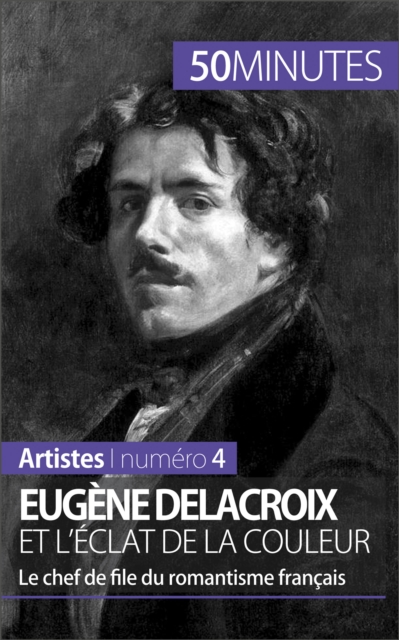
Eugène Delacroix et l'éclat de la couleur
Décryptez l'art d'Eugène Delacroix en moins d'une heure! De formation académique, Eugène Delacroix s'émancipe peu à peu de l'équilibre et de l'ordre classiques pour s'imposer en chef de file du romantisme pictural français. En privilégiant la couleur sur le dessin, l'artiste confère à ses œuvres une intense vibration émotionnelle qui a inspiré plus d'un peintre. L'art de Delacroix, empreint de passion, fait remarquablement écho aux bouleversements de son siècle. Mais il préfigure également des courants artistiques majeurs tels que l'impressionnisme. Ce livre vous permettra d'en savoir plus sur:
- Le contexte politique et culturel dans lequel Eugène Delacroix s'inscrit
- La vie du peintre et son parcours
- Les caractéristiques et spécificités de son art
- Une sélection d'œuvres-clés de Delacroix
- L'impact de l'artiste dans l'histoire de l'art Le mot de l'éditeur:
« Dans ce numéro de la série \"50MINUTES | Artistes\", Thomas Jacquemin nous guide dans les méandres d'une œuvre synonyme de passion et de couleur grâce à une judicieuse sélection de tableaux: La Barque de Dante, La Mort de Sardanapale, La Liberté guidant le peuple et d'autres encore. Dans ce numéro sur Delacroix, nous avons par ailleurs tenu à souligner l'admiration et l'enthousiasme sans borne qu'a suscité \"le plus grand peintre du siècle\", selon les termes de Charles Baudelaire. »
Stéphanie Felten À PROPOS DE LA SÉRIE 50MINUTES | Artistes
La série « Artistes » de la collection « 50MINUTES » aborde plus de cinquante artistes qui ont profondément marqué l'histoire de l'art, du Moyen Âge à nos jours. Chaque livre a été conçu à la fois pour les passionnés d'art et pour les amateurs curieux d'en savoir davantage en peu de temps. Nos auteurs analysent avec précision les œuvres des plus grands artistes tout en laissant place à toutes les interprétations.
eBook

Gericault, Delacroix and Constable's The Hay Wain
All art treasures are prone to fabled accounts, none more pertinent to Anglo-French artistic relations of the 1820s than Constable's The Hay Wain. It is a familiar axiom, repeated incessantly, that after its prominent exhibition in Paris in the Salon of 1824, the so-called 'Salon anglais', the work became entrenched in art-historical lore as a singular icon that transformed French artistic sensibilities in landscape depiction, much to the regret of Ruskin. The influence that Constable's works in the exhibition had on French painters was noted for decades and was most emphatically expressed by the anglophile critic Ernest Chesneau, who paid homage specifically to The Hay Wain when he affirmed that the painting 'firent en France un effet extraordinaire' and that 'notre grande ecole de paysage modern se rattache directement a lui [Constable]'.
Journal Article

Delacroix (1798–1863)/A Modern Struggle: From Delacroix to the Present Day
Lee reviews two exhibitions featuring the works of Eugene Delacroix, including Delacroix (1798-1863) at the Musee du Louvre in Paris France and A Modern Struggle: From Delacroix to the Present Day at the Musee National Eugene Delacroix in Paris France.
Journal Article
Perpetual iridescence, or Impressionism's minor harmonies
The painter Paul Signac has had a large impact on the art histories of modern colour. In his 1899 treatise, D'Eugene Delacroix au néo-impressionisme, Signac distils a disparate array of colour theory-inflected writings by Félix Fénéon, Georges Seurat and Charles Henry-among others-into a protocol for modern colouristic painting. As his book's title suggests, Signac also traces his own Neo-Impressionist manner back to Eugene Delacroix's self-conscious, if eclectic, application of Eugene Chevreul's theory of simultaneous contrasts, in which vivid pictorial harmonies could be achieved through the adjacent placement of complementary hues. Subsequently, Monet and Cie intensified the appearance of these same contrasts by taking their colours straight from the tube and applying them in broken touches onto canvases primed in white. With the arrival of Seurat, this same approach to colour composition was renewed systematically, and then with Signac, it became nearly doctrinal.
Journal Article

Delacroix’s parade
The nineteenth century understood parade to refer to a small presentation announcing the actual spectacle in a theater or circus. Singers, actors, acrobats, and musicians would court the public's favor in front of the performance space. Their goal was to attract a paying audience through improvisational playacting and ostentatious addresses to people passing by. The parade thus seems to have scorned the autonomous work of art, which defined the development of drama, opera, and also painting at the time. Eugene Delacroix was clearly aware of this polemic relationship. In his early caricatures Italian Theater and Grand Opera, he refers to a parade so as to take the side of opera buffa in a dispute about this operatic genre. The tense relationship between artwork and parade also engaged Delacroix as an established artist who had made some of the most-discussed monumental works of the first half of the nineteenth century.
Journal Article

Eugene Delacroix
Ferdinand Victor Eugène Delacroix (Saint-Maurice, 1798 - Paris, 1863).Delacroix fut l'un des plus grands coloristes du XIXe siècle.La couleur était pour lui un moyen d'expression déterminant, qui avait la préséance sur la forme et les détails.Il parlait à l'oeil, moins à la raison.
eBook