
Catalogue Search | MBRL


Are you sure you want to remove the book from the shelf?

{{itemTitle}}
1,752
result(s) for
"Democracy China Hong Kong."
Sort by:


Hong Kong's indigenous democracy : origins, evolution and contentions
This book argues that Hong Kong has a unique system of democracy, and implies that the previous studies in comparative politics have focused excessively on the procedural aspects of democratization. The case of Hong Kong demonstrates that, substantively speaking, it is already a democracy with home grown characteristics, including the rule of law, judicial independence, a strong civil society, horizontal accountability, the complexities of using a civil disobedience movement in pushing for democratization, and the gradual progress in democratizing the election methods for the Chief Executive. The study of democratization in other parts of the world can perhaps focus on liberalization, the building up of the rule of law and judicial independence, and the utilization of social and political movements to exert pressure on the government to democratize the political system. This book is a unique contribution to the study of democratization in Hong Kong, with chapters including the legal tradition in Hong Kong, the features of Hong Kong's indigenous democracy, the 2014 Umbrella Movement, and the evolution of the Chief Executive election. Academics, journalists, government officials and students of comparative democratization and Chinese studies will all find this book useful.
eBook

Take back our future : an eventful sociology of the Hong Kong Umbrella Movement
\"This book explains the contexts, causes and consequences of the 2014 Hong Kong Umbrella Movement, a 79-day mass occupation protest in one of the world's most affluent financial centers\"-- Provided by publisher.
BOOK

Theological reflections on the Hong Kong umbrella movement
This book gathers the voices of four local Hong Kong theologians to reflect on the 2014 democracy protests in the city from the perspectives of Catholic social teaching, feminist and queer intersectionality, Protestant liberation, and textual exegesis. The volume also includes an extended primer on Hong Kong politics to aid readers as they reflect on the theology underlying the democracy protests. September 28, 2014 is known as the day that political consciousness in Hong Kong began to shift. As police fired eighty-seven volleys of tear gas at protesters demanding \"genuine universal suffrage\" in Hong Kong, the movement (termed the \"Umbrella Movement\") ignited a polarizing set of debates over civil disobedience, government collusion with private interests, and democracy. The Umbrella Movement was also a theological watershed moment, a time for religious reflection. This book analyzes the role that religion played in shaping the course of this historic movement.
eBook


Hong Kong's Tortuous Democratization
This book raises interesting questions about the process of democratization in Hong Kong. It asks why democracy has been so long delayed when Hong Kong's level of socio-economic development has become so high. It relates democratization in Hong Kong to wider studies of the democratization process elsewhere, and it supplements the received wisdom - that democracy was delayed because of colonial rule and by the opposition of China - with new thinking, for example, that its quasi-bureaucratic authoritarian political structure vested power in bureaucrats who refused to have top-down democratization; a politically weak civil society and a non-participant political culture that crippled bottom-up democratization; plus the division between pro-democratic civil society and political society.
eBook
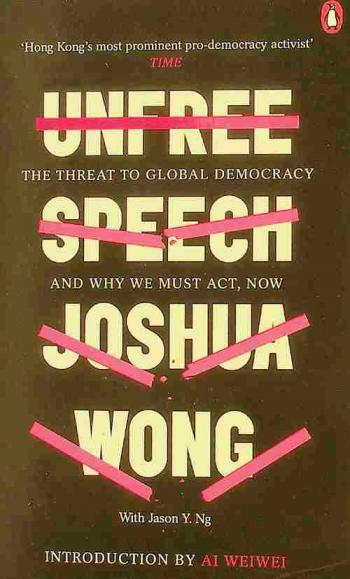
Unfree speech : the threat to global democracy and why we must act, now
\"An urgent manifesto for global democracy from Joshua Wong, the twenty-three-year-old phenomenon leading Hong Kong's protests, and Nobel Peace Prize nominee\"-- Provided by publisher.

Hong Kong in the Shadow of China
A close-up look at the struggle for democracy in Hong Kong.Hong Kong in the Shadow of Chinais a reflection on the recent political turmoil in Hong Kong during which the Chinese government insisted on gradual movement toward electoral democracy and hundreds of thousands of protesters occupied major thoroughfares to push for full democracy now. Fueling this struggle is deep public resentment over growing inequality and how the political system-established by China and dominated by the local business community-reinforces the divide been those who have profited immensely and those who struggle for basics such as housing.Richard Bush, director of the Brookings Institution's Center on East Asia Policy Studies, takes us inside the demonstrations and the demands of the demonstrators and then pulls back to critically explore what Hong Kong and China must do to ensure both economic competitiveness and good governance and the implications of Hong Kong developments for United States policy.
eBook
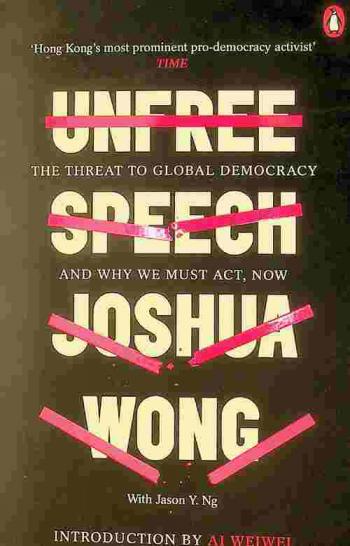
Unfree speech : the threat to global democracy and why we must act, now
The urgent, first book from global phenomenon Joshua Wong - leader of the Hong Kong protests, Nobel prize nominee and TIME, Forbes and Fortune world leader - who will tell us how he took on the biggest country in the world, and why we all have a stake in the global fight for democracy. Introduction by Ai WeiweiAn urgent manifesto for global democracy from the leading 23-year-old Hong Kong activist - Nobel Peace Prize nominee and TIME, Forbes and Fortune world leader. At what point do you stand up to power?Age 14, Joshua Wong made history. While the adults stayed silent, Joshua staged the first ever student protest in Hong Kong to oppose National Education - and won. Since then Joshua founded Demosisto, led the Umbrella Revolution and spearheaded the Extradition Bill protests, which have seen an estimated 2 million people - more than a quarter of the population - take to Hong Kong's streets. His actions have sparked worldwide attention, a Nobel Peace Prize nomination and over 100 days in jail. In Unfree Speech, Joshua tells his story for the first time. Composed in three parts, Joshua chronicles his path to politics, collects the letters he wrote as a political prisoner under the Chinese state, and closes with a powerful and urgent call for all of us around the world to defend our democratic rights. Hong Kong is the canary in the coal mine. When we stay silent, no-one is safe: when we free our speech, they can't stop all of us

Contemporary Hong Kong Government and Politics, Third Edition
In the third edition of Contemporary Hong Kong Government and Politics, Lam Wai-man, Percy Luen-tim Lui, Wilson Wong, and various contributors provide the latest analyses in many aspects of Hong Kong’s government and politics, such as political institutions, mediating institutions, and political actors. They also discuss specific policy areas such as political parties and elections, civil society, political identity and political culture, the mass media, and public opinions after the Umbrella Movement in 2014. The book also evaluates the latest developments in Hong Kong’s relationship with Mainland China and the international community. This new edition offers an up-to-date and comprehensive analysis of the main continuities and changes in the above aspects since 2014. This volume will help its readers grasp a basic understanding of Hong Kong’s political developments in the last ten years.
eBook