
Catalogue Search | MBRL


Are you sure you want to remove the book from the shelf?

{{itemTitle}}
513
result(s) for
"Democracy India Congresses."
Sort by:
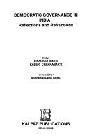
Democratic governance in India : reflections and refractions
Contributed articles presented at the National Seminar on Democratic Governance in India States organised under the DRS Programme (Phase I) of the Dept. of Political Science, Calcutta University on 18 March, 2005.
Book

Democracy, Development and Decentralisation in India
Offering new insights into the political economy of contemporary India, this book considers how and why unequal patterns of economic growth have taken shape within the context of a democratic and decentralising political system, and how this has impacted upon the processes of economic development.
eBook


Power and Influence in India
Taking cognisance of the lack of studies on leadership in modern India, this book explores how leadership is practiced in the Indian context, examining this across varied domains - from rural settings and urban neighbourhoods to political parties and state governments.
The importance of individual leaders in the projection of politics in South Asia is evident from how political parties, mobilisation of movements and the media all focus on carefully constructed personalities. Besides, the politically ambitious have considerable room for manoeuvre in the institutional setup of the Indian subcontinent. This book focuses on actors making their political career and/or aspiring for leadership roles, even as it also foregrounds the range of choices open to them in particular contexts. The articles in this volume explore the variety of strategies used by politically engaged actors in trying to acquire (or keep) power - symbolic action, rhetorical usage, moral conviction, building of alliances - illustrating, in the process, both the opportunities and constraints experienced by them.
In taking a qualitative approach and tracking both political styles and transactions, this book provides insights into the nature of democracy and the functioning of electoral politics in the subcontinent.
eBook

The Poona Pact, Indian National Congress and the descriptive and substantive representation of Dalits in colonial India
Within the prevailing historiographical tradition of modern India, critics see the Poona Pact as having “disenfranchised” Dalits, which they attribute to the fact that, due to the numerical superiority of caste Hindus, the implementation of joint electorates resulted in the consolidation of power within the Indian National Congress: the party that, critics allege, protected the interests of the caste Hindu community. Critics further argue that Dalit candidates who successfully ran for office under the Congress party’s banner, garnering support mostly from caste Hindu voters, failed to speak for the interests of the Dalit community effectively. This article examines the returns of the provincial assembly elections held in 1936–1937 and 1945–1946, as well as the functioning of the Congress ministries in the provinces of British India between 1937 and 1939 and 1946 and 1947 to challenge the criticisms mentioned above and to argue that the inclusion of reserved seats, primary elections, and cumulative voting mechanisms had a significant role in enhancing the potential of the Poona Pact to ensure genuine descriptive representation of Dalits. The article also finds that the affiliation of Dalit legislators with the Congress party had a beneficial impact on their substantive representation in the provincial legislatures where the Congress formed ministries because Dalit interests and the ideological and programmatic dynamics of the Congress party were congruent. In this context, Gandhi, a member of the caste Hindu community, played the role of a “critical actor” who encouraged the Congress party to undertake measures to advance the interests of the Dalit community. Moreover, a powerful and autonomous anti-untouchability movement led by the Harijan Sevak Sangh played a crucial role in enhancing the institutional capabilities of the Congress governments, enabling them to effectively address the concerns and challenges faced by the Dalit community, which further bolstered the substantive representation of Dalits.
Journal Article

History in Flux: Indira Gandhi and the 'Great All-Party Campaign' for the Protection of the Cow, 1966-8
This article contends that the late 1960s, a period rife with crises in Indian political and economic affairs, merits close attention from historians wanting to construct narratives of the country's post-Independence experience. More particularly it demonstrates how the challenge posed to the Congress-led Government of India by one of these crises -an agitation for central cow-protection legislation, which arrived at a crucial moment in Prime Minister Indira Gandhi's first term -proved, against the odds, to be the making of her as a politician and a national leader. At two levels, then, this is an article about burning points' and their application to the writing of contemporary Indian history: for if the late 1960s marked a turning point in the larger Indian story, so, too, they marked a decisive break in the biography of Mrs Indira Gandhi.
Journal Article

Public Interest Litigation in India as a Paradigm for Developing Nations
Public interest litigation (PIL) in India can serve as a vehicle for creating and enforcing rights and is critical to the sustenance of democracy. PIL in India can address the needs of its citizens when legislative inertia afflicts the Indian National Congress. This Note discusses how PIL in India can serve as a model for other developing nations struggling with legislative inertia and can provide recourse to marginalized and disadvantaged communities. Furthermore, while PIL obscures the traditional boundaries of power in a liberal democratic polity, democracy is in fact strengthened by the expansion of standing to include any citizen who has suffered a rights abuse.
Journal Article

The Indian Version of First among Equals – Executive Power during the First Decade of Independence
When India gained independence in August 1947 the world watched with excitement as well as trepidation as to what would happen following this unique and major event. The political destiny of the world's largest democracy would lie in the hands of an infinitesimal portion of the population – the political executive. India's new institutions had new operators to act in new conditions. There were few precedents. Within this Westminster system, refounded in India with its emphasis on executive flexibility and ambiguity, the leading political figures often had conflicting opinions and interpretations as to their powers. The relationship between Nehru as Prime Minister and other leading political figures, such as Patel as deputy Prime Minister, Prasad as President, and their definitions of their roles, would forge a new India. This paper revisits those debates and ideas in the first decade following independence, which allow greater understanding of the workings and conventions of today's Indian executive.
Journal Article

Analyzing Gender, Intersectionality, and Multiple Inequalities: Global, Transnational and Local Contexts
Includes papers presented at the conference \"Gender and Social Transformation: Global, Transnational, and Local Realities and Perspectives\", Beijing, China in 2009. This title addresses topics such as: divisions of labor, migration, war and peace-building.
eBook

Democratic Culture
A collection of essays by distinguished scholars, this book delineates a substantial conception of democracy, the great promise as well as the pitfalls of a democratic mentality and culture. These essays go beyond the institutional and formal descriptions of democracy to its underlying cultural context - expressed both historically and analytically, descriptively and normatively.
eBook