
Catalogue Search | MBRL


Are you sure you want to remove the book from the shelf?

{{itemTitle}}
1,659
result(s) for
"Democracy Iran"
Sort by:


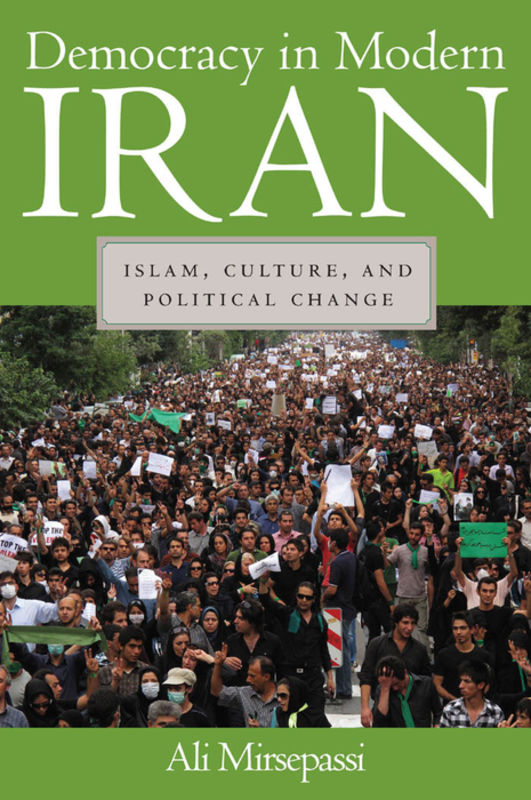
Democracy in Modern Iran
Can Islamic societies embrace democracy? In Democracy in Modern Iran, Ali Mirsepassi maintains that it is possible, demonstrating that Islam is not inherently hostile to the idea of democracy. Rather, he provides new perspective on how such a political and social transformation could take place, arguing that the key to understanding the integration of Islam and democracy lies in concrete social institutions rather than pre-conceived ideas, the every day experiences rather than abstract theories. Mirsepassi, an Iranian native, provides a rare inside look into the country, offering a deep understanding of how Islamic countries like Iran and Iraq can and will embrace democracy.Democracy in Modern Iran challenges readers to think about Islam and democracy critically and in a far more nuanced way than is done in black-and-white dichotomies of Islam vs. Democracy, or Iran vs. the West. This essential volume contributes important insights to current discussions, creating a more complex conception of modernity in the Eastern world and, with it, Mirsepassi offers to a broad Western audience a more accurate, less cliched vision of Iran's political reality.
eBook
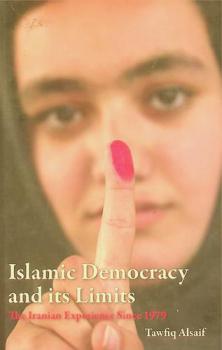
Islamic democracy and its limits : the Iranian experience since 1979
\"What is the difference between a democracy imposed by foreign powers and one developed locally, albeit within a political system dominated by religion.\" \"Tawfiq Alsaif explores Iran's every-bumpy road to democracy, by analysing the political ideologies of both the conservative and reformist trends in Iranian politics and their distance from the traditional model of liberal democracy.\" \"The religion versus democracy debate has been remarkably enriched in Iran by reformist thinkers' new approaches to questions of rationality, secularism, constitutional rights and state - religion relations. Iran's experiences provide readers with a better understanding of the potential, as well as the difficulties, motives and limitations relating to the process of democratisation in the modern Middle East.\"--Jacket.
Book

Democracy and the Nature of American Influence in Iran, 1941-1979
Collier presents a timely and fresh reexamination of one of the most important bilateral relationships of the last century. He delves deeply into the American desire to promote democracy in Iran from the 1940s through the early 1960s and examines the myriad factors that contributed to their success in exerting a powerful influence on Iranian politics. By creating a framework to understand the efficacy of external pressure, Collier explains how the United States later relinquished this control during the 1960s and 1970s. During this time, the shah emerged as a dominant and effective political operator who took advantage of waning American influence to assert his authority. Collier reveals how this shifting power dynamic transformed the former client-patron relationship into one approaching equality.
eBook

The Road to Democracy in Iran
A famous Iranian dissident calls for universal human rights and democracy based on our common humanity.
Akbar Ganji, called by some “Iran's most famous dissident,” was a member of the Islamic Revolutionary Guard Corps. But, troubled by the regime's repressive nature, he became an investigative journalist in the 1990s, writing for Iran's pro-democracy newspapers. Most notably, he traced the murders of dissident intellectuals to Iran's secret service. In 2000, Ganji was arrested, sentenced to six years in prison, and banned from working as a journalist. His eighty-day hunger strike during his last year in prison mobilized the international human rights community.The Road to Democracy in Iran, Ganji's first book in English, demonstrates his lifelong commitment to human rights and democracy. A passionate call for universal human rights and the right to democracy from a Muslim perspective, it lays out the goals and means of Iran's democracy movement, why women's rights trump some interpretations of Islamic law, and how the West can help promote democracy in Iran (he strongly opposes U.S. intervention) and other Islamic countries. Throughout the book Ganji argues consistently for universal rights based on our common humanity (and he believes the world's religions support that idea). But his arguments never veer into abstraction; they are rooted deeply in the realities of life in Islamic countries, and offer a clear picture of the possibilities for and obstacles to improving human rights and promoting democracy in the Muslim world. Since his release from prison in March 2006, Akbar Ganji has been traveling outside Iran, meeting with intellectuals and activists in the international human rights community. He is currently living in the United States.
eBook

A Guerrilla Odyssey
Emerging in the early 1970s, the Organization of Iranian People’s Fadai Guerrillas (OIPFG) became one of the most important secular leftist political organizations in Iran. Despite their lasting influence and the way in which their efforts helped shape the history of Iran for decades to come, little is known about the group. A Guerrilla Odyssey presents the first comprehensive examination of the rise and fall of the Fadai urban guerrilla movement in Iran. Drawing on exhaustive analyses of the published and unpublished works of the Fadai Guerrillas, as well as of archival material and interviews with activists, the author demonstrates historically and sociologically the conditions that surrounded the debut and demise of the urban guerrilla warfare that defined Iranian political life in the 1970s. Vahabzadeh offers a critique of various aspects of the Fadai’s theories of national liberation in an attempt to reconsider the painful relationship among modernization, secularism, and democracy in contemporary Iran. In addition, the author makes a compelling case explaining why older revolutionary social movements of the 1960s and 1970s have transformed into the new democratic social movements that emerged from the 1980s onward in the form of today’s women’s, student, and youth movements in Iran. A Guerilla Odyssey is a meticulously researched and engrossing narrative that promises to be a major contribution to the field of Iranian history.
eBook
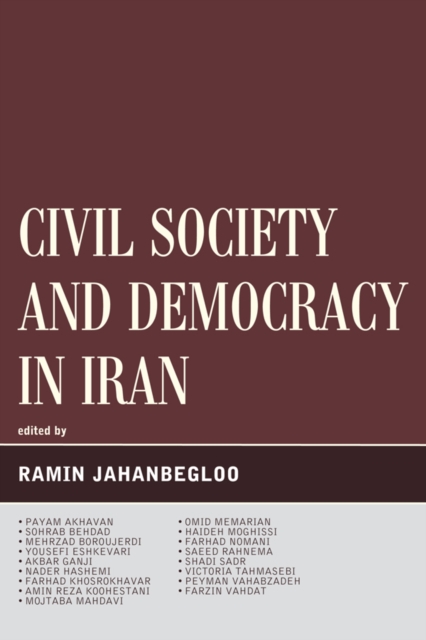
Civil society and democracy in Iran
In this timely, informative edited volume, major Iranian scholars and civic actors address some of the most pressing questions about Iranian civil society and the process of democratization in Iran. They describe the role of Iranian civil society in the process of transition to democracy in Iran and offer insight about the enduring legacy of previous social and political movements—starting with the Constitutional Revolution of 1906— in the struggle for democracy in Iran. Each contributor looks at different aspects of Iranian civil society to address the complex nature of the political order in Iran and the possibilities for secularization and democratization of the Iranian government. Various contributors analyze the impact of religion on prevailing democratic thought, discussing reformist religious movements and thinkers and the demands of religious minorities. Others provide insight into the democratic implications of recent Iranian women’s rights movements, call for secularism within government, and the pressure placed on the existing theocracy by the working class. The contributors address these and related issues in all their richness and complexity and offer a set of discussions that is both accessible and illuminating for the reader.
eBook