
Catalogue Search | MBRL


Are you sure you want to remove the book from the shelf?

{{itemTitle}}
3,822
result(s) for
"Democracy Iraq."
Sort by:

Afghanistan, Iraq, and Post-Conflict Governance
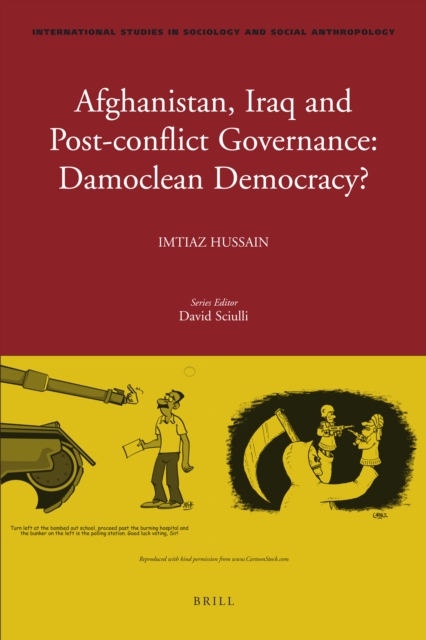
Much has been written about democratizing Afghanistan and Iraq, yet a clear-cut, theoretically-enriching, and empirically thick comparative analysis remains overdue for societies as divided as these two. To partly fill in the vacuum, this book utilizes various theories and stages of international negotiations(which catalyzed democratization in both cases) in interpreting both cases, while also distinguishing between endogenous and exogenous democratization forces. How electoral democracy came about in both cases is traced from the negotiating table through at least 4 stages and 6 chapters. The study finds democratization being more stable when left on its own momentum (as in Afghanistan) than when conflict-driven (as in Iraq). Though full-fledged democracy does not appear inevitable in either case, the study's insightful exploration of its interface in Islamic communities and as a Bush Doctrine component alerts us to fasten our seat belts before elections beckon again.
eBook


Nights in the Pink Motel
Nights in the Pink Motel is the first historical account of the strategic process that sought to reverse the negative consequences of the U.S.-led occupation of Iraq. It offers details and insights into the Iraqi insurgency and Coalition counterinsurgency available nowhere else. This book is a sustained, comprehensive account of all the conflicting factors that have made Iraq such an intractable international crisis and offers an intriguing narrative of how the American-led Coalition returned sovereignty to Iraq in June 2004, while defending Iraq's fledgling interim government against a rising insurgency and terrorism and helping ensure the success of Iraq's first national election in January 2005.The author, Robert Earle--recruited by the first U.S. ambassador to Iraq, John Negroponte, to serve as Negroponte's strategist--documents the Coalition's uncertainty about the nature of the insurgent/terrorist enemies, whose aim is to defeat democratization in Iraq. Earle's story explores the impediments frustrating the massive, 18 billion U.S. reconstruction effort and recounts the formulation of a comprehensive counterinsurgency strategy issued by Negroponte and Multinational Force-Iraq Commanding General George Casey.The title of the book is derived from the name given to the author's dingy offices a former palace of Saddam Hussein in the Green Zone of Badgad where he wrestled with developing a startegy for peace. Upon drafting the strategy, Earle learns he must be evacuated from Iraq because of massive deep vein thrombosis in his left thigh.This narrative twist takes him from the company of senior diplomats, generals, and Iraqi politicians and places him in the medical pipeline of wounded soldiers.Upon arriving home, Earle thinks his nightmare assignment in Iraq is over, but Negroponte requests that he return to Baghdad to write a long message to
the President, explaining that U.S. policy is failing and offering an alternative approach. Casey, meanwhile, also wants Earle to assess the evolution of Iraqi politics and possible outcomes of the risky January 2005 election.Returning to Iraq over the strenuous objections of State Department doctors, Earle occupies the dingy environs he calls the \"Pink Motel\" and completes his assignments, digging deeper into the realities of the international effort to end the violence and build the peace. Nights in the Pink Motel is a graphic, first-person account of the political, military, and human efforts to dispel the fog of 21st century warfare.The book is an essential contribution to understanding how all elements of national power must be combined to defeat insurgency and terror.
eBook


Afghanistan, Iraq, and Post-Conflict Governance
A comparative study is made of how conflict-terminating negotiations led to maiden democratic elections in Afghanistan and Iraq, pointing various thresholds out through specific chapters, invoking negotiations theories/stages to deepen interpretations, and prospecting the Bush Doctrine's future mileage in democratizing the Middle East.
eBook

The ayatollahs and democracy in iraq
Iraqi Shiism is undergoing profound changes, leading to new elaborations of the relationship between clerics and democratic principles in an Islamic state. The Najaf tradition of thinking about Shiite Islam and the modern state in Iraq, which first developed during the Iranian constitutional revolution of 1905–1911, rejects the principle that supreme power in an Islamic state must be in clerical hands. Grand Ayatollah Ali Sistani of Iraq stands in this tradition, and he has striven to uphold and develop it since the fall of Saddam Hussein. At key points he came into conflict with the Bush administration, which was not eager for direct democracy. Parliamentary politics have also drawn in clerics of the Dawa Party, the Sadr movement, and the Supreme Council for Islamic Revolution in Iraq, all of which had earlier been authoritarian in outlook. Is Iraqi Shiism experiencing its enlightenment moment?
eBook

The United States and the challenge of public diplomacy
\"The attacks of September 11th established a new era of US foreign policy--one marked by a profound focus on public diplomacy. With tremendous resources poured into diplomatic efforts to curry favor with foreign audiences, the efficacy of these efforts are subjected to continual debate in the American political consciousness. Some of the most crucial players in this topic--public diplomats themselves--have been missing from this discussion. Using his personal experience in NATO's Public Diplomacy Division, Snyder examines the difficulty of communicating in adversarial environments such as Iraq and Afghanistan, the complexity of multi-linguistic communications, and the importance of directing American cultural power in the national interest. The book also critically examines the use of rhetoric, new communications technologies such as the Internet and virtual worlds, and the role of non-governmental organizations that promote cross-cultural understanding and engage in private diplomacy. Finally, the book looks closely at American political culture itself to provide perspective for the nation's image abroad\"-- Provided by publisher.
Book
Iraq's Dysfunctional Democracy
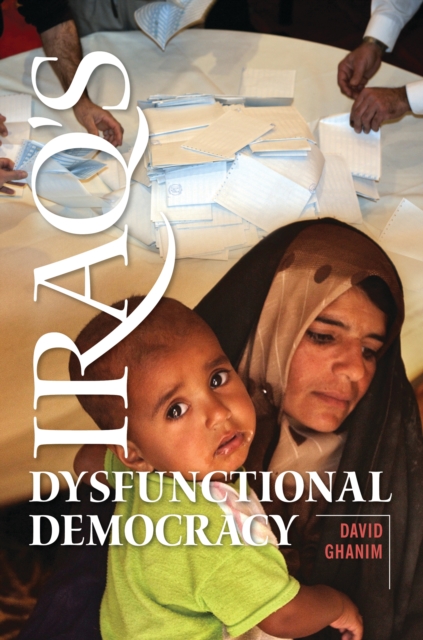
This book examines Iraq since 2003 and argues that a new democratic Iraq cannot be grounded on destructive politics of victimization, narrow nationalism, sectarian confessionalism, and a consensual, power-sharing political arrangement. This book provides an in-depth analysis from an Iraqi perspective on the political development in Iraq since 2003, thereby filling a gap that currently exists in the discussion of this embattled nation. Within its pages, author David Ghanim scrutinizes the many contradictions of the new experience in Iraq and exposes the myth of a \"new democratic Iraq.\" By providing a unflinching look at the dysfunctional nature of democracy in Iraq, the centrality of violence in Iraqi society and politics, and the deterioration of the rights and treatment of minorities and women in Iraq, Iraq's Dysfunctional Democracy exposes how the New Iraq after the nearly decade-long involvement of the United States is becoming a republic of corruption. Complex issues such as ethnic federalism, ethno-sectarian elections, politics of victimization, deceptive legitimacy, and the effects of de-Ba'athification are covered in detail, serving to illuminate the multilayered obstacles to stabilizing Iraq—a country that serves as the linchpin for the security of the Middle East as well as the rest of the world.
eBook