
Catalogue Search | MBRL


Are you sure you want to remove the book from the shelf?

{{itemTitle}}
331
result(s) for
"Democracy Latvia."
Sort by:

The quality of divided democracies : minority inclusion, exclusion, and representation in the new Europe
\"The Quality of Divided Democracies is about how democracy works, or fails to work, in ethno-culturally divided societies. It advances a new theoretical approach to assessing quality of democracy in divided societies, and puts it into practice with the focused comparison of two divided democracies - Estonia and Latvia. The book uses rich comparative data to tackle the vital questions of what determines a democracy's level of inclusiveness and the ways in which minorities can gain access to the policy-making process. It uncovers a 'voice-polarization dilemma' for minorities' inclusion in the democratic process, which has implications for academic debates on minority representation and ethnic politics, as well as practical implications for international and national institutions' promotion of minority rights\"-- Provided by publisher.
Book
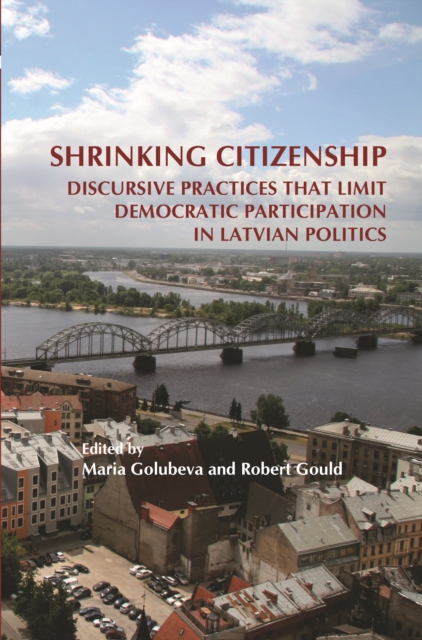
Shrinking citizenship : discursive practices that limit democratic participation in Latvian politics
The book, based on research results from a three-year study of parliamentary and media debates in Latvia, analyses the discourses of Latvian politicians and the media about nation, citizenship, cultural diversity, history and the nation-state. This is the first large-scale study of political debates in a Baltic State from the perspective of Critical Discourse Analysis (CDA). Separate chapters, by researchers from Canada, Latvia, Lithuania and the UK, analyse the intersections between national identity construction, national mythmaking, concepts of citizenship, journalistic action, press ownership and questions of control of political and media discourses. All of these have impact on the fundamental questions of the relationship between individuals and the state. The authors conclude that even after the accession to the European Union in 2004, political pressures in Latvia, as also frequently on the political Right in other EU countries, promote ethnic membership as the guiding factor of state-building.
eBook

Does NATO Enlargement Spread Democracy? Evidence from Three Cases
Does NATO enlargement spread democracy? The issue has been vigorously disputed since the mid-1990s, but no consensus has yet emerged. We test rival claims about what NATO enlargement can and cannot do by examining three cases-Slovakia, Latvia, and Croatia. We use both numerical ratings by Freedom House and our own qualitative assessment to determine whether these three became more democratic after 1994, when NATO opened the door to expansion, and before 2002, when the second round of expansion was announced. Since all three were more democratic in 2002 than they were in 1994, we conclude that the \"carrot\" of NATO membership can indeed spread democracy to prospective members.
Journal Article

Transitional Justice and Democratic Consolidation in the Post-Communist Space: A Comparative Review of the Czech Republic, Latvia and Slovakia
In this comparative review, I first evaluate scholarly findings attempting to dis/prove a relationship between transitional justice and the consolidation of democracy. Second, I outline several criteria for ‘democratic’ transitional justice in order to be able to judge transitional justice policies. Third, I examine and judge transitional justice policies of the Czech Republic, Latvia and Slovakia by these criteria. Last, I argue that transitional justice is neither a prerequisite for the successful consolidation of democracy nor inherently democratic unless it is carried out in coordination with the ideals of liberal democracy, which might support the achievement of peace and societal stability in a transition period.
Journal Article

From Eastern Bloc to European Union
More than 25 years after the fall of the Soviet Union, European integration remains a work in progress, especially in those Eastern European nations most dramatically reshaped by democratization and economic liberalization. This volume assembles detailed, empirically grounded studies of eleven states—Estonia, Latvia, Lithuania, Poland, the Czech Republic, Slovakia, Hungary, Romania, Bulgaria, Slovenia, and the former East Germany—that went on to join the European Union. Each chapter analyzes the political, economic, and social transformations that have taken place in these nations, using a comparative approach to identify structural similarities and assess outcomes relative to one another as well as the rest of the EU.
eBook

Strategic Calculation and International Socialization: Membership Incentives, Party Constellations, and Sustained Compliance in Central and Eastern Europe
This article uses a rationalist approach to explain the international
socialization of Central and Eastern Europe to liberal human rights and
democracy norms. According to this approach, socialization consists in a
process of reinforcement, and its effectiveness depends on the balance
between the international and domestic costs and benefits of compliance
over an extended period of time. EU and NATO accession conditionality has
been a necessary condition of sustained compliance in those countries of
Central and Eastern Europe that violated liberal norms initially. The
pathways and long-term outcomes of international socialization, however,
have varied with the constellations of major parties in the target states.
Whereas conditionality has been effective with liberal and mixed party
constellations, it has failed to produce compliance in antiliberal
regimes. In the empirical part of the article, these propositions are
substantiated with data on the development of liberal democracy in Central
and Eastern Europe and case studies on Slovakia and Latvia.For useful comments on earlier versions, I thank
the participants of the IDNET workshop seminars, especially Jeff Checkel,
Matthew Evangelista, Judith Kelley, Thomas Risse, and Marianne van de
Steeg. In addition, the anonymous reviewers and the editors of IO
made excellent suggestions for improving and clarifying the argument. The
research for this article was supported by a grant of the German Research
Foundation (DFG), 2000–2002.
Journal Article

Weaponizing Wedge Issues: Strategies of Populism and Illiberalism in European Election Campaigning on Facebook
The 2024 European Parliament elections took place against a backdrop of overlapping crises, including climate change, migration, and the Russian war against Ukraine, all of which have the potential to drive political polarization. These wedge issues can be strategically used in campaign communication to activate strong emotional and moral responses, exploit societal divisions, and fracture opposing coalitions. When combined with populist communication and illiberal rhetoric, they align closely with the attention dynamics of social media but also carry potential dangers for democratic discourse. However, research on how these elements are combined in parties’ campaign communication remains limited. To address this gap, we conducted a comprehensive manual quantitative content analysis of 8,748 Facebook posts from parties in 13 EU member states, examining how wedge issues were communicated and combined with populism and illiberalism during the 2024 European Parliament elections. Our analyses reveal that populist parties relied more heavily on wedge issues and combined them with populist communication and illiberal rhetoric more often than non-populist parties. Certain wedge issues appeared more conducive to these elements than others. The combination of wedge issues with populist communication and illiberal rhetoric as exclusionary rhetorical strategies thus emerges as a defining feature of populist digital campaigning. These elements can be seen as mutually reinforcing tools that structure harmful political interpretation patterns, particularly in times of polycrises. This underscores how digital platforms can be used to redefine the contours of democratic debate, making it even more essential to understand the communicative mechanisms through which parties influence public discourse in order to defend democracy.
Journal Article

A Comparative Constitutional Perspective on Israel's Nation-State Law
The article examines the contention that the Basic Law of Israel as the Nation-State of the Jewish People undermines Israel's liberal character. A comparison of the controversial provisions in the Israeli bill to the constitutional provisions of other liberal democracies reveals that it fits comfortably with the widespread practice of constitutionally affirming the particularistic identity of the nation's majority population. Such provisions tie communal identity to that of the state through state religions, dynastic heads of state, or ethnic self-determination. Moreover, the specific national identity measures in Israel's Nation-State Law—those dealing with language, immigration, and related matters—are common to the constitutions of various Western democracies in similar circumstances. While the provisions of Israel's Nation-State Law are not exceptional, the international hostility they arouse undoubtedly is.
Journal Article

A case study of a non-profit organization in an emerging economy: O fonds in Latvia
PurposeThe focus of this research is to present a case study of a small Latvian-based non-profit organization (NPO), O fonds (Oncology Foundation), and how they are an exemplar of the challenges facing NPOs in countries that do not have a strong history of NPO success. The research is supported through primary data collection of multiple interviews and correspondence with the key informant of O fonds, the CEO. These insights were supported with secondary data analysis of the history of NPOs in emerging markets, as well as the history of cancer screening in Latvia.Design/methodology/approachIn order to address the gap in the existing research literature, a single firm case analysis was selected to provide the context of the study. A series of semi-structured questions focused on O fonds branding and rebranding activities were posed to the CEO of the firm. Subsequent personal interviews were conducted to analyze and interpret the original results. This primary data were linked to secondary data about the practices of O fonds, NPOs in Latvia and the roles and challenges of NPOs in emerging markets.FindingsThe analysis of the findings from the primary data collection found that O fonds' rebranding effort helped to achieve a more stable and significant place for NPOs in the healthcare sector in Latvia and of equal importance with the Latvian general public. Tangible results included more financial support from donors, with an added benefit of increased joint marketing activities with corporate donors. Furthermore, active involvement with O fonds and medical professionals resulted from the rebrand. Also, there was an increase in referral patients to O fonds so they could attempt to get these people support for cancer screening.Research limitations/implicationsQuestions as to issues of validity from the use of a single case study, and greater issues with a single case, single interview method are acknowledged. This potential limitation, with respect to this study, was deemed to be lessened based on the use of multiple interviews and sourcing of secondary company material with the CEO of O fonds. Further support by way of sharing of a secondary data, and organizational insights helped to address any major limitations in the research methodology, as helpful information and materials that might not have been readily available, or unavailable without this level of trust, could be obtained.Practical implicationsExploring how NPOs can rebrand their firm to better meet the needs of society and be most impactful will contribute to both managerial practice and academic literature. By examining how a non-profit rebranding process occurs, in an emerging economy, and determining how effective rebranding can be utilized as a turnaround strategy, is a contribution of this research. Given the limited non-profit rebranding literature, particularly in emerging markets, this study provides exploratory insights within a new context to help propel the field of knowledge.Social implicationsNPOs have been shown to play a valuable role in communities across many regions of the world as NPOs enable citizens to come together to collectively work toward a common goal with the purpose of bettering society. With respect to the focus on O fonds their aim of increasing early detection of cancer continues to rise, but more positively, the incidents of treatable cancer are also rising as the result of the former. Regrettably, this positive trend in increased cancer screening does not equate to lower mortality rates across all countries, particularly countries in emerging markets such as Latvia.Originality/valueThis is one of the first known studies of an NPO in the emerging market of Latvia, in general, and in the Latvian healthcare sector specifically. As there is a dearth of research in this field of study, and the fact that NPO growth is a critical component of society growth in emerging markets, there is an important contribution to be made to both practice, and society, from the findings from this research.
Journal Article

“An orgy of licence?” Democracy and property redistribution in Poland and the Baltics in their international context, 1918–1926
The article argues that property redistribution was a major tool of democratization and nationalization in Poland and the Baltics. It provided governments with a means to give peasants a stake in the new democratic states, thus empower the new titular nations and at the same time marginalize former elites, who became national minorities. The most significant acts of property redistribution were the land reforms passed between 1919 and 1925, which achieved the status of founding charters of the new states. Activists of the disenfranchised minorities conceptualized minority protection as the “Magna Carta” of the international order, which should contain the principle of national self-determination and thus safeguard private property, the protection of which was not clearly regulated by international law. By examining the contingencies of the aftermath of the war in East Central Europe as well as discussions about changing conceptions of property ownership in both East Central and Western Europe, the article shows that land reform was meant to counter Bolshevism, but, at the same time, created the impression abroad that the new states themselves displayed revolutionary tendencies and did not respect private property — an image that became a significant argument of interwar territorial revisionists.
Journal Article