
Catalogue Search | MBRL


Are you sure you want to remove the book from the shelf?

{{itemTitle}}
587
result(s) for
"Democracy Nepal."
Sort by:

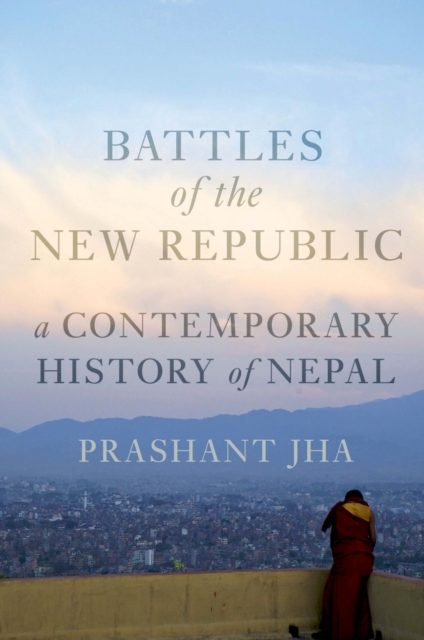
Battles of the new republic : a contemporary history of Nepal
Battles of the New Republic: A Contemporary History of Nepal is a story of Nepal's transformation from war to peace, monarchy to republic, a Hindu kingdom to a secular state, and a unitary to a potentially federal state. Part-reportage, part-history, part-analysis, part-memoir, and part-biography of the key characters, the book breaks new ground in political writing from the region. With access to the most powerful leaders in the country as well as diplomats, it gives an unprecedented glimpse into Kathmandu's high politics. But this is coupled with ground-level reportage on the lives of ordinary citizens of the hills and the plains, striving for a democratic, just and equitable society. It tracks the hard grind of political negotiations at the heart of the instability in Nepal. It traces the rise of a popular rebellion, its integration into the mainstream, and its steady decline. It investigates Nepal's status as a partly-sovereign country, and reveals India's overwhelming role. It examines the angst of having to prove one's loyalties to one's own country, and exposes the Hindu hill upper-caste dominated power structures. Battles of the New Republic is a story of the deepening of democracy, of the death of a dream, and of that fundamental political dilemma - who exercises power, to what end, and for whose benefit.
eBook


The challenge to democracy in Nepal : a political history
In 1990 Nepal's Peoples Movement reduced King Birendra from an absolute ruler to a constitutional monarch. This book is the first academic analysis of these events and places the 'revolution' of 1990 within the context of Nepali history.Louise Brown examines the background to Nepal's recent upheavals as well as covering the country's ealy history and its continuing problems of national integration. The previous, unsuccessful, democratic experiment and the nature of monarchical rule are discussed within an analysis of Nepal's social and economic modernisation. The evolution of political parties, Nepal's foreign relations and development issues - and the way in which these have moulded the political system - are explored in depth.Drawing on extensive interviews with leading politicians and influential figures the author provides a comprehensive survey of the Himalayan Kingdom's political development. This is an original contribution to the debate on democratization in the developing world.
eBook

Toward a New Nepal?
Examines current political troubles in Nepal & the prospect of democratic change. It is argued that Nepal resides at a tipping point toward political settlement & social & economic reforms & that this turnaround should be attributed not only to its political elite but also to India & the UN. Attention is given to the Maoist rebellion & the new Maoist involvement in the political system, the maneuvering of political parties, & the increasing weakness of the monarchy as Nepal veers toward a more inclusive political process. The various meanings of the catchphrase \"New Nepal\" are touched on, along with persistent challenges to any Nepalese government. The end of the Maoist war & the displayed strength of the populace are taken as recent positive signs in Nepal. D. Edelman
Magazine Article

Ethnicity and Democracy in the Eastern Himalayan Borderland
This book presents a close look at the growth, success, and proliferation of ethnic politics on the peripheries of modern South Asia, built around a case study of the Nepal ethnic group that lives in the borderlands of Sikkim, Darjeeling, and east Nepal. Grounded in historical and ethnographic research, it critically examines the relationship between culture and politics in a geographical space that is home to a diverse range of ethnic identities, showing how new modes of political representation, cultural activism, and everyday politics have emerged from the region.
eBook

Determinants of Democratization
What are the determinants of democratization? Do the factors that move countries toward democracy also help them refrain from backsliding toward autocracy? This book attempts to answer these questions through a combination of a statistical analysis of social, economic, and international determinants of regime change in 165 countries around the world in 1972–2006, and case study work on nine episodes of democratization occurring in Argentina, Bolivia, Hungary, Nepal, Peru, the Philippines, South Africa, Turkey, and Uruguay. The findings suggest that democracy is promoted by long-term structural forces such as economic prosperity, but also by peaceful popular uprisings and the institutional setup of authoritarian regimes. In the short-run, however, elite actors may play a key role, particularly through the importance of intra-regime splits. Jan Teorell argues that these results have important repercussions both for current theories of democratization and for the international community's effort in developing policies for democracy promotion.
eBook

Transforming health in Nepal: a historical and contemporary review on disease burden, health system challenges, and innovations
Introduction
Nepal witnessed a tumultuous journey over past two centuries, marked by significant political, social, and cultural shifts. From fighting British colonial encroachments in 1800s, the dynastic Rana regime (1846–1951), and democracy movements in the late 1950s, 1990s and 2000s, Nepal became a federal republic in 2008. The main objective of this review is to lay out an interpretative summary on Nepal’s epidemiological transition (includes general trends and disease specific topics) followed by discussion on health system development over key periods: historical period (–1950s), modern period (1950–1990), post-democracy (1991–2016), and post-federalization (2016–).
Methods
We conducted a scoping review of available literature using the Arksey and O’Malley framework to synthesize the key insights. Searches were performed in PubMed (via NLM), Embase and Google Scholar using a combination of search terms related to Nepal’s health system, epidemiological transition, disease burden and emerging health issues. A total of 1204 records were identified, of which 123 documents – including peer-reviewed articles, government reports and grey literature – met the inclusion criteria.
Results
Major advances in maternal and child health, nutritional health and reduction of infectious diseases have been observed in recent decades. The maternal mortality ratio (MMR) declined by 55% (1996–2016), and neonatal mortality halved (40 to 20 per 1000 live births) due to improved antenatal care, skilled birth attendance and family planning. Stunting rates fell from 66% (1996) to 25% (2022), yet rising non-communicable diseases (NCDs) pose new challenges. Communicable diseases, once dominant, have declined owing to expanded immunization and tuberculosis control. However, NCDs now account for over two thirds of deaths, driven by urbanization, ageing and lifestyle shifts. Health system gaps persist, with workforce shortages, rural–urban disparities and out-of-pocket health costs limiting access. Addressing rising health inequities, digital health innovations and service expansion is critical to achieving universal health coverage and sustaining Nepal’s health gains.
Conclusions
Nepal’s health care landscape has continuously evolved over the past centuries, coinciding with key demographic and political changes. Advances through innovation are necessary for the country’s overstretched health system to reduce the cost of health services whilst increasing quality and access.
Journal Article

Voicing subjects
Voicing Subjects traces the relation between public speech and notions of personal interiority in Kathmandu. It explores two seemingly distinct formations of voice that have emerged in the midst of the country's recent political and economic upheavals: a political voice associated with civic empowerment and collective agency, and an intimate voice associated with emotional proximity and authentic feeling. Both are produced and circulated through the media, especially through interactive technologies. The author argues that these two formations of voice are mutually constitutive and aligned with modern ideologies of democracy and neoliberal economic projects. This ethnography is set during an extraordinary period in Nepal's history that has seen a relatively peaceful 1990 revolution that re-established democracy, a Maoist civil war, and the massacre of the royal family. These dramatic changes have been accompanied by the proliferation of intimate and political discourse in the expanding public sphere, making the figure of voice ever more critical to an understanding of emerging subjectivity, structural change and cultural mediation.
eBook

Membership matters
Unable to attract enough voluntary recruits, many rebel groups rely on force to fill their ranks. Given that the group used force to compel individuals to join, a coerced conscript would be presumed unlikely to be loyal and would be expected to desert at the first opportunity. Yet, groups that have relied on coerced recruitment retain their members just as well as, if not better than, rebel armies that rely on voluntary methods of recruitment. This is a puzzle. How do rebel groups maintain allegiance and prevent desertion, especially if they rely on abduction to staff their ranks? A recruit can be forced to join a rebel group, but continuing to rely on coercion to enforce retention is too costly and not sustainable. These groups must find a way to reduce the costs of retention. The solution to this puzzle rests in the mechanisms of socialization that shape the allegiance of forcibly recruited soldiers. Socialization mechanisms are traced through three outcomes: compliance (or Type 0 socialization), role learning (Type I socialization), and norm internalization (Type II socialization). Integrating socialization theory and a rational choice analysis demonstrates that mechanisms that alter preferences through Type II socialization are effective in retaining recruits; the highest level of retention occurs when several mechanisms work in concert. Illustrative case studies of the Lord’s Resistance Army from Uganda, the Revolutionary United Front in Sierra Leone, the Maoists in Nepal, and the Liberians United for Reconciliation and Democracy (LURD) show that a reliance on child soldiers, group assets (pecuniary and nonpecuniary), organizational structure, and the nature of military contestation shape when different mechanisms are effective or not.
Journal Article