
Catalogue Search | MBRL


Are you sure you want to remove the book from the shelf?

{{itemTitle}}
375
result(s) for
"Democracy Religious aspects Islam"
Sort by:

Democracy, human rights and law in Islamic thought
\"Mohammad Abed al-Jabri is one of the most influential political philosophers in the contemporary Middle East. A critical rationalist in the tradition of Avincenna and Averroes, he emphasises the distinctive political and cultural heritage of the Arab world whilst rejecting the philosophical discourses that have been used to obscure its democratic deficit.\" \"This volume introduces an English-language audience for the first time to writings that have had a major impact on Arab political thought. Wide-ranging in scope yet focused in detail, these essays interrogate concepts such as democracy, law, and human rights, looking at how they have been applied in the history of the Arab world, and show that they are determined by political and social context, not by Islamic doctrine.\" \"Jabri argues that in order to develop democratic societies in which human rights are respected, the Arab world cannot simply rely on old texts and traditions. Nor can it import democratic models from the West. Instead, he says, a new tradition will have to be forged by today's Arabs themselves, on their own terms.\"--Jacket.
Book

Civil Islam
Civil Islamtells the story of Islam and democratization in Indonesia, the world's largest Muslim nation. Challenging stereotypes of Islam as antagonistic to democracy, this study of courage and reformation in the face of state terror suggests possibilities for democracy in the Muslim world and beyond.
Democratic in the early 1950s and with rich precedents for tolerance and civility, Indonesia succumbed to violence. In 1965, Muslim parties were drawn into the slaughter of half a million communists. In the aftermath of this bloodshed, a \"New Order\" regime came to power, suppressing democratic forces and instituting dictatorial controls that held for decades. Yet from this maelstrom of violence, repressed by the state and denounced by conservative Muslims, an Islamic democracy movement emerged, strengthened, and played a central role in the 1998 overthrow of the Soeharto regime. In 1999, Muslim leader Abdurrahman Wahid was elected President of a reformist, civilian government.
In explaining how this achievement was possible, Robert Hefner emphasizes the importance of civil institutions and public civility, but argues that neither democracy nor civil society is possible without a civilized state. Against portrayals of Islam as inherently antipluralist and undemocratic, he shows that Indonesia's Islamic reform movement repudiated the goal of an Islamic state, mobilized religiously ecumenical support, promoted women's rights, and championed democratic ideals. This broadly interdisciplinary and timely work heightens our awareness of democracy's necessary pluralism, and places Indonesia at the center of our efforts to understand what makes democracy work.
eBook
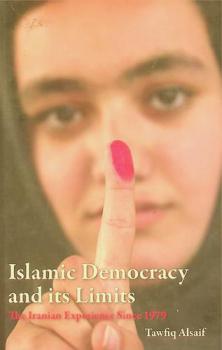
Islamic democracy and its limits : the Iranian experience since 1979
\"What is the difference between a democracy imposed by foreign powers and one developed locally, albeit within a political system dominated by religion.\" \"Tawfiq Alsaif explores Iran's every-bumpy road to democracy, by analysing the political ideologies of both the conservative and reformist trends in Iranian politics and their distance from the traditional model of liberal democracy.\" \"The religion versus democracy debate has been remarkably enriched in Iran by reformist thinkers' new approaches to questions of rationality, secularism, constitutional rights and state - religion relations. Iran's experiences provide readers with a better understanding of the potential, as well as the difficulties, motives and limitations relating to the process of democratisation in the modern Middle East.\"--Jacket.
Book

Islam, secularism, and liberal democracy : toward a democratic theory for Muslim societies
This book analyzes the relationship between religion, secularism, and liberal democracy—historically, theoretically, and in the context of the contemporary Muslim world. The central issue is: liberal democracy requires a form of secularism, yet simultaneously the main cultural and intellectual resources that Muslim democrats can draw upon are religious. A paradox, therefore, confronts the democratic theorist. Challenging the popular belief that religious politics and democratic development are structurally incompatible, three arguments are advanced: In societies where religion is a key marker of identity, the road to liberal democracy must traverse the gates of religious politics. The primary theoretical implication that emerges from this claim is that the process of democratization cannot be de-linked from debates about the normative role of religion in government. While liberal democracy requires secularism, religious traditions are not born with an inherent secular conception of politics. These ideas must be socially constructed. In the context of an emerging democracy, how secularism becomes indigenized as political value is topic that this work explores. An intimate relationship exists between religious reformation and political development. While the first often precedes the second, the processes are interlinked. Democratization does not require a privatization of religion but it does require a reinterpretation of religious ideas that are conducive to liberal democracy. By engaging in this reinterpretation, religious groups can play an important role in the development and consolidation of democracy. Overall, this book argues for a rethinking of democratic theory so that it incorporates the variable of religion in the development and social construction of liberal democracy.
eBook


The New Political Islam
Explains how various Islamists have endorsed human rights, democracy, and justice to gain influence and mobilize supporters Islamist political parties and groups are on the rise throughout the Muslim world and in Muslim communities in the West. Owing largely to the threat of terrorism, political Islam is often portrayed as a monolithic movement embodying fundamentalism and theocracy, an image magnified by the rise of populism and xenophobia in the United States and Europe. Reality, however, is far more complicated. Political Islam has evolved considerably since its spectacular rise decades ago, and today it features divergent viewpoints and contributes to discrete but simultaneous developments worldwide. This is a new political Islam, more global in scope but increasingly local in action.Emmanuel Karagiannis offers a sophisticated analysis of the different manifestations of contemporary Islamism. In a context of global economic and social changes, he finds local manifestations of Islamism are becoming both more prevalent and more diverse. Many Islamists turn to activism, still more participate formally in the democratic process, and some, in far fewer numbers, advocate violence—a wide range of political persuasions and tactics that reflects real and perceived political, cultural, and identity differences.Synthesizing prodigious research and integrating insights from the globalization debate and the literature on social movements, The New Political Islam seeks to explain the processes and factors leading to distinctive fusions of \"the global\" and \"the local\" across the landscape of contemporary political Islam. Examining converts to Islam in Europe, nonviolent Islamists with global reach, Islamist parties in Turkey, Egypt, and Tunisia, and militant Shia and Sunni groups in Syria and Iraq, Karagiannis demonstrates that Islamists have embraced ideas and practices from the global marketplace and have attempted to implement them locally. He looks closely at the ways in which Islamist activists, politicians, and militants have utilized the language of human rights, democracy, and justice to gain influence and popular support and to contend for power.
eBook


Democracy, Human Rights and Law in Islamic Thought
Throughout the Middle East, and in the west as well, there has been much discussion concerning the notion of Islamic rule and the application of shari’ah by the state. Central to these debates are the three key themes that Mohammad Abed al-Jabri looks at in this book: democracy, human rights and law. Jabri, one of the most influential political philosophers in the contemporary Middle East, examines how these three concepts have been applied in the history of the Arab world, and shows that they are determined by political and social context, not by Islamic doctrine. Jabri argues that in order to develop democratic societies in which human rights are respected, the Arab world cannot simply rely on old texts and traditions. Nor can it import democratic models from the West. Instead, he says, a new tradition will have to be forged by today’s Arabs themselves, on their own terms. Through analysis of contemporary Arab ideology, its doubts about democracy, whether human rights are universal and the role of women and minorities in Islamic society, he expounds on the most pertinent issues in modern political philosophy. This lively interrogation of the building blocs of western conceptions of a modern state is a classic text and is vital for all students of modern Islamic political thought.
eBook


Civil Democratic Islam
In the face of Islam's own internal struggles, it is not easy to see who we should support and how. This report provides detailed descriptions of subgroups, their stands on various issues, and what those stands may mean for the West. Since the outcomes can matter greatly to international community, that community might wish to influence them by providing support to appropriate actors. The author recommends a mixed approach of providing specific types of support to those who can influence the outcomes in desirable ways.
eBook