
Catalogue Search | MBRL


Are you sure you want to remove the book from the shelf?

{{itemTitle}}
535
result(s) for
"Democracy Syria."
Sort by:


Democracy's Ancient Ancestors
Democracy's Ancient Ancestors was first published in 2004. It examines the political landscape of the ancient Near East through the archive of over 3000 letters found in the royal palace of Mari. These letters display a rich diversity of political actors, encompassing major kingdoms, smaller states and various tribal towns. Mari's unique contribution to the ancient evidence is its view of tribal organization, made possible especially by the fact that its king Zimri-Lim was first of all a tribal ruler, who claimed Mari as an administrative base and source of prestige. These archaic political traditions are not essentially unlike the forms of pre-democratic Greece, and they offer fresh reason to recognize a cultural continuity between the classical world of the Aegean and the older Near East. This book bridges several areas of interest, including archaeology, ancient and classical history, early Middle and Near East, and political and social history.
eBook

Russia, humanitarian intervention and the Responsibility to Protect: the case of Syria
Western analysis perceives Russian approaches to issues of humanitarian intervention and the Responsibility to Protect (R2P) as running counter to western-inspired international norms. This debate has surfaced with some vigour over Russia's policy in the Syria conflict where, in order to protect its strategic interests in Syria, an obstructionist Moscow has been accused of ignoring humanitarian considerations and allowing time for the Assad regime to crush the opposition by vetoing a resolution threatening to impose sanctions. While Russian approaches are undoubtedly explained by a desire to maximize its growing political influence and trade advantages to serve its legitimate foreign policy interests, and while Moscow's attitudes to intervention and R2P exhibit important differences from those of the major western liberal democracies, its arguments are in fact framed within a largely rational argument rooted in 'traditional' state-centred international law. This article first highlights key arguments in the scholarly literature on intervention and R2P before going on to examine the evolution of Russian views on these issues. The analysis then focuses on the extent to which Moscow's arguments impact on international legal debates on the Libya and Syria conflicts. The article then seeks to explore how Russian approaches to intervention/R2P reflect fundamental trends in its foreign policy thinking and its quest for legitimacy in a negotiated international order. Finally, it attempts to raise some important questions regarding Russia's role in the future direction of the intervention/R2P debates.
Journal Article

Finding Space in Politics: Perceptions of Representation Among Dutch Citizens With an Immigration Background
Representative democracy functions optimally when all citizens can participate, are heard, and feel represented. We know, however, that those interested and satisfied in politics rarely reflect a cross-section of the population. What’s more, the influence exercised by certain groups in a democracy is unevenly distributed, and citizens with an immigration background feel on average less represented politically than citizens without one. This article explores how processes of perceived inclusion and exclusion influence the sense of political representation experienced by Dutch citizens with an immigration background. Our study aims to offer greater insight into perceptions of political representation and gain an understanding of what leads to these experiences. We draw on data from six focus group discussions with people who share the categorical trait of being deemed “different” by the majority society along various dimensions, such as ethnic and religious background, race, postcolonial background, and migration motive (e.g., asylum-seeking). Prior to our analysis, we expected these potential grounds for exclusion to have differing influences on perceived representation and how members of the groups relate to the political institutions. Our results show that descriptive representation is a critical start though not enough for adequate substantive political representation of people with an immigration background. Our respondents felt substantive representation fails in the Netherlands due to a lack of perceived representation in the form of politicians with shared experiences who know what it feels like to be excluded, opposed, and dismissed as problematic.
Journal Article

Media development in Syria: the Janus-faced nature of foreign aid assistance
This article intends to provide responses to some of the many unanswered questions about the making and the transformation of the uprising in Syria by exploring a new avenue of research: media development aid. Most academic interest has been oriented towards the role that the new media played at the time of the uprising; insufficient interest, by contrast, has been directed to the development of the sector in the years predating it. What emerges from this article is that the Syrian media landscape was strongly supported by international development aid during the years prior to the outbreak of the uprising of 2011. By looking at the complex structure of media aid architecture and investigating the practices and programmes implemented by some representative organisations, this article reflects on the field of media development as a new modus operandi of the West (the EU and US especially), to promote democracy through alternative and non-collateral, bottom-up support.
Journal Article

Review of Vulnerability Factors Linking Climate Change and Conflict
This systematic literature review gathers societal vulnerability factors linking climate change and conflict from 53 existing studies. The findings reveal three main points. First, four relevant factors are missing from a previous vulnerability analysis framework proposed by Pearson and Newman: land degradation/land cover, gender, customs, and geographical conditions. Second, two factors, access to technology (e.g., for climate change adaptation) and partially democratic states, are insufficiently studied. Third, classification criteria in the previous framework need revision for accuracy. Considering these points, this study proposes a modified vulnerability analysis framework and offers five suggestions for future research directions in climate security research. First, more qualitative case studies are needed to complement the quantitative work. Second, in particular, cases where conflict was avoided or cooperation was established in high vulnerability areas need further research. Third, further research is needed on understudied factors (e.g., access to technology and partial democracy) and on factors the conventional framework cannot explain (e.g., land degradation/land cover, gender, customs, and geographical conditions). Fourth, no single vulnerability factor leads to conflict in isolation, but only in interaction; their connections must be studied. Finally, case studies are needed on vulnerability factors in countries and regions that have suffered from climate change but have not experienced conflict.
Journal Article

THE ROLE OF THE MILITARY
[...] ethnoreligious differences within the armed forces may mean much in one country and little or nothing in another. [...] these factors may be reinforced or weakened by circumstances that have a bearing on revolutionary outcomes in some contexts but not in others. [...] I expect the nexus between the governments of Bahrain and Syria and their armed forces to become even closer, because events in those two countries have reminded the political elites there of just how much they rely on the loyalty of their troops.
Journal Article
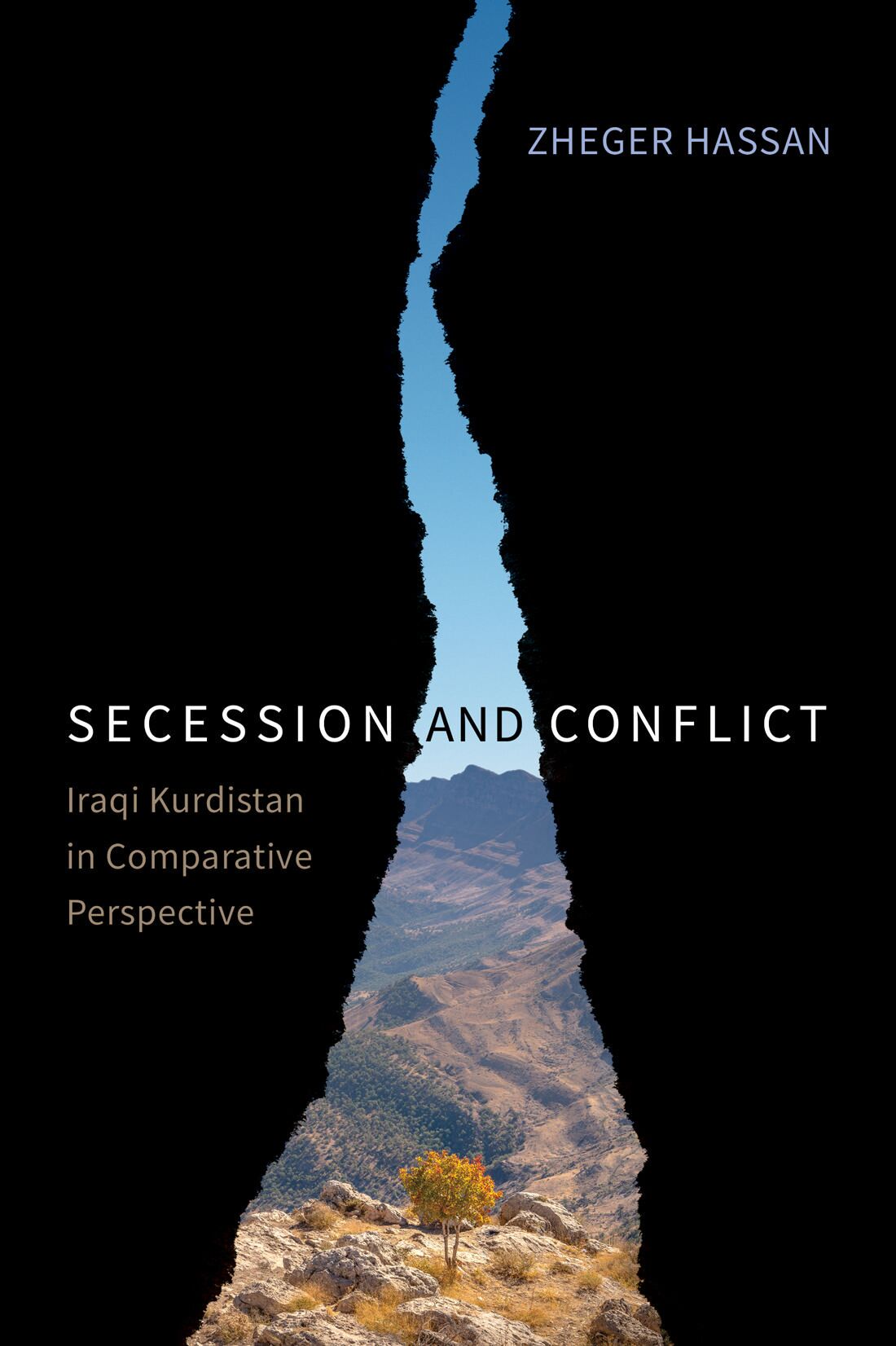
Secession and Conflict
The overthrow of Saddam Hussein in 2003 in Iraq opened the door for Kurdish nationalists to move toward outright independence. Despite the recent visibility of the Kurds in the international media, little is known about their political aspirations as citizens of an autonomous region.In Secession and Conflict Zheger Hassan employs a comparative analysis to explore why Iraqi Kurdistan, despite being better positioned institutionally and economically than the similar cases of South Sudan and Kosovo, has not declared independence. In rebuilding Iraq and fighting against the Islamic State, the Kurds have cultivated important political alliances with the US and Europe, which have garnered them international economic, military, and political support. Though now well-positioned to function as an independent state, Iraqi Kurdistan has vacillated in seizing this golden opportunity to declare independence. The apparent Kurdish willingness to forgo independence runs counter to the prevailing narratives about the Kurds in the Middle East. Hassan draws not only on the history of the Kurds but also on first-hand interviews with high-ranking officials, journalists, and nationalists to provide a new window into the calculations of Kurdish leaders as they navigate the complicated politics of Iraq.Secession and Conflict offers a new model for understanding the Kurdish question in Iraq.
eBook
Turkey Under Erdoğan: Investigating the Relationship Between Populism and Governance Quality Since 2013
Over the past decade, Turkish society and politics seem to have witnessed a populist turn. Events such as the suppression of the 2013 Gezi Park protests, the 2016 failed coup, the 2017 constitutional amendments that expanded presidential powers, the extensive influence over the judiciary, the deepened political polarization, the weakened mechanisms of political representation and mediation, the strengthening of plebiscitary relations, and the overall shift toward personalist rule have led numerous analysts of populism, as well as prominent media outlets like The Guardian, Bloomberg, The New York Times, and Foreign Policy, to label Erdoğan and the Justice and Development Party as “populists.” Accordingly, Turkey’s society and political system, particularly over the past decade, seems to have experienced a significant erosion of democratic values, norms, and institutions. Populist policies have challenged the quality of governance in the country. The main objective of this research, therefore, is to investigate the relationship between Erdoğan’s populist policies and governance quality from 2013 to 2023, utilizing critical approaches to populism and a combination of quality of governance indicators and “quality of democracy” dimensions. Statistical data is extracted from databases such as the World Governance Indicators, Varieties of Democracy Project, Freedom House, Organization for Economic Co-operation and Development, as well as The Legatum Prosperity Index. The research findings show that Erdoğan’s policies have had an adverse impact on the quality of governance and democratic values in the country during his second term in office since 2013, compared to the early years of coming to power.
Journal Article

Tolerance before Secularism: Models of Tolerance in Nineteenth-Century Arabic
By analyzing temporal language, this study investigates the intellectual origins and the conceptual history of three concepts of tolerance that emerged in the Arabic context towards the end of the 19th century. The first is a philosophical concept that has evolved within the philosophical-rational tradition and has connections to the Enlightenment and liberalism. The second is a theological concept that advocates for a harmonious interpretation of all monotheistic religions based on the assumption that all monotheistic scriptures are true. The third is a legal Islamic concept that aims to preserve the traditional imperial and hierarchical Islamic system while addressing contemporary concerns related to citizenship and political affiliation. Tolerance is frequently examined within the research framework on secularity and secularism. Before secularism emerged as a holistic doctrine in Arabic (ʿalmāniyya), discussions surrounding tolerance were closely linked to societal and political principles, including civil equality, freedom of conscience, and the neutrality of religion in the public domain.
Journal Article