
Catalogue Search | MBRL


Are you sure you want to remove the book from the shelf?

{{itemTitle}}
3,494
result(s) for
"Democratic liberalism"
Sort by:


Liberal realism
Political realism has recently moved to the centre of debates in contemporary political theory. In this monograph, Matt Sleat presents the first comprehensive overview of the resurgence of interest in realist political theory and develops a unique and original defence of liberal politics in realist terms. Through explorations of the work of a diverse range of thinkers, including Bernard Williams, John Rawls, Raymond Geuss, Judith Shklar, John Gray, Carl Schmitt and Max Weber, the author advances a theory of liberal realism that is consistent with the realist emphasis on disagreement and conflict yet still recognisably liberal in its concern with respecting individuals’ freedom and constraining political power. The result is a unique contribution to the ongoing debates surrounding realism and an original and timely re-imagining of liberal theory for the twenty-first century. This provocative work will be of interest to students and all concerned with the possibility of realising liberalism and its moral aspirations in today’s world.
eBook


The architecture of neoliberalism : how contemporary architecture became an instrument of control and compliance
The Architecture of Neoliberalism pursues an uncompromising critique of the neoliberal turn in contemporary architecture.This book reveals how a self-styled parametric and post-critical architecture serves mechanisms of control and compliance while promoting itself, at the same time, as progressive.
eBook

Con job : how Democrats gave us crime, sanctuary cities, abortion profiteering, and racial division
\"Democrats have pulled a big con job on blacks in America. Black voters have overwhelmingly supported the Democratic Party for the last fifty years. Where has that support gotten the black community? Democrats have let black incarceration rates rise and marriage rates drop. They've let entire neighborhoods become dependent on welfare, and they've let education and job opportunities dwindle. So why do black voters keep voting for progressive Democratic candidates? Crystal Wright, editor of the blog Conservative Black Chick, takes the Democratic Party to task in this bold, biting expose of the Democrats' systematic betrayal of the blindly loyal black community\"-- Provided by publisher.
Book

Composing an “Agon” and “Lettering a Public”: Democracy Between Binaries?
In response to ongoing expansion of neoliberal ideology in democratic education, this essay details a classroom experiment that attempts to “redo,” or “recraft” democracy. Recrafting democracy, in this context, takes shape in active efforts to compose an agonistic public sphere through a specific kind of “lettering a public.” As described, intentionally inefficient student efforts to “care-fully” compose, revise, and mail democratic letters allowed a more reciprocal and felt form of democratic deliberation to unfold. The essay describes the “Dear Demos” course assignment and articulates how the experiment in doing democracy might work to contest neoliberal notions of efficient, technocratic models of self-governance.
Journal Article

Racial realignment : the transformation of American Liberalism, 1932-1965
\"Few transformations in American politics have been as important as the integration of African Americans into the Democratic Party and the Republican embrace of racial policy conservatism. The story of this partisan realignment on race is often told as one in which political elites--such as Lyndon Johnson and Barry Goldwater--set in motion a dramatic and sudden reshuffling of party positioning on racial issues during the 1960s. Racial Realignment instead argues that top party leaders were actually among the last to move, and that their choices were dictated by changes that had already occurred beneath them. Drawing upon rich data sources and original historical research, Eric Schickler shows that the two parties' transformation on civil rights took place gradually over decades.Schickler reveals that Democratic partisanship, economic liberalism, and support for civil rights had crystallized in public opinion, state parties, and Congress by the mid-1940s. This trend was propelled forward by the incorporation of African Americans and the pro-civil-rights Congress of Industrial Organizations into the Democratic coalition. Meanwhile, Republican partisanship became aligned with economic and racial conservatism. Scrambling to maintain existing power bases, national party elites refused to acknowledge these changes for as long as they could, but the civil rights movement finally forced them to choose where their respective parties would stand. Presenting original ideas about political change, Racial Realignment sheds new light on twentieth and twenty-first century racial politics\"-- Provided by publisher.
Book

Must Global Politics Constrain Democracy?
As each power vies for its national interests on the world stage, how do its own citizens' democratic interests fare at home? Alan Gilbert speaks to an issue at the heart of current international-relations debate. He contends that, in spite of neo-realists' assumptions, a vocal citizen democracy can and must have a role in global politics. Further, he shows that all the major versions of realism and neo-realism, if properly stated with a view of the national interest as a common good, surprisingly lead to democracy. His most striking example focuses on realist criticisms of the Vietnam War.
Democratic internationalism, as Gilbert terms it, is really the linking of citizens' interests across national boundaries to overcome the antidemocratic actions of their own governments. Realist misinterpretations have overlooked Thucydides' theme about how a democracy corrupts itself through imperial expansion as well as Karl Marx's observations about the positive effects of democratic movements in one country on events in others. Gilbert also explodes the democratic peace myth that democratic states do not wage war on one another. He suggests instead policies to accord with the interests of ordinary citizens whose shared bond is a desire for peace.
Gilbert shows, through such successes as recent treaties on land mines and policies to slow global warming that citizen movements can have salutary effects. His theory of \"deliberative democracy\" proposes institutional changes that would give the voice of ordinary citizens a greater influence on the international actions of their own government.
eBook

Underdog politics : the minority party in the U.S. House of Representatives
\"In the first comprehensive study of the subject in decades, political scholar Matthew Green disputes the conventional belief that the minority party in the U.S. House of Representatives is an unimportant political player. Examining the record of the House minority party from 1970 to the present, and drawing from a wide range of quantitative and qualitative data, Green shows how and why the minority seeks to influence legislative and political outcomes and demonstrates that the party's efforts can succeed. The result is a fascinating appreciation of what the House minority can do and why it does it, providing readers with new insights into the workings of this famously contentious legislative chamber\"-- Provided by publisher.
Book
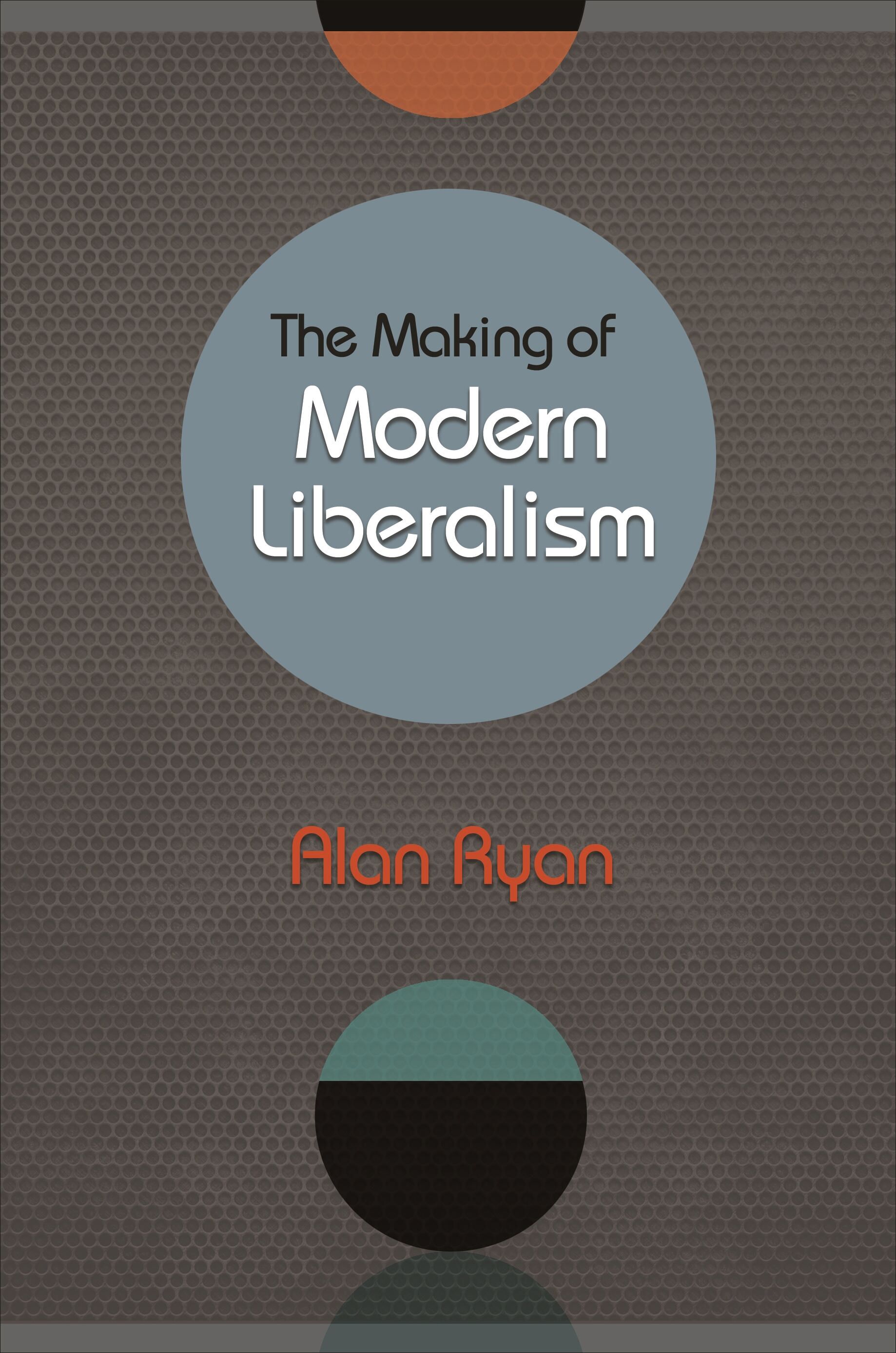
The Making of Modern Liberalism
The Making of Modern Liberalismis a deep and wide-ranging exploration of the origins and nature of liberalism from the Enlightenment through its triumphs and setbacks in the twentieth century and beyond. The book is the fruit of the more than four decades during which Alan Ryan, one of the world's leading political thinkers, has reflected on the past of the liberal tradition--and worried about its future.
Tracing the emergence of liberalism as articulated by some of its greatest proponents, including Locke, Tocqueville, Mill, Dewey, Russell, Popper, Berlin, and Rawls, the book explores key themes such as the meaning and nature of freedom, individual rights, and tolerance. It also examines how property rights fit within liberal thinking, how work and freedom are connected, and how far liberal freedoms are compatible with a socialized economy.
This is essential reading for anyone interested in political theory or the history of liberalism.
eBook