
Catalogue Search | MBRL


Are you sure you want to remove the book from the shelf?

{{itemTitle}}
170
result(s) for
"Democratization -- Africa, North"
Sort by:

The New Authoritarianism in the Middle East and North Africa
Stephen J. King considers the reasons that international and domestic efforts toward democratization have failed to take hold in the Arab world. Focusing on Egypt, Tunisia, Syria, and Algeria, he suggests that a complex set of variables characterizes authoritarian rule and helps to explain both its dynamism and its persistence. King addresses, but moves beyond, how religion and the strongly patriarchal culture influence state structure, policy configuration, ruling coalitions, and legitimization and privatization strategies. He shows how the transformation of authoritarianism has taken place amid shifting social relations and political institutions and how these changes have affected the lives of millions. Ultimately, King's forward-thinking analysis offers a way to enhance the prospects for democracy in the Middle East and North Africa.
eBook

Perceptions of democracy within the Middle East and North Africa
Support for democracy in the Middle East and North Africa constitutes an important element of democratization and the consolidation of transitions from authoritarian rule. Recent research has indicated the sharp decline of popular support for democracy because of extreme instability across the region. In this study, an empirical examination of the most recent data from the Arab Barometer (seventh wave) across 12 countries provides a comprehensive outlook on citizens' views on democracy in the region. Overall, Arab citizens across all countries included in the research believe that democracy is a better system compared with its alternatives despite its problems. More importantly, more than half the sample in each of the 12 countries agreed that democracy is associated with \"weak economic performance\", is \"indecisive\", and fails to maintain \"order\". Notwithstanding the sizable proportion of the population suggesting such negative connotations to democracy, Arab citizens generally still believe that democracy is a desirable \"core value\" to any society. Evidently, in countries that have witnessed large-scale instability, support for democracy seems to dwindle more compared with countries that have held free and fair elections and are characterized with lively party politics. This paper contributes to the literature on democratization by showing how long-term instability and mediocre economic growth lead to diminished support for democracy in developing countries.
Journal Article

THE ROLE OF DIGITAL MEDIA
During the 'Arab Spring,' young tech savvy activists led uprisings in a dozen countries across North Africa and the Middle East. At first, digital media allowed democratization movements to develop new tactics for catching dictators off guard. Eventually, authoritarian governments worked social media into their own counter-insurgency strategies. What have we learned about the role of digital media in modern protest? Digital media helped to turn individualized, localized, and community-specific dissent into structured movements with a collective consciousness about both shared grievances and opportunities for action. Adapted from the source document.
Journal Article
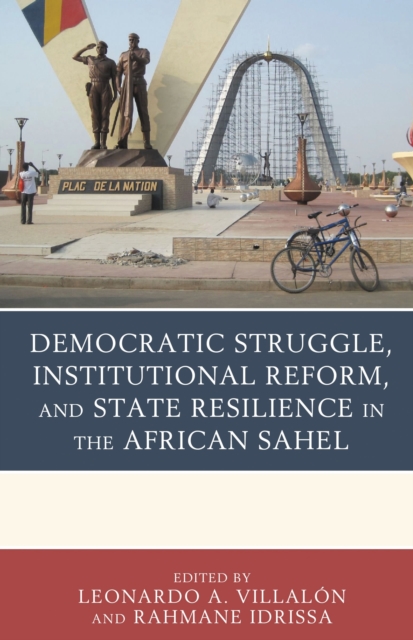
Democratic struggle, institutional reform, and state resilience in the African Sahel
Long on the periphery of both academic research and international attention, the countries of the West African Sahel currently find themselves at the center of global concerns over security, terrorism, migration, and conflict.
eBook

The Routledge Handbook to the Middle East and North African State and States System
Conflict and instability are built into the very fabric of the Middle East and North African (MENA) state and states system; yet both states and states system have displayed remarkable resilience. How can we explain this? This handbook explores the main debates, theoretical approaches and accumulated empirical research by prominent scholars in the field, providing an essential context for scholars pursuing research on the MENA state and states system. Contributions are grouped into four key themes:
Historical contexts, state-building and politics in MENA
State actors, societal context and popular activism
Trans-state politics: the political economy and identity contexts
The international politics of MENA
The 26 chapters examine the evolution of the state and states system, before and after independence, and take the 2011 Arab uprisings as a pivotal moment that intensified trends already embedded in the system, exposing the deep features of state and system-specifically their built-in vulnerability and their ability to survive.
This handbook provides comprehensive coverage of the history and role of the state in the MENA region. It offers a key resource for all researchers and students interested in international relations and the Middle East and North Africa.
eBook

PIOUS AND CRITICAL: Muslim Women Activists and the Question of Agency
Recent turmoil in the Middle East and North Africa has prompted renewed concerns about women's rights in Muslim societies. It has also raised questions about women's agency and activism in religious contexts. This article draws on ethnographic research with women activists in Indonesia, the country with the worlds largest Muslim population, to address such concerns. My fleldwork shows that some Muslim women activists in democratizing Indonesia manifest pious critical agency. Pious critical agency is the capacity to engage critically and publicly with religious texts. While some scholars have argued that pious and feminist subjectivity are inherently at odds, the emergence of pious critical agency in Indonesia demonstrates that piety and feminism can intersect in surprising and unexpected ways. Moreover, it shows that women's agency can draw on both secular and religious resources and that religion can be used to promote critical discourses on gender.
Journal Article

What Best Explains Successful Protest Cascades? ICTs and the Fuzzy Causes of the Arab Spring
It has been 15 years since the last wave of democratization. But as a region, North Africa and the Middle East were noticeably devoid of popular democracy movements—until the early months of 2011. Democratization movements had existed long before technologies like mobile phones and the Internet came to these countries. But with these technologies, people sharing an interest in democracy built extensive networks and activated collective action movements for political change. What might have made regimes more susceptible than others to these uprisings, and what might explain the relative successes of some movements over others? What role does information technology have in the modern recipe for democratization? Weighing multiple political, economic, demographic, and cultural conditions, we find that information infrastructure—especially mobile phone use—consistently appears as one of the key ingredients in parsimonious models for the conjoined combinations of causes behind regime fragility and social movement success. To understand the successes and failures of contemporary political protests, we must also assess how civil society leaders and authoritarian security forces treat communication technologies as democratically consequential.
Journal Article

No friend of democratization: Europe's role in the genesis of the 'Arab Spring'
The argument advanced in this article is that EU policies helped to trigger the so-called Arab Spring, not by intention but by default. This contention is advanced through an examination of four strands of EU policy towards those countries designated as Mediterranean Partner Countries (MPCs) under the Euro-Mediterranean Partnership Programme (EMP) and the European Neighbourhood Policy (ENP), namely: trade and economic development, political reform, the ' peace process', and regional security (including migration control). What emerges is that the EU has not just departed from its own normative principles and aspirations for Arab reform in some instances, but that the EU has consistently prioritized European security interests over ' shared prosperity' and democracy promotion in the Mediterranean. The net result is a set of structured, institutionalized and securitized relationships which will be difficult to reconfigure and will not help Arab reformers attain their goals.
Journal Article

Why teach quantum in your own time: the values of grassroots organizations involved in quantum technologies education and outreach
This paper examines the intersection of goals and values within grassroots organizations operating in the realm of quantum technologies (QT) education. It delineates a fundamental distinction between the objective to provide education and the drive to democratize learning through principles of inclusivity, accessibility, and diversity. The analysis reveals how these organizations navigate their nascent stages, grappling with the dual challenge of adhering to their foundational values while aspiring for sustainable growth and development in the highly specialized field of QT. The study uncovers the strategic approaches adopted by these entities, including efforts to create educational ecosystems and foster community engagement. The research underscores the potential vulnerabilities of these grassroots organizations, particularly in relation to the longevity and evolution of their initiatives as members transition into professional roles within the quantum sector. Through this investigation, the paper contributes to a nuanced understanding of how emerging educational organizations in the QT field balance their ideological commitments with practical growth considerations, highlighting the critical factors that influence their trajectory and impact.
Journal Article

In the pursuit of social justice during political transitions: the practices of CSOs in post-Arab Spring Tunisia
While social inequalities and regional disparities incited Tunisia's 2011 so-called 'Jasmine Revolution', successive government promises to improve the lives of the country's most marginalized people remain unfulfilled. This article explores the role of local Tunisian civil society organizations (CSOs) in compensating for the state's lack of social justice reform and equitable regional development during the COVID-19 pandemic and growing political unrest. Our findings show that during periods of significant upheaval, civil society rapidly changes to assume increasingly diverse and essential roles in providing care and safety for vulnerable people and their communities, but this responsiveness is not without difficulty. Attempts at understanding civil societies' emergent and dynamic functions needs to be deeply contextualized to incorporate the dynamic politics of democratic transitions and entanglements vis-à-vis the state in processes of change. By bringing attention to these relational entanglements, complexities and dynamic state-civil society-citizen struggles participants emphasized, our findings challenge homogenizing and normative theoretical approaches to civil society.
Journal Article