
Catalogue Search | MBRL


Are you sure you want to remove the book from the shelf?

{{itemTitle}}
1,777
result(s) for
"Democratization -- Developing countries"
Sort by:


Alliance Curse: How America Lost the Third World
Root illustrates that recent U.S. foreign policy is too often misguided, resulting in misdirected foreign aid and alliances that stunt political and economic development among partner regimes, leaving America on the wrong side of change.
eBook


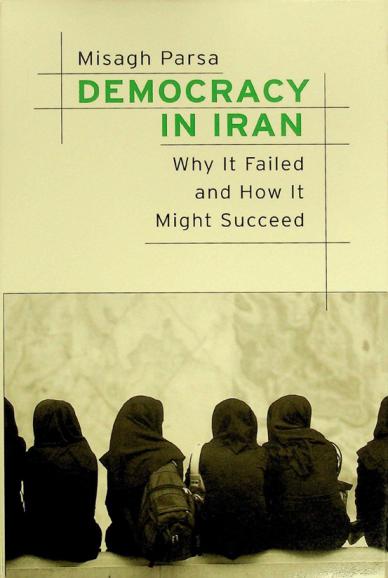
Democracy in Iran : why it failed and how it might succeed
Democracy in Iran examines democratization movements and processes in Iran over the last few decades, explains the causes of their failure, and suggests possible route to successful democratization. The book proposes a new framework for analyzing routes for democratization in the context of extremely authoritarian regimes in developing countries, specifically, the Islamic Republic of Iran. The new framework specifies the relevant variables in the economic, political, ideological, and social conditions of developing countries that determine alternative paths to democratization.-- Provided by publisher
Book

Democratic policing in transitional and developing countries
Is it possible to create democratic forms of policing in transitional and developing societies? This volume argues that policing models and practices promoted by the west are often inadequate for adoption by countries making democratic transitions because they do not adequately address issues such as human rights, equity, co-production, accountability, openness and organizational change. Therefore police reform is often limited to a \"one size fits all\" approach.
The book expands the dialogue so that discussions of democratic policing around the world are more realistic, comprehensive and sensitive to the local context. Detailed case studies on Iraq, South Africa, Northern Ireland and Kazakhstan provide a realistic assessment of the current state of policing. The editors use the studies to suggest how to promote democratic policing and other important goals of democratic reform around the world.
The volume will assist academics, policy makers, NGOs and others in tailoring a local democratic policing strategy within a broader framework to enhance socioeconomic development and citizen capacity, build social capital, reduce various forms of conflict and support human rights.
eBook

Aftershocks : great powers and domestic reforms in the twentieth century
\"Over the past century, democracy spread around the world in turbulent bursts of change, sweeping across national borders in dramatic cascades of revolution and reform. 'Aftershocks' is the first book to offer a detailed explanation for this wavelike spread and retreat--not only of democracy but also of its twentieth-century rivals, fascism and communism\"--Back cover.
Book

Law and disorder in the postcolony
Are postcolonies haunted more by criminal violence than other nation-states? The usual answer is yes. In Law and Disorder in the Postcolony, Jean and John Comaroff and a group of respected theorists show that the question is misplaced: that the predicament of postcolonies arises from their place in a world order dominated by new modes of governance, new sorts of empires, new species of wealth—an order that criminalizes poverty and race, entraps the “south” in relations of corruption, and displaces politics into the realms of the market, criminal economies, and the courts. As these essays make plain, however, there is another side to postcoloniality: while postcolonies live in states of endemic disorder, many of them fetishize the law, its ways and itsmeans. How is the coincidence of disorder with a fixation on legalities to be explained? Law and Disorder in the Postcolony addresses this question, entering into critical dialogue with such theorists as Benjamin, Agamben, and Bayart. In the process, it also demonstrates how postcolonies have become crucial sites for the production of contemporary theory, not least because they are harbingers of a global future under construction.
eBook

Determinants of Democratization
What are the determinants of democratization? Do the factors that move countries toward democracy also help them refrain from backsliding toward autocracy? This book attempts to answer these questions through a combination of a statistical analysis of social, economic, and international determinants of regime change in 165 countries around the world in 1972–2006, and case study work on nine episodes of democratization occurring in Argentina, Bolivia, Hungary, Nepal, Peru, the Philippines, South Africa, Turkey, and Uruguay. The findings suggest that democracy is promoted by long-term structural forces such as economic prosperity, but also by peaceful popular uprisings and the institutional setup of authoritarian regimes. In the short-run, however, elite actors may play a key role, particularly through the importance of intra-regime splits. Jan Teorell argues that these results have important repercussions both for current theories of democratization and for the international community's effort in developing policies for democracy promotion.
eBook

Democracy Does Cause Growth
We provide evidence that democracy has a positive effect on GDP per capita. Our dynamic panel strategy controls for country fixed effects and the rich dynamics of GDP, which otherwise confound the effect of democracy. To reduce measurement error, we introduce a new indicator of democracy that consolidates previous measures. Our baseline results show that democratizations increase GDP per capita by about 20 percent in the long run. We find similar effects using a propensity score reweighting strategy as well as an instrumental-variables strategy using regional waves of democratization. The effects are similar across different levels of development and appear to be driven by greater investments in capital, schooling, and health.
Journal Article