
Catalogue Search | MBRL


Are you sure you want to remove the book from the shelf?

{{itemTitle}}
26
result(s) for
"Democratization Psychological aspects."
Sort by:

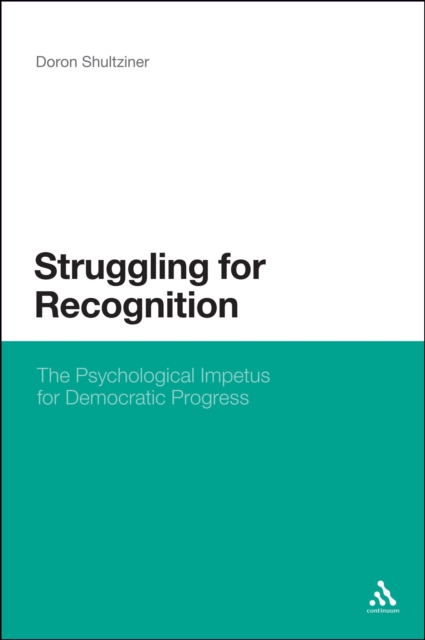
Struggling for Recognition
Struggling for Recognition posits that the drive for personal recognition is a prime motivation behind the pursuit of democracy. The book presents an alternative to the theories of social and political changes that fail to test the causal assumption they make about human psychology. The theory presented underscores a fundamental aspect of human nature: the pursuit of recognition, that is, the drive for positive self-esteem and status and the aversion of negative self-esteem and subordination. This pursuit of recognition becomes the impetus for action and is used to overcome fear as well as rational costs and benefits calculations involved in collective action. The book examines the mechanisms by which this disposition is triggered and converted into political pressures that eventually lead to democratic reforms. Struggling for Recognition will be of interest to a wide range of scholars in political science, including those researching social movements, social change, democracy, and democratic transitions. A unique multidisciplinary work, it will foster better understanding of key political events such as democratic transitions.
eBook

Kissing Matter: John Lydgate’s Lyric IOn Kissing at/I Verbum caro factum est and the Democratization of Contemplation
This article examines the use of contemplation in the religious poetry of John Lydgate, a fifteenth-century Benedictine monk and poet from England. While our understanding of Lydgate as a Benedictine poet has gained scholarly momentum, his paraliturgical writings have received less sustained attention. In this article, I argue that Lydgate democratizes the millennium-old monastic practice of lectio and meditatio by introducing a new contemplative mode for lay- and non-Latinate people in the vernacular, which I refer to as a performative lectio domini. This lectio is on an image instead of scripture and takes place within the context of the liturgy. Lydgate offers directions for participation in a liturgical ritual, enabling his readers to fully inhabit the surplus of materiality, somatic movements, and figurative language emanating from the liturgy in order for them to abandon themselves to contemplation in the crux of the rite. By looking at the poem On Kissing at Verbum caro factum est as a case study, I demonstrate how for Lydgate the liturgical kiss becomes a threshold of encounter with Christ through the incarnation. Rather than producing an emotive response, as is often characterized, the liturgical kiss fosters an intellectual illumination and deeper knowledge of Christ crucified.
Journal Article

Supporting managerial decisions: a comparison of new robotic platforms through time-driven activity-based costing within a value-based healthcare framework
Background
The advent of novel robotic platforms requires that managers base their decisions on the value these platforms generate. This study showcases how micro-costing methodologies can assist managers in the decision-making process regarding the implementation of new robotic platforms within the value-based healthcare (VBHC) framework.
Methods
We applied time-driven activity-based costing (TDABC) to evaluate cost disparities between the da Vinci and Hugo robotic systems for robot-assisted radical prostatectomy (RARP). Data were collected from consecutively enrolled patients with organ-confined prostate cancer. Basic cost information was gathered from Azienda Universitaria Integrata di Verona’s finance and pharmacy departments. We conducted cost and sensitivity analyses to evaluate the most cost-sensitive parameters.
Results
The da Vinci system incurred higher total costs for RARP than the Hugo system (€4,97.21 vs. € 3,511.73,
p
-value < 0.001) However, excluding surgical kit costs, the da Vinci platform proved less expensive (€1,481.18 vs. €1,926.18,
p
-value < 0.001). Sensitivity analyses identified surgical kit costs as the most influential parameter, followed by surgical duration and platform costs.
Conclusions
This study highlights the importance of micro-costing practices in supporting managerial decisions within a VBHC framework. When clinical outcomes are equivalent, the value of robotic platforms is related to cost savings. By using TDABC and sensitivity analyses, managers can pinpoint critical activities and parameters to optimize the effective adoption of new platforms.
Journal Article

The symbolic meaning of luxury-lite fashion brands among younger Chinese consumers
PurposeThe purpose of this study is uncovering the connotative and symbolic meaning of “luxury-lite brands” [轻奢].Design/methodology/approachApplying mixed methods, this study conducted two studies: (1) a semiotic analysis of a focus group discussion and 10 interviews on luxury-lite brands and (2) a content analysis of 248 Weiblog posts from 10 luxury-lite brands in a two-month period.FindingsStudy 1 showed that luxury-lite brands are interpreted as foreign brands that serve people's needs for social presence, and symbolize youthfulness, tastefulness, and aspirations. Other descriptors of luxury-lite brands included unique design, and less than the best quality offered by luxury brand. Study 2 suggested brands are missing out on a wide range of stories that resonate with their core segments in their social media advertising.Practical implicationsBased on the definition of luxury-lite brands in the context of China proposed by the researchers, we recommend that managers broaden topics of stories, make more effort to create desirable symbolic brand meaning, and use social media to excite these young crowds.Originality/valueLuxury-lite brands have been a cultural sign in the Chinese market projected to grow into an over 90 billion USD business by 2025. Therefore, an insightful understanding of the masstige market of China is a must for any Western masstige brand to be successful and competitive.
Journal Article
Kissing Matter: John Lydgate’s Lyric On Kissing at Verbum caro factum est and the Democratization of Contemplation
This article examines the use of contemplation in the religious poetry of John Lydgate, a fifteenth-century Benedictine monk and poet from England. While our understanding of Lydgate as a Benedictine poet has gained scholarly momentum, his paraliturgical writings have received less sustained attention. In this article, I argue that Lydgate democratizes the millennium-old monastic practice of lectio and meditatio by introducing a new contemplative mode for lay- and non-Latinate people in the vernacular, which I refer to as a performative lectio domini. This lectio is on an image instead of scripture and takes place within the context of the liturgy. Lydgate offers directions for participation in a liturgical ritual, enabling his readers to fully inhabit the surplus of materiality, somatic movements, and figurative language emanating from the liturgy in order for them to abandon themselves to contemplation in the crux of the rite. By looking at the poem On Kissing at Verbum caro factum est as a case study, I demonstrate how for Lydgate the liturgical kiss becomes a threshold of encounter with Christ through the incarnation. Rather than producing an emotive response, as is often characterized, the liturgical kiss fosters an intellectual illumination and deeper knowledge of Christ crucified.
Journal Article

Municipal employee perceptions on the use of artificial intelligence to perform their work
BackgroundOver the past 30 years of democracy, South Africa has undergone a significant technological transformation, with an increasing integration of artificial intelligence (AI) in government operations. Local governments remain reliant on manual systems, resulting in inadequate service delivery, community protests, and corruption.AimThis study assessed municipal employees’ perceptions of using AI in their work, highlighting a research gap in reliance on manual systems that contribute to poor service delivery, community unrest, and corruption. The findings underscore the need for electronic management systems and a deeper understanding of employee perceptions of AI.SettingThe study was conducted in the Buffalo City Metropolitan Municipality (BCMM) in the Eastern Cape Province of South Africa.MethodA quantitative, hypothetical-deductive study employed structured questionnaires to assess the perceptions of 255 employees in BCMM’s corporate services and finance divisions, utilising a cross-sectional, purposive sampling design.ResultsEmployees generally view AI positively, recognising its advantages. Structural Equation Modelling results indicate that a low perceived ease of use hinders performance, while positive attitudes and perceived usefulness enhance it, highlighting the challenges in experience and capacity-building for effective AI use.ConclusionMunicipalities can enhance employee performance and service delivery by implementing user-friendly systems and cultivating a positive attitude towards AI. Furthermore, strategic investment in employee retention and institutional capacity building is crucial for the effective and efficient adoption of AI.ContributionThis study contributes to the limited literature on electronic management systems and provides insights to improve employee perceptions and adoption of AI within municipal contexts.
Journal Article

Narratives of Success and Failure in Ressentiment: Assuming Victimhood and Transmuting Frustration among Young Korean Men
In this article, we examine toxic masculinity, anti-feminist, anti-globalisation, and anti-military conscription positions in the narratives of what constitutes success and failure among young South Korean men during the COVID-19 pandemic. Misogynistic accounts attributed to the globalised effects of neoliberalism and its evolution through South Korean meritocratic competition, compounded by the social isolation of the pandemic, remain a puzzle psychologically, despite their toxic emotionality. We use the analytical framework of ressentiment to consolidate references to moral victimhood, indignation, a sense of destiny, powerlessness, and transvaluation, as components of a single emotional mechanism responsible for misogynistic accounts. In an empirical plausibility probe, we analyse qualitative surveys with young South Korean men and examine the content of the far-right social sharing site Ilbe (일베) which hosts conversations of young men about success and self-improvement. Our findings show envy, shame, and inefficacious anger transvaluated into to moral victimhood, misogynistic hatred, vindictiveness against women and feminists, and anti-globalisation stances. We discuss how the content of these narratives of success and failure in ressentiment relates to the electoral win of the right-wing People Power party in March 2022 which capitalised on anti-feminist grievances. We also consider the socio-political consequences of ressentiment narratives in the highly gendered and polarised South Korean society and expand the study of ressentiment outside the context of Western democracies where it has been most extensively elaborated.
Journal Article

State-society nexus in Brazil and Venezuela and its effect on participatory governance efforts in health and other sectors
Introduction
Participatory governance is about state and society jointly responsible for political decisions and services. The origins and trajectory of participatory governance initiatives are determined by the socio-political context and specifically the nature of state-society relations. Participation by communities in health interventions has been promoted globally as a strategy to involve citizens in health decision-making but with little success. Such participatory governance in health should be seen not as a strategy alone but as a political project in which organized communities challenge the status-quo in health.
Methods
This paper deals with the wider socio-political context of participatory governance initiatives. It uses comparative politics literature to analyze socio-political context in Brazil and Venezuela, historically spanning half century prior to 2015, to assess whether it was conducive to participatory governance. The focus of this paper’s analysis particularly is on the socio-political changes that were taking place in Brazil and Venezuela in the decades of the 1980s and 1990s. Those decades formed the bedrock on which the two countries experienced democratization and a socialist transformation that has lasted well into the first decade of the twenty-first century. The situation in the health sector is also described for the two countries showing a parallel trajectory to the wider political context and that reflected the political ideology. For this assessment, we use a contemporary framework called the ‘socialist compass’ which links dynamics of power relations in various ways among three domains of power, namely, state power, economic power, and social power. Socialist compass can be used to assess whether such reforms are moving towards or against social empowerment.
Conclusion
Our analysis reveals that both Brazil and Venezuela were moving in the direction of social empowerment until at least the year 2015, just before the political turmoil started engulfing the left-leaning regimes in both the countries.
Journal Article

Unraveling the Black Mountain: Authoritarian Submission and Party Preference in Montenegro
Why do some post-communist countries regularly experience democratic overturn of power while others do not? This article analyzes the role of authoritarianism, adopting a novel approach concentrating on three separate dimensions (authoritarian submission, conventionalism, authoritarian aggression). Examining Montenegro, a country that has not changed its incumbent government since the breakdown of communism, the article argues that authoritarian submission, which stands for an obedient relationship to a political authority, is a relevant factor for the domination of a single party—the Democratic Party of Socialists (DPS). I test my assumptions using two surveys: the Montenegrin National Elections Study (2016) and a self-designed student survey. Notwithstanding the Montenegrin and Serb ethnic cleavage and economic preferences that remain significant for voting patterns, findings from both analyses confirm that submissive tendencies are important for voting behavior both for the national sample and for the educated young. This emphasizes the importance of psychological factors and the need to break submissive mindsets for successful democratic transformation in post-communist countries.
Journal Article