
Catalogue Search | MBRL


Are you sure you want to remove the book from the shelf?

{{itemTitle}}
107
result(s) for
"Demoniac possession."
Sort by:

The exorcist
A young girl becomes possessed by the devil and causes several violent deaths before she can be cured.
Book

Demonic Possession and Exorcism in Early Modern England
This book is exclusively devoted to demonic possession and exorcism in early modern England. It offers modernized versions of the most significant early modern texts on nine cases of demonic possession from the period 1570 to 1650, the key period in English history for demonic possession. The nine stories were all written by eyewitnesses or were derived from eyewitness reports. They involve matters of life and death, sin and sanctity, guilt and innocence, of crimes which could not be committed and punishments which could not be deserved. The nine critical introductions which accompany the stories address the different strategic intentions of those who wrote them. The modernized texts and critical introductions are placed within the context of a wide-ranging general Introduction to demonic possession in England across the period 1550 to 1700.
eBook


Demonic Possession and Exorcism
This is a highly original study of demon possession and the ritual of exorcism, both of which were rife in early modern times, and which reached epidemic proportions in France.Catholics at the time believed that the Devil was everywhere present, in the rise of the heretics, in the activities of witches, and even in the bodies of pious young women. The rite of exorcism was intended to heal the possessed and show the power of the Church - but it generated as many problems as it resolved. Possessed nuns endured frequently violent exorcisms, exorcists were suspected of conjuring devils, and possession itself came to be seen as a form of holiness, elevating several women to the status of living saints. Sarah Ferber offers a challenging study of one of the most intriguing phenomena of early modern Europe. Looking towards the present day, the book also argues that early modern conflicts over the Devil still carry an unexpected force and significance for Western Christianity.
eBook

The haunting of tram car 015
Cairo, 1912. The case started simply enough for the Ministry of Alchemy, Enchantments, and Supernatural Entities: handle a possessed tram car. Soon, however, Agent Hamed Nasr and his new partner, Agent Onsi Youssef, are exposed to another side of Cairo stirring with suffragettes, secret societies, and sentient automatons. It's a race against time to protect the city from an encroaching danger that crosses the line between the magical and mundane.
BOOK

Case of Witchcraft
As a Catholic priest, Grandier was an influential figure in the Loudun community and local government. A brilliant speaker, he was popular with his parishioners. But he had enemies, including Cardinal Richelieu and Louis XIII, who was trying to wrest political autonomy from local governors and centralize power in Paris. Grandier's support of the governor of Loudun meant that he was seen as an enemy of the crown. In addition, the debonair priest's romantic intrigues brought him into conflict with some of the town's most influential power brokers.
eBook
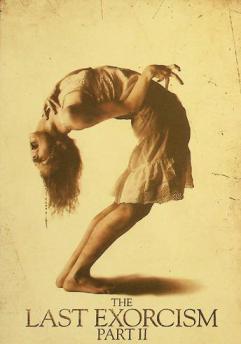
The last exorcism. Part II
At a New Orleans halfway house for girls, Nell Sweetzer attempts to recover from her trauma, but the demon that possessed her returns with an even more horrific plan.
DVD

Exorcism and Its Texts
Exorcism and demonic possession appear as recurrent motifs in early modern Spanish and English literatures. InExorcism and Its Texts, Hilaire Kallendorf demonstrates how this 'infection' was represented in some thirty works of literature by fifteen different authors, ranging from canonical classics like Shakespeare, Cervantes, Ben Jonson, and Lope de Vega, to obscure works by anonymous writers.
From comic and tragic drama to picaresque narrative and eight other genres, possession worked as a paradigm through which authors could convey extraordinary experience, including not only demonic possession but also madness or even murder. The devil was thought to be able to enter the bodily organs and infect memory, imagination, and reason. Some came to believe that possession was tied to enthusiasm, poetic frenzy, prophecy, and genius. Authors often drew upon sensational details of actual exorcisms. In some cases, such as in Shakespeare, curing the body (and the body politic) meant affirming cultural authority; in others, as with Zamora, it clearly meant subverting it. Drawing on the disciplines of literary theory and history,Exorcism and its Textsis the first comprehensive study of this compelling topic.
eBook

Christine : a novel
\"It's love at first sight for high school student Arnie Cunningham when he and his best friend Dennis Guilder spot the dilapidated 1958 red-and-white Plymouth Fury for sale--dubbed \"Christine\" by its original cantankerous owner--rusting away on a front lawn of their suburban Pennsylvania neighborhood. Dennis knows that Arnie's never had much luck in the popularity department, or really taken an interest in owning a car...but Christine quickly changes all that. Arnie suddenly has the new-found confidence to stick up for himself, going as far as dating the most beautiful girl at Libertyville High--transfer student Leigh Cabot -- even as a mysteriously restored Christine systematically and terrifyingly consumes every aspect of Arnie's life. Dennis and Leigh soon realize that they must uncover the awful truth behind a car with a horrifying and murderous history. Hell hath no fury like a woman scorned, and heaven help anyone who gets in Christine's way...\"-- Page 4 of cover.
Book

Russian tales of demonic possession
Russian Tales of Demonic Possession: Translations of Savva Grudtsyn and Solomonia is a translation from the Russian of two stories of demonic possession, of innocence lost and regained. The original versions of both tales date back to the seventeenth century, but the feats of suffering and triumph described in them are timeless. Aleksei Remizov, one of Russia’s premiere modernists, recognized the relevance of the late-medieval material for his own mid-twentieth-century readers and rewrote both tales, publishing them in 1951 under the title The Demoniacs. The volume offers a new translation of the original Tale of Savva Grudtsyn as well as first-ever translations of The Tale of The Demoniac Solomonia and Remizov’s Demoniacs. Russian Tales of Demonic Possession opens with an introduction that interprets and contextualizes both the late-medieval and the twentieth-century tales. By providing new critical interpretations of all four tales as well as a short discussion of the history of demons in Russia, this introduction makes an eerily exotic world accessible to today’s English-speaking audiences. Savva Grudtsyn and Solomonia, the protagonists of the two tales, are young people poised on the threshold of adulthood. When demons suddenly appear to confront and overmaster them, each of them teeters on the brink of despair in a world filled with chaos and temptation. The Tale of Savva Grudtsyn and The Tale of the Demoniac Solomonia propel us forcibly into the realm of good and evil and pose hard questions: Why does evil afflict us? How does it manifest itself? How can it be overcome? Aleksey Remizov’s modernist re-castings of the two stories offer compelling evidence that these same questions are very much with us today and are still in need of answers.
eBook