
Catalogue Search | MBRL


Are you sure you want to remove the book from the shelf?

{{itemTitle}}
28
result(s) for
"Deng, Xiaoping, 1904-1997."
Sort by:

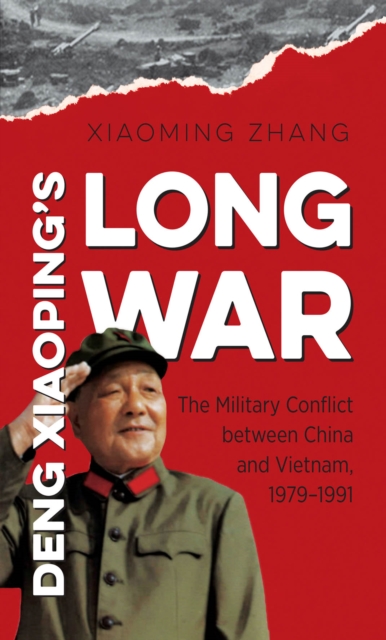
Deng Xiaoping's Long War
The surprise Chinese invasion of Vietnam in 1979 shocked the international community. The two communist nations had seemed firm political and cultural allies, but the twenty-nine-day border war imposed heavy casualties, ruined urban and agricultural infrastructure, leveled three Vietnamese cities, and catalyzed a decadelong conflict. In this groundbreaking book, Xiaoming Zhang traces the roots of the conflict to the historic relationship between the peoples of China and Vietnam, the ongoing Sino-Soviet dispute, and Chinese leader Deng Xiaoping's desire to modernize his country. Deng's perceptions of the Soviet Union, combined with his plans for economic and military reform, shaped China's strategic vision. Drawing on newly declassified Chinese documents and memoirs by senior military and civilian figures, Zhang takes readers into the heart of Beijing's decision-making process and illustrates the war's importance for understanding the modern Chinese military, as well as China's role in the Asian-Pacific world today.
eBook
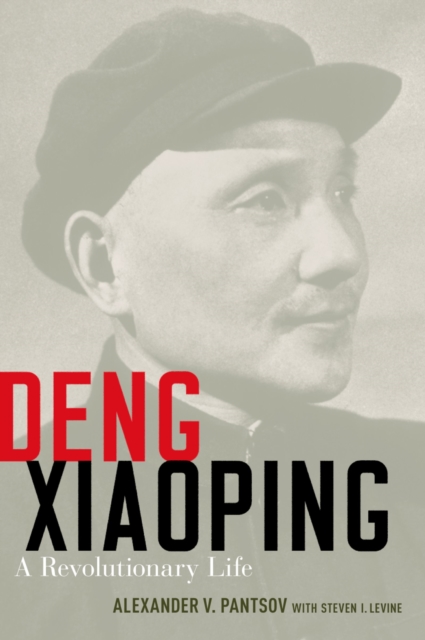
Deng Xiaoping
Deng Xiaoping joined the Chinese Communist movement as a youth and rose in its ranks to become an important lieutenant of Mao's from the 1930s onward. Two years after Mao's death in 1976, Deng became the de facto leader of the Chinese Communist Party and the prime architect of China's post-Mao reforms. Abandoning the Maoist socio-economic policies he had long fervently supported, he set in motion changes that would dramatically transform China's economy, society, and position in the world. Three decades later, we are living with the results. China has become the second largest economy and the workshop of the world. And while it is essentially a market economy (\"socialism with Chinese characteristics\"), Deng and his successors ensured the continuation of CCP rule by severely repressing the democratic movement and maintaining an iron grip on power. When Deng died at the age of 92 in 1997, he had set China on the path it is following to this day. Alexander Pantsov and Steven Levine's new biography of Deng Xiaoping does what no other biography has done: based on newly discovered documents, it covers his entire life, from his childhood and student years to the post-Tiananmen era. Thanks to unprecedented access to Russian archives containing massive files on the Chinese Communist Party, the authors present a wealth of new material on Deng dating back to the 1920s. In a long and extraordinary life, Deng navigated one epic crisis after another. Born in 1904, Deng, like many Asian revolutionary leaders, spent part of the 1920s in Paris, where he joined the CCP in its early years. He then studied in the USSR just as Stalin was establishing firm control over the Soviet communist party. He played an increasingly important role in the troubled decades of the 1930s and 1940s that were marked by civil war and the Japanese invasion. He was commissar of a communist-dominated area in the early 1930s, loyal henchman to Mao during the Long March, regional military commander in the anti-Japanese war, and finally a key leader in the 1946-49 revolution. During Mao's quarter century rule, Deng oscillated between the heights and the depths of power. He was purged during the Cultural Revolution, only to reemerge after Mao's death to become China's paramount leader until his own death in 1997. This objective, balanced, and unprecedentedly rich biography changes our understanding of one of the most important figures in modern history.
eBook

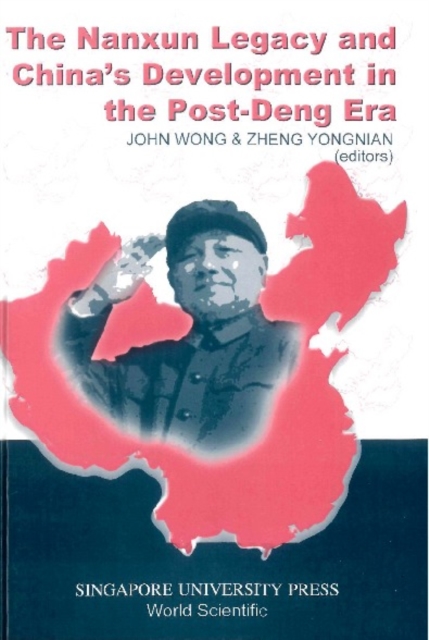
The Nanxun Legacy and China's Development in the Post-Deng Era
In the spring of 1992, Deng Xiaoping made a historical tour of south China, popularly known as the Nanxun (\"southern tour\"). During the tour, he boldly called for more radical economic reform and further opening up of China. The Nanxun has become a political landmark in the history of the People's Republic of China, much like great events such as the Great Leap Forward, the Cultural Revolution, and the 1989 Tiananmen crackdown. Deng Xiaoping has left his own legacy for the country. The Nanxun belongs to Deng, just as the 1911 revolution belongs to Sun Yat-sen and the communist revolution to Mao Zedong.
In this collection of articles, leading China scholars and experts analyze how the Nanxun has sparked off dynamic economic growth in China and drastically changed the political and social landscape of the country.
eBook

Deng Xiaoping and the transformation of China
\"Perhaps no one in the twentieth century had a greater long-term impact on world history than Deng Xiaoping. And no scholar of contemporary East Asian history and culture is better qualified than Ezra Vogel to disentangle the many contradictions embodied in the life and legacy of China's boldest strategist. Once described by Mao Zedong as a 'needle inside a ball of cotton,' Deng was the pragmatic yet disciplined driving force behind China's radical transformation in the late twentieth century. He confronted the damage wrought by the Cultural Revolution, dissolved Mao's cult of personality, and loosened the economic and social policies that had stunted China's growth. Obsessed with modernization and technology, Deng opened trade relations with the West, which lifted hundreds of millions of his countrymen out of poverty. Yet at the same time he answered to his authoritarian roots, most notably when he ordered the crackdown in June 1989 at Tiananmen Square. Deng's youthful commitment to the Communist Party was cemented in Paris in the early 1920s, among a group of Chinese student-workers that also included Zhou Enlai. Deng returned home in 1927 to join the Chinese Revolution on the ground floor. In the fifty years of his tumultuous rise to power, he endured accusations, purges, and even exile before becoming China's preeminent leader from 1978 to 1989 and again in 1992. When he reached the top, Deng saw an opportunity to creatively destroy much of the economic system he had helped build for five decades as a loyal follower of Mao-and he did not hesitate.\"-- Publisher's description.
Book
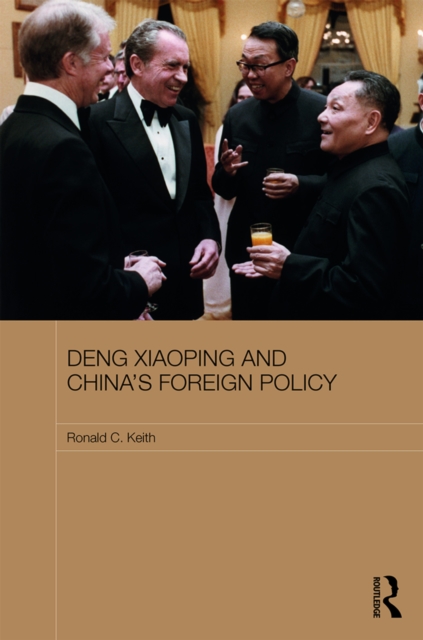
Deng Xiaoping and China's Foreign Policy
Deng Xiaoping is widely acknowledged as the principal architect of China's economic reforms, but how far was he also responsible for shaping China's foreign policy that emphasized peace and development? This book explores Deng's foreign policy and shows how he established basic principles for China to have a foreign policy that supported economic development, stressed \"harmony\" in the world rather than \"hegemony,\" and which avoided conflict and nurtured a peaceful approach. The book outlines how Deng worked to normalize relations with both the United States and the Soviet Union, how he was disappointed by the lack of reciprocation by the United States, where relations are still portrayed in terms of \"the China threat,\" and how the principles established by Deng continue to be adhered to.
eBook

From silk to silicon : the story of globalization through ten extraordinary lives
The story of globalization, the most powerful force in history, as told through the life and times of ten people who changed the world by their singular, spectacular accomplishments. This is the first book to look at the history of globalization through the lens of individuals who did something transformative, as opposed to describing globalization through trends, policies, or particular industries. From Silk to Silicon tells the story of who these men and women were, what they did, how they did it and how their achievements continue to shape our world today.
BOOK

Deng Xiaoping and the Transformation of China
No one in the twentieth century had a greater impact on world history than Deng Xiaoping. And no scholar is better qualified than Ezra Vogel to disentangle the contradictions embodied in the life and legacy of China’s boldest strategist—the pragmatic, disciplined force behind China’s radical economic, technological, and social transformation.
eBook