
Catalogue Search | MBRL


Are you sure you want to remove the book from the shelf?

{{itemTitle}}
29,244
result(s) for
"Denmark."
Sort by:

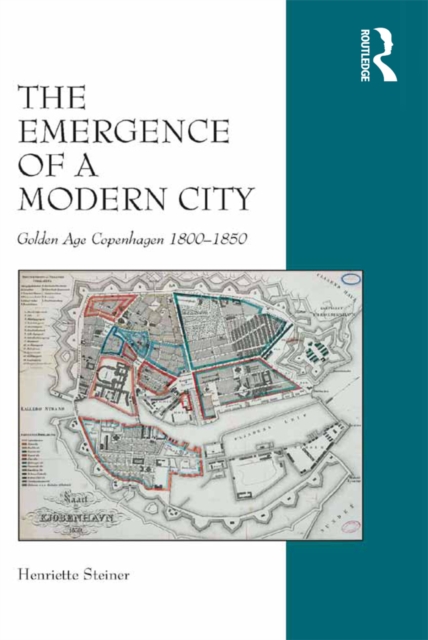
The Emergence of a Modern City
This book is an exploration of how urban life in Copenhagen, in the period known as the Golden Age (c. 1800 to 1850), was experienced and structured socially, institutionally, and architecturally. It draws on a broad historical source material - spanning urban anecdotes, biography, philosophy, literature, and visual culture - to do so. The book argues that Copenhagen emerged as a modern city at this time, despite the fact that the Golden Age never witnessed the appearance of the main characteristics of the modernisation of cities associated with industrialisation, such as street lighting, sewer systems, and railroads. The book outlines the historical and topographical context of Copenhagen in the Golden Age with a special focus on the works of the most prominent architect of the period, C.F. Hansen. The characterisation of the city is complemented by investigations into writings of three citizens: the philosopher Soren Kierkegaard, the novelist Thomasine Gyllembourg, and the criminal Ole Kollerod, who all take an interest in the city's institutional and urban structures as well as their own place in it. From these different sources, a picture is painted of urban life and thought at a time when the city began to take on characteristics of ambiguity and alienation in European thinking, while at the same time the city itself retained some pre-modern motifs of a symbolic order. This transformation is set in a larger process of cultural re-orientation, from traditional Baroque culture to what might be termed Romantic culture. The book reconsiders the significance of this transformation for the emergent order of the modern European city in the nineteenth century and thus of the very foundation on which our own urban culture rests.
eBook


Family Upheaval
Pakistani migrant families in Denmark find themselves in a specific ethno-national, post-9/11 environment where Muslim immigrants are subjected to processes of non-recognition, exclusion and securitization. This ethnographic study explores how, why, and at what costs notions of relatedness, identity, and belonging are being renegotiated within local families and transnational kinship networks. Each entry point concerns the destructive-productive constitution of family life, where neglected responsibilities, obligations, and trust lead not only to broken relationships, but also, and inevitably, to the innovative creation of new ones. By connecting the micro-politics of the migrant family with the macro-politics of the nation state and global conjunctures in general, the book argues that securitization and suspicion-launched in the name of \"integration\"-escalate internal community dynamics and processes of family upheaval in unpredicted ways.
eBook

The Urban Lifeworld
Urban conditions are crucial to our experience of modernity, and, as reflected by art, literature and popular culture, have influenced contemporary ideas of what urban life is about.The Urban Lifeworld contributes to our understanding of the cultural role of cities by offering new insight into the analysis of urban experience. Two exceptional cities, New York and Copenhagen, are the focus of this exploration of cultural representations of urban life, which investigates the contrasts between perceptions and formation of the urban lifeworld.Integrating sociological, aesthetic and anthropological approaches to urban questions, this collection of essays presents a new vision of the cityscape which will enrich both academic debate and public life.
eBook

Time Out Copenhagen
Time Out Guides is rated top guidebook brand by Which? Survey, for level of detail, photography, quality of maps, ease of finding information and value for money. Time Out Copenhagen gives the lowdown on where to go and what to see in this most civilised of cities. With the help of local experts, the guide takes you beyond the cliches - into the neighbourhoods of Vesterbro, Norrebro, Osterbro and Frederiksberg, where most Copenhageners live and go out, sampling the full extent of its museums, restaurants, cafes and shops. Praised and admired for its cycling culture, New Nordic cuisine and contemporary architecture, Copenhagen is enjoying a much-deserved heyday. Though still celebrated for its historic royal palaces and mid-century design, it's now taken on a new identity as the style, gastronomic and green capital of Europe. The city's new daily food market, Torvehallerne, is buzzing; its bike lanes are an inspiration for urban planners worldwide; and its citizens are impeccably dressed.
Book
Copenhagen Tales
The Danish love of story-telling is richly demonstrated in this unique anthology of seventeen tales drawn from the canon of Danish literature over the past two hundred years. Together these stories present a unique view of the city of Copenhagen.
eBook


Figuration Work
What role should students take in shaping their education, their university, and the wider society? These questions have assumed new importance in recent years as universities are reformed to become more competitive in the “global knowledge economy.” With Denmark as the prism, this book shows how negotiations over student participation — influenced by demands for efficiency, flexibility, and student-centered education — reflect broader concerns about democracy and citizen participation in increasingly neoliberalised states. Combining anthropological and historical research, Gritt B. Nielsen develops a novel approach to the study of policy processes and opens a timely discussion about the kinds of future citizens who will emerge from current reforms.
eBook