
Catalogue Search | MBRL


Are you sure you want to remove the book from the shelf?

{{itemTitle}}
800
result(s) for
"Dentistry, Operative."
Sort by:

When to intervene in the caries process? An expert Delphi consensus statement
ObjectivesTo define an expert Delphi consensus on when to intervene in the caries process and on existing carious lesions using non- or micro-invasive, invasive/restorative or mixed interventions.MethodsNon-systematic literature synthesis, expert Delphi consensus process and expert panel conference.ResultsCarious lesion activity, cavitation and cleansability determine intervention thresholds. Inactive lesions do not require treatment (in some cases, restorations will be placed for reasons of form, function and aesthetics); active lesions do. Non-cavitated carious lesions should be managed non- or micro-invasively, as should most cavitated carious lesions which are cleansable. Cavitated lesions which are not cleansable usually require invasive/restorative management, to restore form, function and aesthetics. In specific circumstances, mixed interventions may be applicable. On occlusal surfaces, cavitated lesions confined to enamel and non-cavitated lesions radiographically extending deep into dentine (middle or inner dentine third, D2/3) may be exceptions to that rule. On proximal surfaces, cavitation is hard to assess visually or by using tactile methods. Hence, radiographic lesion depth is used to determine the likelihood of cavitation. Most lesions radiographically extending into the middle or inner third of the dentine (D2/3) can be assumed to be cavitated, while those restricted to the enamel (E1/2) are not cavitated. For lesions radiographically extending into the outer third of the dentine (D1), cavitation is unlikely, and these lesions should be managed as if they were non-cavitated unless otherwise indicated. Individual decisions should consider factors modifying these thresholds.ConclusionsComprehensive diagnostics are the basis for systematic decision-making on when to intervene in the caries process and on existing carious lesions.Clinical relevanceCarious lesion activity, cavitation and cleansability determine intervention thresholds. Invasive treatments should be applied restrictively and with these factors in mind.
Journal Article
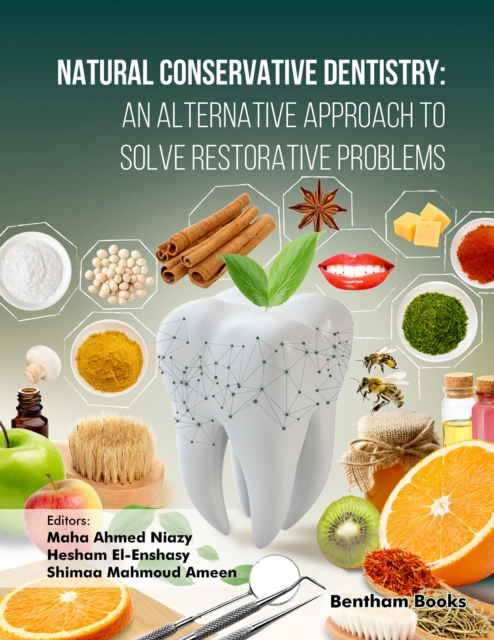
Natural Conservative Dentistry: An Alternative Approach to Solve Restorative Problems
In nature lies the solution to restore teeth with minimal damage. In this groundbreaking book, the management of dental challenges is presented from a new perspective. Natural Conservative Dentistry: An Alternative Approach to Solve Restorative Problems provides evidence-based solutions to dental challenges to researchers, practitioners and dental service providers. The main attribute of all these solutions is that they are all derived from natural ingredients. Natural ingredients are an effective alternative for dental care and management in contrast to synthetic products that have multiple side effects. This book fills a knowledge gap on alternative and sustainable solutions derived from nature to respond effectively to dental challenges encountered in dental treatment for the conservation of the tooth. It is a compilation of the work of expert dentists that has been carried out in clinics for the management of dental problems. Key Features - Provides an insightful look at the prevention of dental diseases through evidence-based interventions using natural products in 8 referenced chapters - Contains valuable contributions in restorative dentistry, such as caries prevention, enamel and dentin remineralization, dentin biomodification, dentin desensitization, vital pulp therapy, antioxidants, and tooth bleaching - Provides an update on the current status of different ingredients used in oral health care products developed for commercial markets - Includes notes on pathophysiology and diagnosis on specific conditions and sources of natural ingredients The book is a valuable reference for trainees and professionals who want to enhance their restorative dentistry practice in the clinic. Readership Dentistry residents, clinicians and administrators
eBook

Effect of a virtual reality simulator for preclinical instruction of operative dentistry on level of competence of undergraduate dental students
Background
This study aimed to assess the effect of a virtual reality (VR) simulator for instruction of restorative dentistry on the level of competence of undergraduate dental students.
Methods
This case-control study was conducted on 55 third-year dental students, who were randomly assigned to the intervention (
n
= 30) and control (
n
= 25) groups. Both groups received the same theoretical instruction for preparation of a Class I cavity in a mandibular first molar. The control group then practiced cavity preparation on acrylic teeth for 8 h. The intervention group practiced by using a VR simulator for 4 h and practicing on acrylic teeth for 4 h. Both groups participated in a pretest on acrylic teeth. The intervention group had one posttest after using the VR simulator and another posttest after practicing on acrylic teeth. The control group also had two posttests after the first and second phases of practice. The performance of the two groups was scored blindly by three examiners. Data were analyzed by independent and paired t-test, Chi-square test, Fisher’s exact test, and Mann-Whitney U test (alpha = 0.05).
Results
The improvement in overall performance was significantly greater in the intervention group than the control group (
P
< 0.05). Progression in the first step (pretest-posttest 1) was significantly greater in 5 out of 9 criteria in the intervention group than the control group (
P
< 0.05). Progression in the second step (posttest 1-posttest 2) was significantly greater in the intervention group than the control group in 6 out of 9 criteria (
P
< 0.05). The reduction in catastrophic errors in the first posttest compared to pretest was significantly greater in the intervention group than the control group (
P
= 0.000 for the VR group and
P
= 0.006 for the control group).
Conclusions
VR simulation can improve the quality of learning of preclinical restorative dentistry, and may be used as an educational supplement in dental curricula.
Journal Article

Reframing perceptions in operative dentistry relating evidence-based dentistry and clinical decision making: a cross-sectional study among Jordanian dentists
Background
The aim of the current study was to investigate current dental practice in operative dentistry in Jordan, and the relationship between evidence-based dentistry in caries research and decision making in clinical practice in operative dentistry.
Materials and methods
This cross-sectional study was conducted through a survey of dentists in Jordan. The survey aimed to explore the degree of knowledge and practice of evidence-based dentistry in caries research the dentists possess regarding clinical decision making in operative dentistry. The sample size was composed of (5811) dentists whom registered in Jordan Dental Association database. Descriptive statistics were generated and Chi-square test was used to examine associations between the different variables and the significance level was set at P < 0.05.
Results
4000 responses were collected from the web-survey, response rate (68.83%). Nearly half of the surveyed dentists focus on the chief complaint of their patients (n = 2032, 50.8%) rather than doing full mouth assessment. Nearly two-thirds of dentists (n = 2608, 65.2%) treat lesions confined to enamel with operative treatment. Half of dentists use operative treatment when asked about the routine management of radiographically detected proximal caries confined to enamel. When treating incipient lesions, the majority (n = 3220, 80.5%) use preventive treatment. Three-quarters of dentists (n = 2992, 74.8%) treat deep dentinal caries by removing just the soft infected carious dentin, and treated old failed restorations with replacement.
Conclusion
In operative dentistry, the evidence-based research is not implemented clinically. To optimize relationship between evidence-based dentistry and clinical decision-making, dental curriculum has to be updated and modified constantly.
Journal Article

Enhancement of Skill Competencies in Operative Dentistry Using Procedure-Specific Educational Videos (E-Learning Tools) Post-COVID-19 Era—A Randomized Controlled Trial
E-learning has completely transformed how people teach and learn, particularly in the last three pandemic years. This study evaluated the effectiveness of additional procedure-specific video demonstrations through E-learning in improving the knowledge and practical preclinical skills acquisition of undergraduate dental students in comparison with live demonstration only. A randomized controlled trial was conducted for the second-year dental students in the College of Dentistry, Jouf University, to evaluate the impact of E-learning-assisted videos on preclinical skill competency levels in operative dentistry. After a brief introduction to this study, the second-year male and female students voluntarily participated in the survey through an official college email. Fifty participants were enrolled in the study after obtaining informed consent. The participants were randomly divided into two groups, twenty-five each. The control group (Group A) was taught using traditional methods, and the intervention group (Group B) used E-learning-assisted educational videos and traditional techniques. An objective structured practical examination (OSPE) was used to assess both groups. The faculty members prepared a structured, standardized form to evaluate students. After OSPE, statistical analysis was done to compare the grades of OSPE between Group A and Group B. Logistic regression analysis was done to express the effect of components of the OSPE on gender, cumulative gross point average (CGPA), Group A and Group B. The results showed a significant difference in the experimental groups after the intervention (p < 0.000). The simulator position parameter demonstrated that the participants had a significant competence level after the intervention by procedure-specific videos (p < 0.000) and an exponential value of 6.494. The participants taught by E-learning-assisted procedure-specific videos and traditional teaching strategies demonstrated an enhanced learning and skill competency level than participants who used only traditional teaching strategies.
Journal Article

The transition from amalgam to other restorative materials in the U.S. predoctoral pediatric dentistry clinics
Increased concerns about the safety of amalgam restorations in children have resulted in many dental schools emphasizing the teaching of alternative dental materials. This study investigated the current teaching of different dental materials for use in posterior teeth in the United States predoctoral pediatric dentistry programs. In 2011, the authors invited the chairs of the predoctoral pediatric dentistry departments in all accredited dental schools at that time (N = 57) to participate in an internet‐based survey. Descriptive statistics were calculated to describe the frequency of using different restorative materials. Regression models were developed to explore the factors related to the use of dental restorations in predoctoral pediatric clinics. Among the 44 dental schools that responded (77% response rate), 74% used amalgam, and 93% used composite in primary posterior teeth. Glass ionomer was used by 61% of the schools in primary posterior teeth. Placing amalgam in primary posterior teeth was associated with programs that treated more 3–5‐year‐old patients (β = .302, p < .043), whereas the use of glass ionomer was associated with having students serving at off‐site satellite dental clinics (β = .015, p < .012). In general, having departments with chairs who had positive attitudes towards Minimal Invasive Dentistry (MID) used composite (β = .091, p < .0001) and glass ionomer (β = 103, p < .0001) more frequently and were less likely to use amalgam (β = −.077, p < .005) in primary posterior teeth. Although teaching MID concepts in predoctoral pediatric clinics in dental schools is increasing, the use of amalgam in posterior primary and permanent teeth is still widely practiced.
Journal Article

The Effectiveness of Live and Prerecorded Video Demonstrations in Teaching Restorative Dentistry to Undergraduate Students: Cohort Study
Mastering complex psychomotor skills is essential in undergraduate dental education; however, traditional live demonstrations (LDs) face limitations such as high instructor-to-student ratios and restricted viewing angles. Prerecorded video demonstrations (VDs) offer scalable, repeatable instructions and the ability to integrate multimedia cues but may lack real-time interaction and immediate feedback. There is limited evidence comparing these teaching modalities, particularly regarding gender differences, in the acquisition of restorative dentistry skills.
This study aimed to (1) compare first-year dental students' knowledge acquisition and procedural performance following a LD versus a prerecorded VD of a class II amalgam restoration and (2) evaluate whether gender influences outcomes within each demonstration method.
A total of 51 students enrolled in an Introduction to Operative Dentistry course (2024-2025) participated in this cohort study. The students were randomized into 2 groups: LD (26/51, 51%) or VD (25/51, 49%). Both groups received identical lectures and demonstrations of a standardized class II cavity preparation and amalgam restoration. Knowledge was assessed via preprocedural and postprocedural multiple-choice questionnaires, and the procedural performance was graded by 2 blinded raters using a 10-point rubric. Student perceptions were measured with an 8-item Likert survey. Mixed ANOVA and independent and paired 2-tailed t tests evaluated between-group and within-group differences, while gender analyses used factorial ANOVA. Interrater reliability (interclass correlation coefficient=0.991) was confirmed.
The baseline knowledge scores did not differ between the 2 groups. After the demonstration, knowledge was significantly higher with LD (mean 71.22, SD 17.3) than VD (mean 58.4, SD 21.7; P=.02; Cohen d=0.65). The LD method demonstrated significant within-group improvement (P<.001; Cohen d=0.83). Procedural grading favored LD (mean 8.3, SD 0.9 vs mean 7.9, SD 1.0); however, results were not statistically significant (P=.08; Cohen d=0.50). No significant differences were found in the student perception survey. Gender analysis revealed that male students in the LD group achieved higher postknowledge scores (mean 74.0, SD 12.3 vs mean 55.0, SD 24.3; P=.03), greater score improvements (P=.03), and higher grading scores (mean 8.5, SD 0.6 vs mean 7.6, SD 1.3; P=.03) compared to those in the VD group. No significant differences were observed among female students.
LDs yielded superior knowledge acquisition and better performance compared to VDs, particularly for male students. VDs remain a viable alternative when supplemented with interactive elements and instructor feedback. Blended teaching models integrating live and video methods may optimize the demonstration experience for the students, thus enhancing the learning outcomes.
Journal Article
Evaluation of a workplace assessment method designed to improve self-assessment in operative dentistry: a quasi-experiment
Background
Dental education has placed continued emphasis on self-regulated learning (SRL) and its subprocess, self-assessment. This study set out to evaluate the effectiveness of a novel workplace assessment method in developing trainees’ self-assessment of operative procedures.
Methods
A Direct Observation of Procedural Skills (DOPS) form was modified for the use and measurement of self-assessment. Participants were trained on how to conduct self-assessment using the designed assessment form and its grading rubric. Feedback and feedforward sessions were given to address self-assessment and performance issues. A
P-value
less than 0.10 was considered significant and the confidence level was set at 90%.
Results
Thirty-two Year 5 dental students with an age mean of 22.45 (SD = 0.8) completed five self DOPS encounters during the clinical operative dentistry module in 2022. The aggregated total deviation (absolute difference) between self-assessment and teacher assessment decreased consistently in the five assessment encounters with a significant mean difference and a medium effect size (
P
= 0.064, partial Eta squared = 0.069). Participants’ self-assessment accuracy differed from one skill to another and their ability to identify areas of improvement as perceived by teachers improved significantly (
P
= 0.011, partial Eta squared = 0.099). Participants’ attitudes towards the assessment method were positive.
Conclusions
The findings suggest that the self DOPS method was effective in developing participants’ ability to self-assess. Future research should explore the effectiveness of this assessment method in a wider range of clinical procedures.
Journal Article
Analysis of Online Consultations and Emergent Treatments of Operative Dentistry and Endodontics during the COVID-19 Epidemic
Background: The purpose of the present study is to evaluate the characteristics of online consultations and emergent dental treatments and analyze the status of diseases related to operative dentistry and endodontics (ODE) during the COVID-19 epidemic. Methods: Online consultations were collected from 3 February to 21 April 2020. The electronic medical record system was accessed to collect clinical diagnoses and emergent dental treatments from 9 January to 21 April 2020. Results: A total of 2419 patients visited us and received treatments 2 weeks before the lockdown. The number of patients decreased to 537 during the 76 days of the lockdown. Among them, dental examinations accounted for the majority of visits (88.83%). After 7 April, the outpatient number increased to 36.79 ± 6.63 per day, but the proportion of dental examinations and treatments did not change significantly. A total of 1218 online consultations were completed before the lockdown. The most common dental problem was pulpitis (48.1%). After 7 April, consultations surged from 23.15 ± 8.54 to 44.43 ± 12.63 per day. Consultations related to pulpitis, apical periodontitis, or dental caries remained stable. Conclusions: Correct understanding, active treatments, and appropriate psychological interventions for the ODE staff during the COVID-19 epidemic are necessary. Our results may provide references to arrange staff and treat patients more efficiently for future epidemics.
Journal Article