
Catalogue Search | MBRL


Are you sure you want to remove the book from the shelf?

{{itemTitle}}
65
result(s) for
"Desert Fathers"
Sort by:
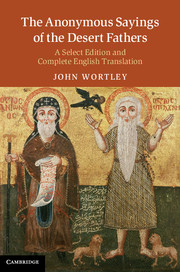
The Anonymous Sayings of the Desert Fathers
The Tales and Sayings of the Desert Fathers (Apophthegmata Patrum) are a key source of evidence for the practice and theory respectively of eremitic monasticism, a significant phenomenon within the early history of Christianity. The publication of this book finally ensures the availability of all three major collections which constitute the work, edited and translated into English. Richer in Tales than the 'Alphabetic' collection to which this is an appendix (both to be dated c.AD 500), the 'Anonymous' collection presented in this volume furnishes almost as much material for the study of the late antique world from which the monk sought to escape as it does for the monastic endeavour itself. More material continued to be added well into the seventh century and so the spread and gradual evolution of monasticism are illustrated here over a period of about two and a half centuries.
eBook

Experience vs. Explanation: Jinn and Demons in Islam and the Desert Fathers as a Case Study in Spirituality
The discipline of spirituality can be described as the study of human experience of encounter with the transcendent and our lived response to that encounter. There are commonalities to our experience of transcendence that cross the divides of culture and language, commonalities which are often obscured when we theologize about our experience. If we examine the concept of jinn, both among pre-Islamic peoples and in the Qur’an and Hadith and compare this to the demons described in The Life of Antony and The Sayings of the Desert Fathers, we see remarkable similarities. These similarities give evidence that the beliefs in jinn in early Islam and in demons among the Desert Fathers are grounded in a common desert experience. As the centers of theological activity move away from the desert, we find this experience explained by Christianity and Islam in diverse ways. The contrast between descriptive narrative and the subsequent theologizing exemplifies a movement from common spiritual experience to differing theological interpretation.
Journal Article
Loneliness, Solitude, Community: Insights from the Apophthegmata Patrum
The present article provides an urban reading of the Apophthegmata Patrum, in the broader context of the rediscovery and re-evaluation of monastic spirituality by and for the laity. On the one hand, the 21st century is considered to be the age of loneliness; on the other hand, loneliness defined the lives of the desert fathers, albeit its nuance was different. The wisdom of these elders could be a cure for contemporary loneliness, or, at least give us a set of models to navigate our loneliness.
Journal Article

Painful Consolations: Re-Imagining Soul Care in a Time of Climate Crisis
This essay argues that the ancient practice of “the care of souls” needs to be re-imagined amid a climate crisis that is taking an increasing toll on people’s emotional, psychological, and spiritual health. Drawing on recent work on climate emotions while acknowledging critiques of the seemingly privileged nature of eco-anxiety discourse, the author suggests three dimensions of a re-imagined soul care while suggesting spiritual resources and practices from Christian history that may help people navigate difficult climate-related emotions in ways that move them beyond hopeless despair and debilitated inaction.
Journal Article
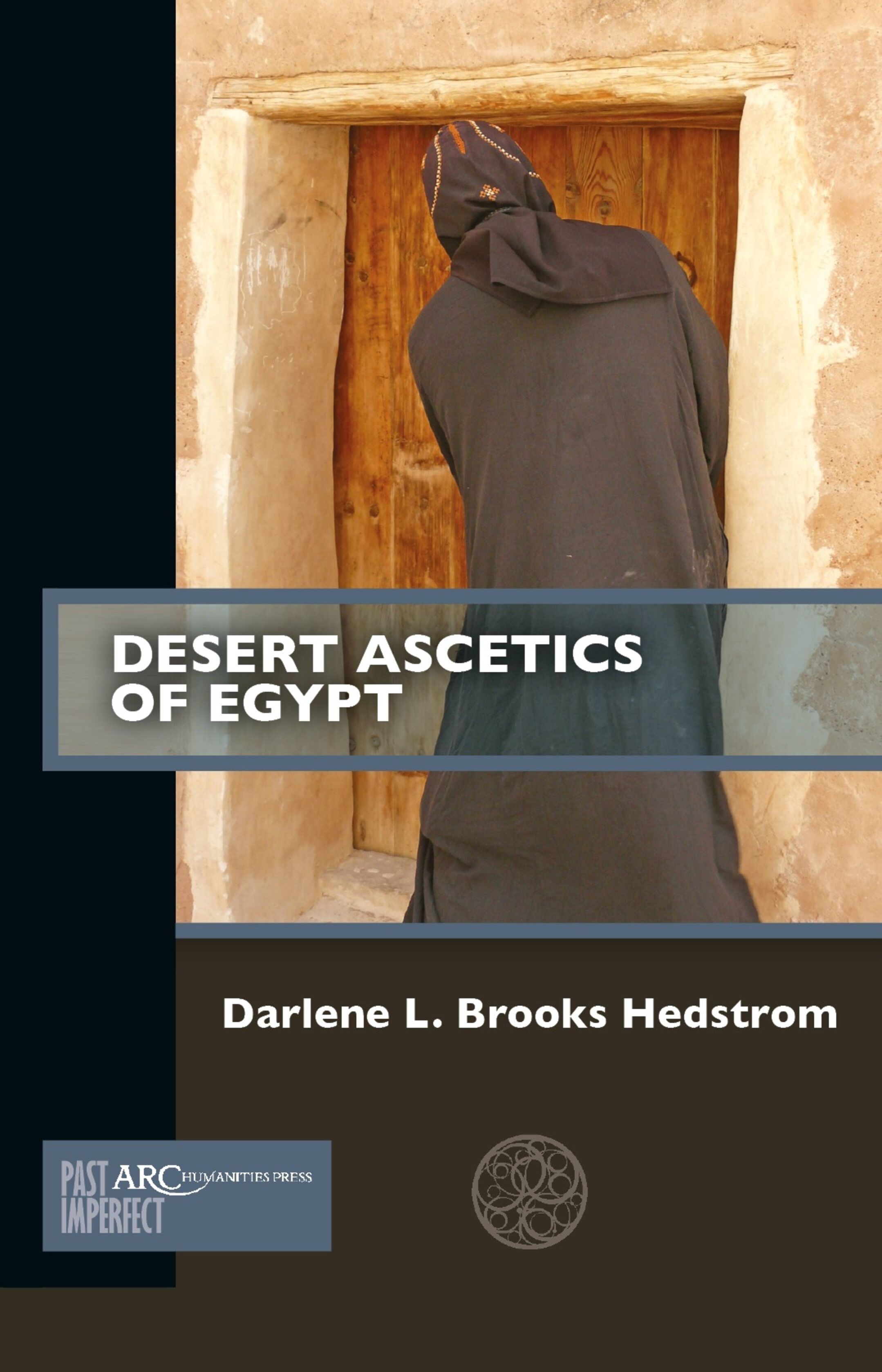
Desert Ascetics of Egypt
Egypt is revered as the home of the famous Desert Ascetics, who first embraced a monastic life and established homosocial communities on the borders of their urban centres in the Nile Valley. Regarded as angels and warriors, the wisdom of the Desert Ascetics formed part of the oral and literary tradition of wonder-working saints whose commitment to asceticism was legendary and inspirational. This book grounds the mythologized stories of Desert Ascetics in the materiality of the desert, demonstrating the closeness of the desert, the connections between non-monastic and monastic communities, and the exciting insights into lived monasticism through the archaeology of monasticism in Egypt.
eBook

Bread in the Desert: The Politics and Practicalities of Food in Early Egyptian Monasticism
The Apophthegmata Patrum (Sayings of the Desert Fathers) offer a compelling literary perspective on the daily lives of early Egyptian monastics. The routine necessities of food and drink played a distinct part in the physical and spiritual survival of these novel monastic communities. When, what, and how much a monk ate could cause celebration or scandal. Every meal was likewise a test. This study has two purposes. First, it situates the Sayings's many references to bread, salt, oil, and fruit within the dietary possibilities of late antique Egypt. Second, and more broadly, this study highlights the place of eating (or not eating) as it relates to particular monastic notions of spiritual wellbeing. Meals were always an arena for acts of heroic asceticism, but they also served as highly charged communal confrontations, a dizzying back and forth of hospitality received or rejected, of honor and shame played out in alimentary paradoxes. In this, the Sayings bear witness to the spiritual politics of eating within Egyptian monastic culture and provide insight into the formation of late antique religious identities, betraying fundamental tensions inherent in other forms of Christian literature.
Journal Article
Transforming Loneliness: An Orthodox Christian Answer to an Increasing Loneliness in Disabled Populations
Social isolation and inactivity have a profound effect on one’s quality of life. In recent times, the COVID-19 pandemic has impacted the social life of many. When it comes to disabled populations, emotional well-being is greatly affected by an increasing trend of social isolation. Research shows that people with disabilities perceive loneliness as unbelonging in childhood and disaffiliation to normative institutions in adulthood. Certainly, the efforts of building community bring richness and quality to life, but there are other solutions to addressing loneliness and solitude. Therefore, finding the true meaning of life is what can bring a positive vision of one’s world. In the Eastern Orthodox Christian ascetical theology, loneliness was transformed into a positive voluntary solitude and has been a central point of daily life, manifested from the ancient Christian sites to modern-day monastic and eremitic life. The present paper proposes a two-folded solution for reframing loneliness into empowerment. It starts with an insight into Frankl’s Man’s Search for Meaning and continues with finding a positive value of loneliness. The study examines different perspectives on loneliness and solitude which can improve the spiritual and emotional well-being of people with disabilities.
Journal Article

The “Ecumenism” of the Desert Fathers. The Relationship with the Other in Apophthegmata Patrum
Ecumenism is a 20th century concept that cannot be directly transposed in the everyday reality of the Desert Fathers, but the authority of the desert ascetics is still crucial to the monastic milieu of the Orthodox Church as well as other denominations. For this very reason, the present paper intends to investigate the stories recorded in the alphabetical collection of the Egyptian Paterikon in order to understand to what extent they may actually offer a guide to the complex relations with the Other. How do these stories illustrate denominational or even religious alterity? What types of rapports can one identify therein? Rejection? Separation? Acceptance of the other’s difference? These are all legitimate questions and their significance is amplified in the context of our times – a period in which we see an increase in fundamentalist movements and tendencies, including in the Orthodox community.
Journal Article

PERMANECER EN LA CELDA. LA ACEDIA COMO PROBLEMA Y SUS REMEDIOS EN LA SABIDURÍA PATRÍSTICA
The general objective of this work is to study the main remedies that patristic wisdom used against the temptation of acedia, the most important of them being the permanence of the monk in the cell. Its specific objectives will seek to trace in the Apothegms of the Desert Fathers and in the ascetic writings of Evagrius Ponticus the characterization of acedia as a disease of the soul and its cure in “being patient”. A comparative analysis is also proposed with the acedia of contemporary man, immersed in the society of acceleration, transparency and consumption, which prevent him from guarding his heart as the privileged place of encounter with himself and with God. The central hypothesis is that the main remedy against acedia may be remaining in the cell. The methodology to be used will be that of patristic hermeneutics, which consists of a careful reading of the sources, a dialogue with the authors and their texts in order to confront them with the vicissitudes that the men of this century deal with to preserve inner stillness. The results of the application of this method are to find out how the man of the 21st century can make the domain of the cell his own and thus overcome acedia, understood as a disease of the soul that prevents the connection with himself, with the subjectivities close to him, with the created world and with its Creator. El presente trabajo tiene como objetivo general estudiar los principales remedios que la sabiduría patrística usaba contra la tentación de la acedia, siendo el más importante de ellos la permanencia del monje en la celda. Sus objetivos específicos buscarán rastrear en los Apotegmas de los Padres del Desierto y en los escritos ascéticos de Evagrio Póntico la caracterización de la acedia como enfermedad del alma y su cura en el “hacer paciente”. También se propone un análisis comparativo con la acedia del hombre contemporáneo, inmerso en la sociedad de la aceleración, de la transparencia y del consumo, que le impiden custodiar su corazón como el lugar privilegiado del encuentro consigo mismo y con Dios. La hipótesis central es que el principal remedio contra la acedia puede ser la permanencia en la celda. La metodología a utilizar será la de la hermenéutica patrística, que consiste en una lectura detenida de las fuentes, un diálogo con los autores y sus textos, a fin de confrontarlos con las vicisitudes que lidian los hombres de este siglo para conservar la quietud interior. Los resultados de la aplicación de este método son el encontrar de qué manera puede el hombre del siglo XXI hacer suyo el dominio de la celda y vencer así la acedia, entendida como enfermedad del alma que impide la conexión consigo mismo, con las subjetividades próximas a él, con el mundo creado y con su Creador.
Journal Article

Desert Christians
In the fourth century, the deserts of Egypt became the nerve center of a radical new movement, what we now call monasticism. Groups of Christians—from illiterate peasants to learned intellectuals—moved out to the wastelands beyond the Nile Valley and, in the famous words of Saint Athanasius, made the desert a city. In so doing, they captured the imagination of the ancient world. They forged techniques of prayer and asceticism, of discipleship and spiritual direction, that have remained central to Christianity ever since. Seeking to map the soul’s long journey to God and plot out the subtle vagaries of the human heart, they created and inspired texts that became classics of Western spirituality. These Desert Fathers were also brilliant storytellers, some of Christianity’s finest. This book introduces the literature of early Christian monasticism, examining all the best-known works, including Athanasius’ Life of Antony, the Lives of Pachomius, and the Sayings of the Fathers (Apophthegmata Patrum). Later chapters focus on two pioneers of monastic theology: Evagrius Ponticus, the first great theoretician of Christian mysticism; and John Cassian, who brought Egyptian monasticism to the Latin West. Along the way, readers are introduced to path-breaking discoveries—to new texts and recent archeological finds—that have revolutionized contemporary scholarship on monastic origins. Included are snippets from papyri and from little-known Coptic, Syriac, and Ethiopic texts. Interspersed in each chapter are illustrations, maps, and diagrams that help readers sort through the key texts and the richly textured world of early monasticism.
eBook