
Catalogue Search | MBRL


Are you sure you want to remove the book from the shelf?

{{itemTitle}}
3,356
result(s) for
"Design, Decorative"
Sort by:

Marimekko : in patterns
\"Internationally beloved Finnish design brand Marimekko's iconic patterns grace home decor, apparel, and accessories, and have informed and influenced tastemakers worldwide for over half a century. Richly illustrated with photographs and prints both classic and new, this vibrant volume offers a behind-the-scenes tour of the brand's creative process.\"-- Provided by publisher.
Book

Craft Economies
Craft Economies provides a wide-ranging exploration of contemporary craft production, situating practices of amateur and professional making within a wider creative economy. Contributors address a diverse range of practices, sites and forms of making in a wide range of regional and national contexts, from floristry to ceramics and from crochet to coding. The volume considers the role of digital practices of making and the impact of the maker's movement as part of larger trends around customisation, on-demand production, and the possibilities of 3D printing and digital manufacturing.
eBook

History of design : decorative arts and material culture, 1400-2000
\"Spanning six centuries of global design, this far-reaching survey is the first to offer an account of the vast history of decorative arts and design produced in Africa, the Americas, Asia, Europe, the Indian subcontinent, and the Islamic world, from 1400 to the present. Meticulously documented and lavishly illustrated, the volume covers interiors, furniture, textiles and dress, glass, graphics, metalwork, ceramics, exhibitions, product design, landscape and garden design, and theater and film design. Divided into four chronological sections, each of which is subdivided geographically, the authors elucidate the evolution of style, form, materials, and techniques, and address vital issues such as gender, race, patronage, cultural appropriation, continuity versus innovation, and high versus low culture. Leading authorities in design history and decorative arts studies present hundreds of objects in their contemporary contexts, demonstrating the overwhelming extent to which the applied arts have enriched customs, ceremony, and daily life worldwide over the past six hundred years. This ambitious, landmark publication is essential reading, contributing a definitive classic to the existing scholarship on design, decorative arts, and material culture, while also introducing these subjects to new readers in a comprehensive, erudite book with widespread appeal\"-- Provided by publisher.
Book

Symmetry : through the eyes of old masters
A large range of symmetries in art is presented through clear and aesthetically outstanding examples of historical ornaments.Compendious comments illustrate the selected photographic material by addressing the interested and specialist reader alike.
eBook


The Aesthetics of Imagination in Design
In The Aesthetics of Imagination in Design, Mads Folkmann investigates design in both material and immaterial terms. Design objects, Folkmann argues, will always be dual phenomena -- material and immaterial, sensual and conceptual, actual and possible. Drawing on formal theories of aesthetics and the phenomenology of imagination, he seeks to answer fundamental questions about what design is and how it works that are often ignored in academic research. Folkmann considers three conditions in design: the possible, the aesthetic, and the imagination. Imagination is a central formative power behind the creation and the life of design objects; aesthetics describes the sensual, conceptual, and contextual codes through which design objects communicate; the concept of the possible -- the enabling of new uses, conceptions, and perceptions -- lies behind imagination and aesthetics. The possible, Folkmann argues, is contained as a structure of meaning within the objects of design, which act as part of our interface with the world. Taking a largely phenomenological perspective that reflects both continental and American pragmatist approaches, Folkmann also makes use of discourses that range from practice-focused accounts of design methodology to cultural studies. Throughout, he offers concrete examples to illustrate theoretical points. Folkmann's philosophically informed account shows design -- in all its manifestations, from physical products to principles of organization -- to be an essential medium for the articulation and transformation of culture.
eBook

100 ideas that changed design
This inspiring book chronicles the most influential ideas that have shaped industrial and product design. Written by two experts on modern design, it provides both a concise history of the subject, and offers a fascinating resource to dip into for the general reader. From the origins or modern design in the craft movements of the 19th and early 20th century and the changes brought about by mass production, the book traces the most important ideas in design through the modern movement and post-war consumer society to more recent ideas such as Open-Source Design and Biomimicry. Arranged in a broadly chronological order, the ideas are presented through fascinating text and arresting visuals, 100 Ideas that Changed Design explores when each idea first evolved and the subsequent impact it has had up to the present day.
Book

Not Just for Show
Beads, beadwork, and personal ornaments are made of diverse materials such as shell, bone, stones, minerals, and composite materials. Their exploration from geographical and chronological settings around the world offers a glimpse at some of the cutting edge research within the fast growing field of personal ornaments in humanities’ past. Recent studies are based on a variety of analytical procedures that highlight humankind’s technological advances, exchange networks, mortuary practices, and symbol-laden beliefs. Papers discuss the social narratives behind bead and beadwork manufacture, use and disposal; the way beads work visually, audibly and even tactilely to cue wearers and audience to their social message(s). Understanding the entangled social and technical aspects of beads require a broad spectrum of technical and methodological approaches including the identification of the sources for the raw material of beads. These scientific approaches are also combined in some instances with experimentation to clarify the manner in which beads were produced and used in past societies.
eBook

Urban lighting for people : evidence-based lighting design for the built environment
Lighting has the power to illuminate and enhance our experience within the built environment. The light that enables people to travel around their neighbourhood or their city; the light which they see themselves and their neighbourhood under. Research into the effects of urban lighting on behaviour, environmental psychology and social interaction is developing at a rapid rate. Yet, despite the affect it has on our daily lives, the practical application of this research is a relatively untapped resource. 0This book explores the needs and experiences of people at night and how these can be addressed by public lighting. It will give readers the confidence to develop more sophisticated lighting plans and add value to their projects. Case studies provide in-depth analysis of real-life projects and will help the reader to understand lighting designers' own experiences, including post-installation observations. Written in an accessible style by an array of experts, this is an essential book for practitioners, academics and students alike, that will enable you to put the research in to practice and develop better lighting for better places.
Book
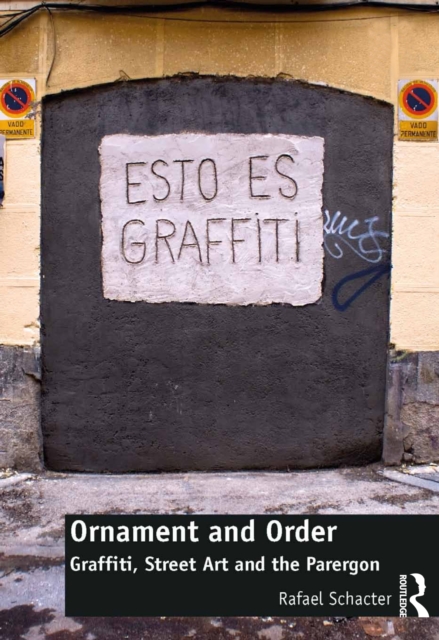
Ornament and Order
Over the last forty years, graffiti and street-art have become a global phenomenon within the visual arts. Whilst they have increasingly been taken seriously by the art establishment (or perhaps the art market), their academic and popular examination still remains within old debates which argue over whether these acts are vandalism or art, and which examine the role of graffiti in gang culture and in terms of visual pollution. Based on an in-depth ethnographic study working with some of the world's most influential Independent Public Artists, this book takes a completely new approach. Placing these illicit aesthetic practices within a broader historical, political, and aesthetic context, it argues that they are in fact both intrinsically ornamental (working within a classic architectonic framework), as well as innately ordered (within a highly ritualized, performative structure). Rather than disharmonic, destructive forms, rather than ones solely working within the dynamics of the market, these insurgent images are seen to reface rather than deface the city, operating within a modality of contemporary civic ritual. The book is divided into two main sections, Ornament and Order. Ornament focuses upon the physical artifacts themselves, the various meanings these public artists ascribe to their images as well as the tensions and communicative schemata emerging out of their material form. Using two very different understandings of political action, it places these illicit icons within the wider theoretical debate over the public sphere that they materially re-present. Order is focused more closely on the ephemeral trace of these spatial acts, the explicitly performative, practice-based elements of their aesthetic production. Exploring thematics such as carnival and play, risk and creativity, it tracks how the very residue of this cultural production structures and shapes the socio-ethico guidelines of these artists' lifeworlds.
eBook