
Catalogue Search | MBRL


Are you sure you want to remove the book from the shelf?

{{itemTitle}}
244
result(s) for
"Design, Drafting, Drawing "
Sort by:


Computer Aided Design and Manufacturing
This book addresses the need to provide up-to-date coverage of current CAD/CAM usage and implementation. It covers, in one source, the entire design-to-manufacture process, reflecting the industry trend to further integrate CAD and CAM into a single, unified process. It also updates the computer aided design theory and methods in modern manufacturing systems and examines the most advanced computer-aided tools used in digital manufacturing. Computer Aided Design and Manufacturing consists of three parts. The first part on Computer Aided Design (CAD) offers the chapters on Geometric Modelling; Knowledge Based Engineering; Platforming Technology; Reverse Engineering; and Motion Simulation. The second part on Computer Aided Manufacturing (CAM) covers Group Technology and Cellular Manufacturing; Computer Aided Fixture Design; Computer Aided Manufacturing; Simulation of Manufacturing Processes; and Computer Aided Design of Tools, Dies and Molds (TDM). The final part includes the chapters on Digital Manufacturing; Additive Manufacturing; and Design for Sustainability. The book is also featured for being uniquely structured to classify and align engineering disciplines and computer aided technologies from the perspective of the design needs in whole product life cycles, utilizing a comprehensive Solidworks package (add-ins, toolbox, and library) to showcase the most critical functionalities of modern computer aided tools, and presenting real-world design projects and case studies so that readers can gain CAD and CAM problem-solving skills upon the CAD/CAM theory. Computer Aided Design and Manufacturing is an ideal textbook for undergraduate and graduate students in mechanical engineering, manufacturing engineering, and industrial engineering. It can also be used as a technical reference for researchers and engineers in mechanical and manufacturing engineering or computer-aided technologies.
eBook

Building structures illustrated : patterns, systems, and design
\"Bestselling reference by reknowned authors of architectural design. One-stop guide to structural design in practice, meant for every designer's desktop. Illustrated throughout with Ching's trademark drawing. Treatment of structural design as part of the entire building design process. Includes overview of the historicial development of architectural materials and structures\"-- Provided by publisher.
Book

BIM for Facility Managers
\"Addressing building owners, developers, and managers, this text covers how building information management (BIM) complements facility management (FM) systems to achieve significant lifecycle advantages. It includes coverage of the guidelines for BIM in FM as developed by owners such as the General Services Administration, the COBie2 (BIM document standard) used to collect and communicate facility equipment information, and a list of software for BIM/FM integration. It also offers six real-life case studies including the Texas A&M Health Science Center, the USC School of Cinematic Arts, and the State of WI Facilities\"--
eBook

The SketchUp workflow for architecture : modeling buildings, visualizing design, and creating construction documents with SketchUp Pro and LayOut
\"This book is for architects and related design professionals who want to take their SketchUp use to the next level. In-depth tips and techniques show users how to use SketchUp and its related suite of tools in every stage of the design process. The author presents a flexible workflow that makes common design tasks easier and allows users to incorporate varying degrees of SketchUp use into their design process. Included are best practices for organizing projects, drafting schematics. A section devoted to LayOut guides readers through an often underused component of SketchUp Pro. Tutorial videos compliment the book, demonstrating some of the more advanced methods\"-- Provided by publisher.
Book

Technology for facility managers
A comprehensive look at the impact of technology on facility managers Facility managers are tasked with operating and maintaining the built environment. Technology plays a big role in this function, and often facility managers are asked to install, implement, and work with a variety of technologies without any prior experience in information technology. Technology for Facility Managers presents the cutting-edge technology that facility managers will come across in their careers. Each chapter covers a different technology and includes an overview and basic primer about the technology—the current use of the technology, how it's evolving, and how it will impact the practice of facility management in the future—and is complemented with case studies that address how the technology was implemented and the effect it had on the organization. Technologies covered include: Building information modeling (BIM) Building automation systems (BAS) FM automation (CAFM/IWMS) Condition assessment/life cycle analysis Radio frequency identification (RFID) Geographic information systems (GIS) Social networking Sustainability and energy analysis Information and communications technology (ICT) Workflow technology that supports standards such as Business Process Modeling Notation (BPMN) and those developed by the Workflow Management Coalition (WfMC) Technology for Facility Managers is appropriate as a textbook for IFMA Accredited Degree Programs and as a resource for professionals studying for certification through IFMA.
eBook

Building structures
\"This new edition continues its legacy as the reference of choice for architects studying contemporary issues and design practices for building structures by taking a conceptual approach that foregos complicated mathematics. Looking at the role of the structure as a building subsystem, it offers the fundamentals of computational methods for design of wood, steel, and reinforced concrete structures, along with new material such as discussion of the LRFD method of design. Profusely illustrated with new case studies, this go-to guide is perfect for non-engineers to understand and visualize structural design\"-- Provided by publisher.
Book
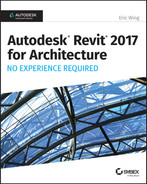
Autodesk Revit 2017 for Architecture
The only Revit tutorial guide based on a real project workflow Autodesk Revit Architecture No Experience Required is the ultimate real-world guide for mastering this increasingly prevalent BIM software package. Using a continuous, step-by-step tutorial, this book walks you through all project phases as you learn the basics of Revit by designing, documenting, and presenting a four-story office building. You'll begin by learning your way around the interface and conventions, then jump right into design by placing walls, doors, and windows. Next you'll work with grids, beams, foundations, dimensions, and text as you build floors layer by layer, join walls, create ceilings and roofs, and place stairs, ramps, and railings. The instruction covers construction documentation, advanced detailing, and families, as well as site considerations including grading and top surface features to provide a well-rounded, real-world Revit skill set. The companion website features downloadable 'before and after' tutorial files that allow you to jump in at any point and compare your work to the pros. The shift from 2D drafting to 3D building information modeling has made Revit a must-have skill for an increasing number of design, engineering, and construction professionals. This book is designed to teach you the basics quickly, using a real-world workflow, process, and pacing. Get acquainted with the Revit interface, then immediately start building Learn to place structural components, text, dimensions, and more Understand views, grids, editing, importing, exporting, and work sharing Generate construction documentation including schedules and material takeoffs This simple yet engaging tutorial brings together all of the major skills a Revit user needs to know to complete real workplace projects. Whether read from beginning to end as a comprehensive lesson, or used as 'dip-in' reference for unfamiliar tasks, Autodesk Revit Architecture No Experience Required provides invaluable practical BIM instruction for every phase of a project.
eBook

Exterior building enclosures : process and composition for innovative skins
\"Focused on the design process for architects and related professionals, this is a guide to the design and execution of sophisticated exterior building enclosures for a number of commercial building types and in a variety of building materials. Written by the technical director of the San Francisco office of the esteemed architecture firm Skidmore, Owings and Merrill (SOM), this book has a distinct focus on the design process by delineating the participants (architects, engineers, consultants) and their roles and responsibilities through collaboration, and tracking the design process through construction\"-- Provided by publisher.
Book

Architectural detailing
The industry-standard guide to designing well-performing buildings Architectural Detailing systematically describes the principles by which good architectural details are designed. Principles are explained in brief, and backed by extensive illustrations that show you how to design details that will not leak water or air, will control the flow of heat and water vapor, will adjust to all kinds of movement, and will be easy to construct. This new third edition has been updated to conform to International Building Code 2012, and incorporates current knowledge about new material and construction technology. Sustainable design issues are integrated where relevant, and the discussion includes reviews of recent built works that extract underlying principles that can be the basis for new patterns or the alteration and addition to existing patterns. Regulatory topics are primarily focused on the US, but touch on other jurisdictions and geographic settings to give you a well-rounded perspective of the art and science of architectural detailing. In guiding a design from idea to reality, architects design a set of details that show how a structure will be put together. Good details are correct, complete, and provide accurate information to a wide variety of users. By demonstrating the use of detail patterns, this book teaches you how to design a building that will perform as well as you intend. Integrate appropriate detailing into your designs Learn the latest in materials, assemblies, and construction methods Incorporate sustainable design principles and current building codes Design buildings that perform well, age gracefully, and look great Architects understand that aesthetics are only a small fraction of good design, and that stability and functionality require a deep understanding of how things come together. Architectural Detailing helps you bring it all together with a well fleshed-out design that communicates accurately at all levels of the construction process.
eBook