
Catalogue Search | MBRL


Are you sure you want to remove the book from the shelf?

{{itemTitle}}
155,828
result(s) for
"Design, Industrial"
Sort by:

Industrial design : why smartphones aren't round and other mysteries : with science activities for kids
Explore the engineering design process from its earliest beginnings, to today. Using inquiry-based STEM activities, kids ages 10 to 15 read all about good design, which combines the right materials, colors, details, and form to make a person want to buy and use a peoduct.
Book

Sketching user experiences : getting the design right and the right design
Sketching User Experiences approaches design and design thinking as something distinct that needs to be better understood—by both designers and the people with whom they need to work— in order to achieve success with new products and systems. So while the focus is on design, the approach is holistic. Hence, the book speaks to designers, usability specialists, the HCI community, product managers, and business executives. There is an emphasis on balancing the back-end concern with usability and engineering excellence (getting the design right) with an up-front investment in sketching and ideation (getting the right design). Overall, the objective is to build the notion of informed design: molding emerging technology into a form that serves our society and reflects its values. Grounded in both practice and scientific research, Bill Buxton’s engaging work aims to spark the imagination while encouraging the use of new techniques, breathing new life into user experience design. Covers sketching and early prototyping design methods suitable for dynamic product capabilities: cell phones that communicate with each other and other embedded systems, \"smart\" appliances, and things you only imagine in your dreams Thorough coverage of the design sketching method which helps easily build experience prototypes—without the effort of engineering prototypes which are difficult to abandon Reaches out to a range of designers, including user interface designers, industrial designers, software engineers, usability engineers, product managers, and others Full of case studies, examples, exercises, and projects, and access to video clips that demonstrate the principles and methods
eBook


Design, When Everybody Designs
In a changing world everyone designs: each individual person and each collective subject, from enterprises to institutions, from communities to cities and regions, must define and enhance alife project. Sometimes these projects generate unprecedented solutions; sometimes they converge on common goals and realize larger transformations. As Ezio Manzini describes in this book, we are witnessing a wave of social innovations as these changes unfold -- an expansive open co-design process in which new solutions are suggested and new meanings are created. Manzini distinguishes betweendiffuse design(performed by everybody) andexpert design(performed by those who have been trained as designers) and describes how they interact. He maps what design experts can do to trigger and support meaningful social changes, focusing on emerging forms of collaboration. These range from community-supported agriculture in China to digital platforms for medical care in Canada; from interactive storytelling in India to collaborative housing in Milan. These cases illustrate how expert designers can support these collaborations -- making their existence more probable, their practice easier, their diffusion and their convergence in larger projects more effective. Manzini draws the first comprehensive picture of design for social innovation: the most dynamic field of action for both expert and nonexpert designers in the coming decades.
eBook


Design research through practice : from the lab, field, and showroom
Design Research Through Practice: From the Lab, Field, and Showroom focuses on one type of contemporary design research known as constructive design research.It looks at three approaches to constructive design research: Lab, Field, and Showroom.
eBook

Material thoughts
This work explores the thinking of leading designers and producers that are able to challenge convention through curiosity and experimentation. It aims to promote a physical enquiry of materials and a mentality to constantly ask what could be done 'if' rather than to consider only what is being done.
Book

Design and the Creation of Value
John Heskett was a leading design historian with a particular interest in design and economics. This book publishes for the first time his writings on design and economic value, and design’s role in creating value in organisations and products. The first part of Heskett’s text introduces the main traditions of economic thought as they explain the relationship between producers, markets, products and consumers; he then goes on to consider the importance of design and design thinking in innovating and creating value in business practice and product development. Heskett refers to examples of businesses such as Dyson and Apple that have successfully responded to the value of design in their practice, and others such as the Ford Motor Company that were faced with the threat of bankruptcy because they failed to encourage innovation and creativity or to respond adequately to the challenges and opportunities presented by new technology. Heskett’s text is accompanied by critical and contextualising overviews by leading design scholars, which place Heskett's writings within the framework of contemporary design and business thought and practice.
eBook

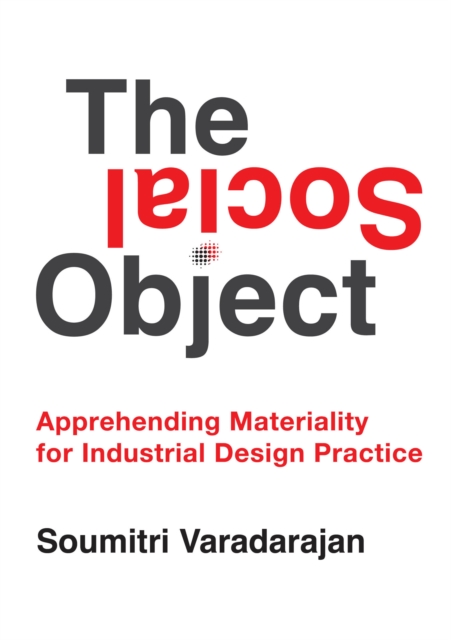
The Social Object
A book about the biography of projects and objects. Where projects serve as book ends to a detailed account of objects with the homes of the not so rich. By silencing the designer, the book allows accounts of objects to emerge as periodic irruptions that serve as evidence of a hidden maelstrom of passion, ideas and failed projects. 61 b&w illus. Check out author Soumitri Varadarajan's website here Listen to Soumitri Varadarajan's podcast 'Learner Centered Design Education' here.
eBook