
Catalogue Search | MBRL


Are you sure you want to remove the book from the shelf?

{{itemTitle}}
14,919
result(s) for
"Design Technological innovations."
Sort by:

Packaging design
The third volume in this series is on packaging design and features carefully selected products that showcase the innovative use of a particular material. The book focuses on specific categories of packaging sustainable packaging, functional forms, dispensing systems, advanced protection, interactive and mass craft. Seven specially commissioned visual narratives are included. The extensive illustrated materials directory contains detailed information on over 100 materials.
Book

Design-inspired innovation
When an innovation is inspired by design, it transcends technology and utility. The design delights the user, seamlessly integrating the physical object, a service, and its use into something whole. A design-inspired innovation is so simple that it becomes an extension of the user. It creates meaning and a new language.
eBook

Product design
A first title in the ambitious series that identifies and examines the innovative materials that are transforming art, design, and technology practice. This volume on product design presents carefully selected products that showcase the innovative use of a particular material. The authors focus on specific product categories that include grown materials, surface fortification, advanced composites, additive manufacturing media, recycled materials, and the integration of electricity. A wide range of products spanning from medical equipment to clothing are featured, along with six specially commissioned visual narratives by experts in the field. The materials employed in each project are cross-referenced to an extensive illustrated materials directory containing detailed information on almost 100 materials - from hemp and kelp to titanium and biocomposite glass fibers.
Book
The art of product design
\"Embrace Open Engineering and accelerate the design and manufacturing processes. Product development is a team sport, but most companies don't practice it that way. Organizations should be drawing on the creativity of engaged customers and outsiders, but instead they rely on the same small group of internal 'experts' for new ideas. Designers and engineers should be connecting with marketing, sales, customer support, suppliers, and most importantly, customers. The Art of Product Design explains the rise of 'Open Engineering,' a way of breaking down barriers and taking advantage of web-based communities, knowledge, and tools to accelerate the design and manufacturing processes. Explains how to establish open flows of information inside and outside an organization, increasing the quality and frequency of input from different groups and stakeholders. Hardi Meybaum is the founder and CEO of GrabCad, the largest community of mechanical engineers and designers in the world. Open Engineering is crowdsourcing, it's collaborating, it's sharing and connecting. And it's helping a growing number of companies create better products faster than they ever imagined. The Art of Product Design shows you how to harness its power for your company\"-- Provided by publisher
eBook

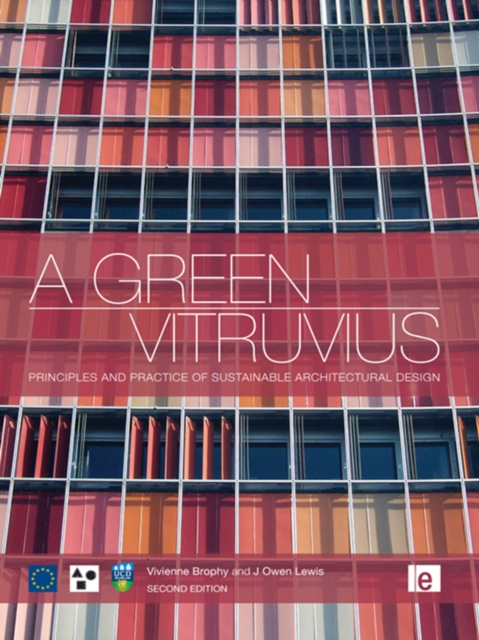
A Green Vitruvius
2000 years ago the roman architect Marcus Vitruvius Pollio wrote the ten books on architecture establishing the concept of the pattern book offering design principles and solutions that is still referred to in every architect's education. A Green Vitruvius is intended as a green pattern book for today.
Now fully updated, this well established textbook provides advice suitable for undergraduate and post graduate students on the integration of sustainable practice into the design and construction process, the issues to be considered, the strategies to be adopted, the elements of green design and design evaluation within the process.
Classic design elegance is found in the holistic clear solution.
eBook


The Rent of Form
A critique of prominent architects' approach to digitally driven design and labor practices over the past two decades
With the advent of revolutionary digital design and production technologies, contemporary architects and their clients developed a taste for dramatic, unconventional forms. Seeking to amaze their audiences and promote their global brands, \"starchitects\" like Herzog & de Meuron and Frank Gehry have reaped substantial rewards through the pursuit of spectacle enabled by these new technologies. This process reached a climax in projects like Gehry's Guggenheim Bilbao and the \"Bilbao effect,\" in which spectacular architectural designs became increasingly sought by municipal and institutional clients for their perceived capacity to enhance property values, which author Pedro Fiori Arantes calls the \"rent of form.\"
Analyzing many major international architectural projects of the past twenty years, Arantes provides an in-depth account of how this \"architecture of exception\" has come to dominate today's industry. Articulating an original, compelling critique of the capital and labor practices that enable many contemporary projects, Arantes explains how circulation (via image culture), consumption (particularly through tourism), the division of labor, and the distribution of wealth came to fix a certain notion of starchitecture at the center of the industry.
Significantly, Arantes's viewpoint is not that of Euro-American capitalism. Writing from the Global South, this Brazilian theorist offers a fresh perspective that advances ideas less commonly circulated in dominant, English-language academic and popular discourse. Asking key questions about the prevailing logics of finance capital, and revealing inconvenient truths about the changing labor of design and the treatment of construction workers around the world,The Rent of Formdelivers a much-needed reevaluation of the astonishing buildings that have increasingly come to define world cities.
eBook

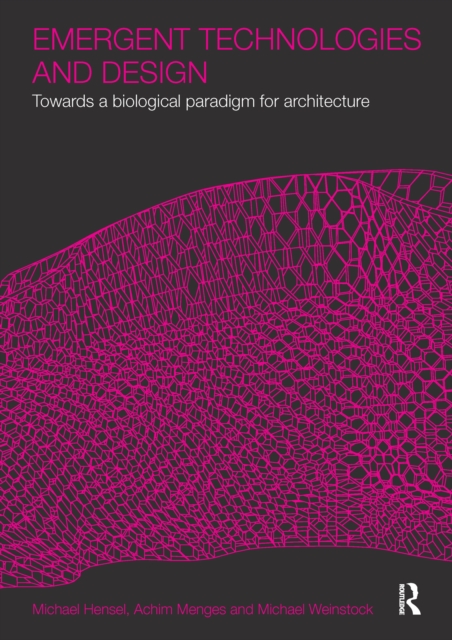
Emergent Technologies and Design
Emergence - the process by which new and coherent structures, patterns and properties 'emerge' from within complex systems
Traditional architecture starts from the premise that architectural structures are singular and fixed, and however well integrated are separate from their environment and context. Emergence requires that the opposite is true - that those structures are complex energy and material systems that have a lifespan, exist as part of an environment of other active systems, and develop in an evolutionary way.
This book, based on the authors' internationally renowned Emergent Technologies and Design course at the Architectural Association in London, introduces a new approach to the practice of architecture. The authors use essays and projects to demonstrate the interrelationship of concepts such as emergence and self-organisation with the latest technologies in design, manufacturing and construction.
With projects from their course, and critiques and commentary from some of the world's leading design theorists and practitioners, the authors of Emergent Technologies and Design have introduced a radical new way of understanding the way in which architecture is conceived, designed and produced.
eBook