
Catalogue Search | MBRL


Are you sure you want to remove the book from the shelf?

{{itemTitle}}
36,899
result(s) for
"Desire"
Sort by:


Bittersweet : how sorrow and longing make us whole
\"With her mega-bestseller Quiet, Susan Cain urged our society to cultivate space for the undervalued, indispensable introverts among us, thereby revealing an untapped power hidden in plain sight. Now, she employs the same mix of research, storytelling, and memoir to explore why we experience sorrow and longing, and the surprising lessons these states of mind teach us about creativity, compassion, leadership, spirituality, mortality and love. Bittersweetness is a tendency to states of longing, poignancy, and sorrow; an acute awareness of passing time; and a curiously piercing joy when beholding beauty. It recognizes that light and dark, birth and death-bitter and sweet-are forever paired. A song in a minor key, an elegiac poem, or even a touching television commercial all can bring us to this sublime, even holy, state of mind-and, ultimately, to greater kinship with our fellow humans. But bittersweetness is not, as we tend to think, just a momentary feeling or event. It's also a way of being, a storied heritage. Our artistic and spiritual traditions - amplified by recent scientific and management research - teach us its power. Cain shows how a bittersweet state of mind is the quiet force that helps us transcend our personal and collective pain. If we don't acknowledge our own sorrows and longings, she says, we can end up inflicting them on others via abuse, domination, or neglect. But if we realize that all humans know - or will know - loss and suffering, we can turn toward each other. And we can learn to transform our own pain into creativity, transcendence, and connection. At a time of profound discord and personal anxiety, Bittersweet brings us together in deep and unexpected ways\"-- Provided by publisher.
Book

Getting what you want
It is commonly accepted that if an agent wants
p
, then she has a desire that is satisfied in exactly the worlds where
p
is true. Call this the ‘Satisfaction-is-Truth Principle’. We argue that this principle is false: an agent may want
p
without having a desire that is satisfied when
p
obtains in any old way. For example, Millie wants to drink milk but does not have a desire that is satisfied when she drinks spoiled milk. Millie has a desire whose satisfaction conditions are what we call
ways-specific
. Fara (Philos Perspect 17(1):141–163,
2003
, Noûs 47(2):250–272,
2013
) and Lycan (Philos Perspect 26(1):201–215,
2012
, In what sense is desire a propositional attitude?, Unpublished manuscript) have also argued for this conclusion, but their claims about desire satisfaction rest solely on contested intuitions about when agents get what they want. We set these intuitions to one side, instead arguing that desire satisfaction is ways-specific by appealing to the dispositional role of desire. Because agents are disposed to satisfy their desires, dispositions provide important evidence about desire satisfaction. Our argument also provides new insight on the dispositional role of desire satisfaction.
Journal Article
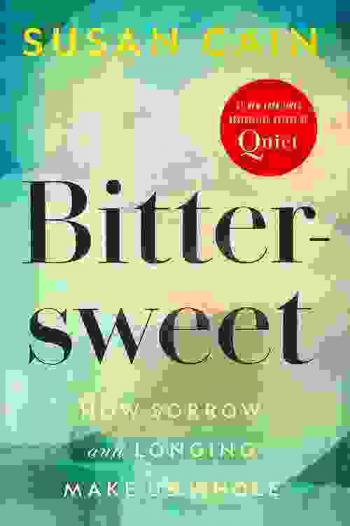
Bittersweet : how sorrow and longing make us whole
\"With her mega-bestseller Quiet, Susan Cain urged our society to cultivate space for the undervalued, indispensable introverts among us, thereby revealing an untapped power hidden in plain sight. Now, she employs the same mix of research, storytelling, and memoir to explore why we experience sorrow and longing, and the surprising lessons these states of mind teach us about creativity, compassion, leadership, spirituality, mortality and love. Bittersweetness is a tendency to states of longing, poignancy, and sorrow; an acute awareness of passing time; and a curiously piercing joy when beholding beauty. It recognizes that light and dark, birth and death-bitter and sweet-are forever paired. A song in a minor key, an elegiac poem, or even a touching television commercial all can bring us to this sublime, even holy, state of mind-and, ultimately, to greater kinship with our fellow humans. But bittersweetness is not, as we tend to think, just a momentary feeling or event. It's also a way of being, a storied heritage. Our artistic and spiritual traditions--amplified by recent scientific and management research--teach us its power. Cain shows how a bittersweet state of mind is the quiet force that helps us transcend our personal and collective pain. If we don't acknowledge our own sorrows and longings, she says, we can end up inflicting them on others via abuse, domination, or neglect. But if we realize that all humans know--or will know--loss and suffering, we can turn toward each other. And we can learn to transform our own pain into creativity, transcendence, and connection. At a time of profound discord and personal anxiety, Bittersweet brings us together in deep and unexpected ways\"-- Publisher's description.

Age Effects on Women’s and Men’s Dyadic and Solitary Sexual Desire
While most studies on sexuality in later life report that sexual desire declines with age, little is known about the exact nature of age effects on sexual desire. Using self-reported dyadic sexual desire relating to a partner, dyadic sexual desire relating to an attractive person, and solitary sexual desire from a large (
N
> 8000) and age diverse (14.6–80.2 years) online sample, the current study had three goals: First, we investigated relationships between men and women’s sexual desire and age. Second, we examined whether individual differences such as gender/sex, sexual orientation, self-rated masculinity, relationship status, self-rated attractiveness, and self-rated health predict sexual desire. Third, we examined how these associations differed across sexual desire facets. On average, the associations between age and both men and women’s sexual desire followed nonlinear trends and differed between genders/sexes and types of sexual desire. Average levels of all types of sexual desire were generally higher in men. Dyadic sexual desire related positively to self-rated masculinity and having a romantic partner and solitary desire was higher in people with same-sex attraction. We discuss the results in the context of the evolutionary hypothesis that predict an increase of sexual desire and female reproductive effort prior to declining fertility. Our findings both support and challenge beliefs about gender/sex specificity of age effects on sexual desire and highlight the importance of differentiating between desire types.
Journal Article


Authenticity and the argument from testability: a bottom-up approach
Jesper Ahlin Marceta published an article in this journal in which he formulated his “argument from testability”, stating that it is impossible, at least practically, to operationalize procedural authenticity. That is, using procedural accounts of authenticity, one cannot reliably differentiate between authentic and inauthentic desires. There are roughly two ways to respond to the argument from testability: top-down and bottom-up. Several authors have endeavored the top-down approach by trying to show that some conceptions of authenticity might be operationalizable after all. At present, however, the bottom-up approach has not been put to the test. That is, no attempt has been made to use a currently existing assessment tool to guide the development of an account of authenticity. In this paper, I will investigate what it means to develop an account of authenticity bottom-up based on measures of concordance. More specifically, I will investigate the following three research questions. First, how do concordance and authenticity relate at a conceptual level? As crucial similarities exist between these concepts, concordance measures seem to offer a good starting point for the bottom-up approach. Second, how do judgements of concordance differ from judgements of authenticity? Both their scope and the way they are justified will turn out to be different. This suggests novel ways to react to Marceta’s argument from testability. Third, should we develop a theory of concordance? The positive answer to this question will point towards a central limitation of the bottom-up approach.
Journal Article

Discrepancy in Dyadic Sexual Desire Predicts Sexual Distress over Time in a Community Sample of Committed Couples: A Daily Diary and Longitudinal Study
In long-term relationships, sexual desire discrepancy (SDD) occurs frequently between partners. For many, this discrepancy is persistent and significant, and a source of distress. However, the dynamics of SDD in couples and, specifically, its implications for sexual distress have received scant empirical attention. This study examined the associations between SDD and sexual distress from one day to the next and over a 12-month span, in a community sample of 229 same-sex/gender and mixed-sex/gender couples. Two datasets were collected: A 35-day daily diary and a 12-month longitudinal survey. In both, dyadic sexual desire and sexual distress were measured, and SDD was calculated as the absolute value of the difference in sexual desire between partners. Directional associations between SDD at one time point and sexual distress at the next time point were assessed using multilevel, 2-pane autoregressive cross-lagged models, controlling for within-variable changes, dependencies between partners, and partner age. Results were consistent with the study’s hypotheses: Couples’ SDD on one day predicted sexual distress on the next day. Similarly, SDD at baseline predicted sexual distress 12 months later. Participant gender, partner gender, and couple type did not significantly moderate these associations, nor did differentiating partners based on higher and lower average sexual desire. The reverse associations (i.e., sexual distress predicting SDD) were non-significant. The associations’ directionality and the fact that they remained significant over days and months were consistent with the proposal that SDD is a precursor of sexual distress. The present study provides support for dyadic conceptualizations of sexual desire. Clinically, findings suggest that therapeutic approaches should address issues with sexual desire and sexual distress by focusing not on the individual, but on the couple.
Journal Article