
Catalogue Search | MBRL


Are you sure you want to remove the book from the shelf?

{{itemTitle}}
161
result(s) for
"Detention of persons Israel"
Sort by:


Time in the Shadows
Detention and confinement—of both combatants and large groups of civilians—have become fixtures of asymmetric wars over the course of the last century. Counterinsurgency theoreticians and practitioners explain this dizzying rise of detention camps, internment centers, and enclavisation by arguing that such actions \"protect\" populations. In this book, Laleh Khalili counters these arguments, telling the story of how this proliferation of concentration camps, strategic hamlets, \"security walls,\" and offshore prisons has come to be.
Time in the Shadows investigates the two major liberal counterinsurgencies of our day: Israeli occupation of Palestine and the U.S. War on Terror. In rich detail, the book investigates Abu Ghraib, Guantánamo Bay, CIA black sites, the Khiam Prison, and Gaza, among others, and links them to a history of colonial counterinsurgencies from the Boer War and the U.S. Indian wars, to Vietnam, the British small wars in Malaya, Kenya, Aden and Cyprus, and the French pacification of Indochina and Algeria.
Khalili deftly demonstrates that whatever the form of incarceration—visible or invisible, offshore or inland, containing combatants or civilians—liberal states have consistently acted illiberally in their counterinsurgency confinements. As our tactics of war have shifted beyond slaughter to elaborate systems of detention, liberal states have warmed to the pursuit of asymmetric wars. Ultimately, Khalili confirms that as tactics of counterinsurgency have been rendered more \"humane,\" they have also increasingly encouraged policymakers to willingly choose to wage wars.
eBook


Assessment of Nutritional Status and Health Perception among Male Inmates in Israeli Prisons
The nutritional and health perceptions of inmates are crucial to their overall well-being. However, limited research has been conducted on this topic. This study aimed to assess the nutritional and health perception state of male inmates in eleven prisons in Israel. A cross-sectional study was conducted between February and September 2019 with 176 voluntary participants. Structured questionnaires were used to collect data on socio-demographic characteristics, healthy habits, subjective health status, and prison situation variables. The study found that the prevalence of overweight (40%) and obesity (18.1%) among 18–34-year-old inmates was significantly higher than in the reference Israeli population. Short detention periods (up to one year) predicted less weight gain, while older age predicted poorer health status. Better emotional status significantly predicted better subjective health status among male inmates. There is a need for nutrition interventions to improve the health of inmates. The significant weight gain during incarceration and the associated lower health index and stress highlights the importance of increasing knowledge and promoting a healthier lifestyle in incarceration as early as possible and continuing over time.
Journal Article

Palestinians in Gaza Are Forced To Make Life-or-Death Decisions Following Israeli Evacuation Orders. There Is No Right Choice
Hajiaj discusses the predicament of Palestinians in Gaza who are forced to make life-or-death decisions following Israel's evacuation orders. On Saturday, Nov. 23, 2024, the Israeli army sent evacuation orders to Al-Shujai'yya and Al-Zaytoon neighborhoods, east of Gaza City, two of the most populated areas in Gaza City. After three days of the warnings, the Israeli army had still not yet invaded the area. This is not uncommon. It happens every time Israel sends an evacuation warning to a location; only the army will choose the moment to start its attack. In the meantime, families need to decide what to do. Some families returned to their homes, but they live in fear. Based on the previous Israeli invasions, those who stayed knew they might be forced to leave under Israeli fire. And even if they weren't, they would face challenging conditions to survive from the Israeli siege of the north, which is preventing food and water from entering the area, to detention and death once Israel begins targeting everything that moves on the ground.
Journal Article

Stolen Youth
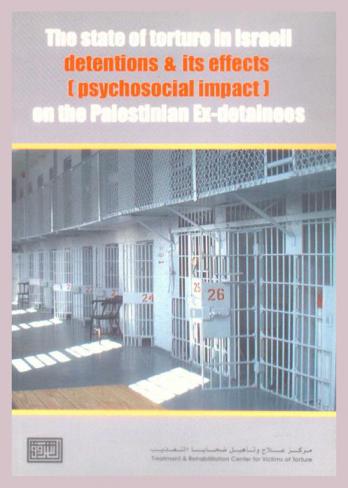
Stolen Youth is the first book to explore Israel's incarceration of Palestinian children. Based on first-hand information from international human rights groups and NGO workers in the West Bank and Gaza Strip, it also features interviews with children who have been imprisoned. The result is a disturbing and often shocking account of the abuses that are being carried out by Israel.
The book presents a critical analysis of the international legal framework and the UN system, arguing that a major failure of these instuitutions is their appeal to neutrality while ignoring the reality of power. The book attempts to address the inadequacy of these institutions by placing the issue of Palestinian child prisoners within the framework of Israeli strategy and the overall system of control.
Stolen Youth outlines Israel's system of institutionalized discrimination and state torture, challenges the legitimacy of Israel's 'security' argument, and argues that Israel's treatment of Palestinian detainees forms one pillar of a policy designed to quash resistance to the occupation.
eBook

The Jewish Question in the British Colonial Imagination
In December 1940, 1,580 Jewish refugees who fled Nazi-controlled Europe survived a long journey to Haifa only to be deported by the British Mandate authorities in Palestine to the British colony of Mauritius. Using this case study, this article explores British perceptions of the Jewish Question during World War II. It builds on a transnational archive that includes British colonial records from Britain, Palestine, and Mauritius, together with memoirs, letters, diaries, and oral testimonies from the Jewish detainees and the local Mauritians who remember them. In doing so, it asks three interconnected questions: How did the British authorities perceive the Jews deported to Mauritius? How did the deportees perceive Mauritius, their new destination, and its local population? And how were the detainees received and perceived by Mauritians? This three-pronged inquiry invites an exploration of the ambiguity of attitudes toward Jewish refugees inside and outside British colonial frames.
Journal Article
AFSC screens \Detaining Dreams\ in Des Moines
The American Friends Service Committee (AFSC) screened \"Detaining Dreams,\" its new documentary film about Israel's systematic detention and abuse of Palestinian children, at Drake University's Old Main in Des Moines, Iowa on September 19. Rabbi Brant Rosen, midwest regional director of AFSC, traveled from Chicago to participate in a post-screening panel discussion with Jody Mashek, legal services director for AFSC's Immigrants Voice Program in Des Moines, and AFSC Iowa Middle East Peace Building associate Katie Huerter. All three visited Israel and Palestine earlier this year. The documentary is part of the vital \"No Way To Treat A Child\" campaign () co-sponsored by AFSC and Defense for Children International-Palestine, Rosen added.
Journal Article