
Catalogue Search | MBRL


Are you sure you want to remove the book from the shelf?

{{itemTitle}}
736,146
result(s) for
"Devices"
Sort by:


Handbook of Organic Materials for Optical and (Opto)Electronic Devices
Small molecules and conjugated polymers, the two main types of organic materials used for optoelectronic and photonic devices, can be used in a number of applications including organic light-emitting diodes, photovoltaic devices, photorefractive devices and waveguides.
eBook


A review of memristor: material and structure design, device performance, applications and prospects
With the booming growth of artificial intelligence (AI), the traditional von Neumann computing architecture based on complementary metal oxide semiconductor devices are facing memory wall and power wall. Memristor based in-memory computing can potentially overcome the current bottleneck of computer and achieve hardware breakthrough. In this review, the recent progress of memory devices in material and structure design, device performance and applications are summarized. Various resistive switching materials, including electrodes, binary oxides, perovskites, organics, and two-dimensional materials, are presented and their role in the memristor are discussed. Subsequently, the construction of shaped electrodes, the design of functional layer and other factors influencing the device performance are analyzed. We focus on the modulation of the resistances and the effective methods to enhance the performance. Furthermore, synaptic plasticity, optical-electrical properties, the fashionable applications in logic operation and analog calculation are introduced. Finally, some critical issues such as the resistive switching mechanism, multi-sensory fusion, system-level optimization are discussed.
Journal Article

Automotive power transmission systems
'Automotive Power Transmission Systems' provides technical details and developments for all automotive power transmission systems. The transmission system of an automotive vehicle is the key to the dynamic performance, drivability and comfort, and fuel economy.
Book

Quasi-normal mode expansion as a tool for the design of nanophotonic devices
Many nanophotonic devices rely on the excitation of photonic resonances to enhance light-matter interaction. The understanding of the resonances is therefore of a key importance to facilitate the design of such devices. These resonances may be analyzed by use of the quasi-normal mode (QNM) theory. Here, we illustrate how QNM analysis may help study and design resonant nanophotonic devices. We will in particular use the QNM expansion of far-field quantities based on Riesz projection to design optical antennas.
Journal Article

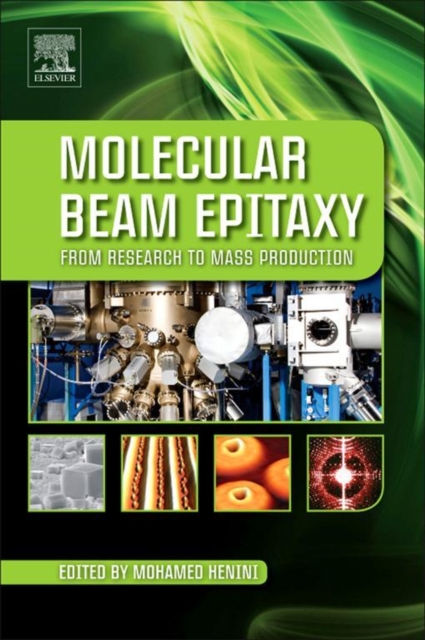
Molecular beam epitaxy : from research to mass production
This multi-contributor handbook discusses Molecular Beam Epitaxy (MBE), an epitaxial deposition technique which involves laying down layers of materials with atomic thicknesses on to substrates. It summarizes MBE research and application in epitaxial growth with close discussion and a 'how to' on processing molecular or atomic beams that occur on a surface of a heated crystalline substrate in a vacuum. MBE has expanded in importance over the past thirty years (in terms of unique authors, papers and conferences) from a pure research domain into commercial applications (prototype device structures and more at the advanced research stage). MBE is important because it enables new device phenomena and facilitates the production of multiple layered structures with extremely fine dimensional and compositional control. The techniques can be deployed wherever precise thin-film devices with enhanced and unique properties for computing, optics or photonics are required. This book covers the advances made by MBE both in research and mass production of electronic and optoelectronic devices. It includes new semiconductor materials, new device structures which are commercially available, and many more which are at the advanced research stage. Condenses fundamental science of MBE into a modern reference, speeding up literature reviewDiscusses new materials, novel applications and new device structures, grounding current commercial applications with modern understanding in industry and research Coverage of MBE as mass production epitaxial technology enhances processing efficiency and throughput for semiconductor industry and nanostructured semiconductor materials research community
eBook

State of the Art in Smart Portable, Wearable, Ingestible and Implantable Devices for Health Status Monitoring and Disease Management
Several illnesses that are chronic and acute are becoming more relevant as the world’s aging population expands, and the medical sector is transforming rapidly, as a consequence of which the need for “point-of-care” (POC), identification/detection, and real time management of health issues that have been required for a long time are increasing. Biomarkers are biological markers that help to detect status of health or disease. Biosensors’ applications are for screening for early detection, chronic disease treatment, health management, and well-being surveillance. Smart devices that allow continual monitoring of vital biomarkers for physiological health monitoring, medical diagnosis, and assessment are becoming increasingly widespread in a variety of applications, ranging from biomedical to healthcare systems of surveillance and monitoring. The term “smart” is used due to the ability of these devices to extract data with intelligence and in real time. Wearable, implantable, ingestible, and portable devices can all be considered smart devices; this is due to their ability of smart interpretation of data, through their smart sensors or biosensors and indicators. Wearable and portable devices have progressed more and more in the shape of various accessories, integrated clothes, and body attachments and inserts. Moreover, implantable and ingestible devices allow for the medical diagnosis and treatment of patients using tiny sensors and biomedical gadgets or devices have become available, thus increasing the quality and efficacy of medical treatments by a significant margin. This article summarizes the state of the art in portable, wearable, ingestible, and implantable devices for health status monitoring and disease management and their possible applications. It also identifies some new technologies that have the potential to contribute to the development of personalized care. Further, these devices are non-invasive in nature, providing information with accuracy and in given time, thus making these devices important for the future use of humanity.
Journal Article