
Catalogue Search | MBRL


Are you sure you want to remove the book from the shelf?

{{itemTitle}}
8
result(s) for
"Devotional literature, Latin (Medieval and modern)"
Sort by:


Affective Meditation and the Invention of Medieval Compassion
Affective meditation on the Passionwas one of the most popular literary genres of the high and later Middle Ages. Proliferating in a rich variety of forms, these lyrical, impassioned, script-like texts in Latin and the vernacular had a deceptively simple goal: to teach their readers how to feel. They were thus instrumental in shaping and sustaining the wide-scale shift in medieval Christian sensibility from fear of God to compassion for the suffering Christ.Affective Meditation and the Invention of Medieval Compassionadvances a new narrative for this broad cultural change and the meditative writings that both generated and reflected it. Sarah McNamer locates women as agents in the creation of the earliest and most influential texts in the genre, from John of Fécamp'sLibellusto theMeditationes vitae Christi, thus challenging current paradigms that cast the compassionate affective mode as Anselmian or Franciscan in origin. The early development of the genre in women's practices had a powerful and lasting legacy. With special attention to Middle English texts, including Nicholas Love'sMirrorand a wide range of Passion lyrics and laments,Affective Meditation and the Invention of Medieval Compassionilluminates how these scripts for the performance of prayer served to construct compassion itself as an intimate and feminine emotion. To feel compassion for Christ, in the private drama of the heart that these texts stage, was to feel like a woman. This was an assumption about emotion that proved historically consequential, McNamer demonstrates, as she traces some of its legal, ethical, and social functions in late medieval England.
eBook

Texts of the Passion
In this book Thomas H. Bestul constructs the literary history of the Latin Passion narratives, placing them within their social, cultural, and historical contexts. He examines the ways in which the Passion is narrated and renarrated in devotional treatises, paying particular attention to the modifications and enlargements of the narrative of the Passion as it is presented in the canonical gospels.
Of particular interest to Bestul are the representations of Jews, women, and the body of the crucified Christ. Bestul argues that the greatly enlarged role of the Jews in the Passion narratives of the twelfth and thirteenth centuries is connected to the rising anti-Judaism of the period. He explores how the representations of women, particularly the Virgin Mary, express cultural values about the place of women in late medieval society and reveal an increased interest in female subjectivity.
eBook

Finding the right words : Isidore's Synonyma in Anglo-Saxon England
Isidore of Seville (circa 570-636) was the author of the Etymologiae, . the most celebrated and widely circulated encyclopaedia of the western Middle Ages. In addition, Isidore's Synonyma were very successful and became one of the classics of medieval spirituality. Indeed, it was the Synonyma that were to define the so-called 'Isidorian style,' a rhymed, rhythmic prose that proved influential throughout the Middle Ages.
Finding the Right Words is the first book-length study to deal with the transmission and reception of works by Isidore of Seville in Anglo-Saxon England, with a particular focus on the Synonyma. Beginning with a general survey of Isidore's life and activity as a bishop in early seventh-century Visigothic Spain, Claudia Di Sciacca offers a comprehensive introduction to the Synonyma , drawing special attention to their distinctive style. She goes on to discuss the transmission of the text to early medieval England and its 'vernacularisation,' that is, its translations and adaptations in Old English prose and verse. The case for the particular receptiveness of the Synonyma in Anglo-Saxon England is strongly supported by both a close reading of primary sources and an extensive selection of secondary literature. This rigorous, well-documented volume demonstrates the significance of the Synonyma to our understanding of the literary pretensions and pedagogical practices of Anglo-Saxon England, and offers new insights into the interaction of Latin and vernacular within its literary culture.
eBook
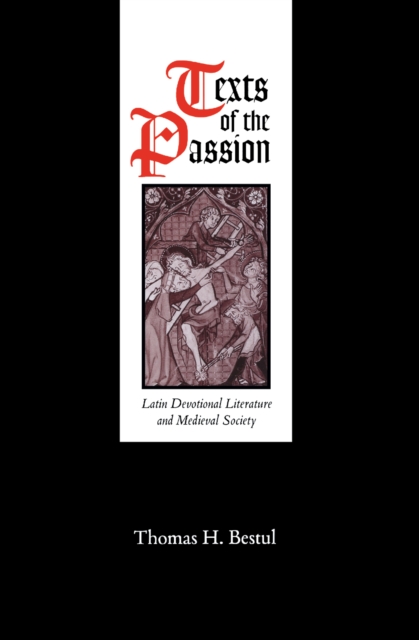
Texts of the passion : Latin devotional literature and medieval society
In this book Thomas H. Bestul constructs the literary history of the Latin Passion narratives, placing them within their social, cultural, and historical contexts. He examines the ways in which the Passion is narrated and renarrated in devotional treatises, paying particular attention to the modifications and enlargements of the narrative of the Passion as it is presented in the canonical gospels. Of particular interest to Bestul are the representations of Jews, women, and the body of the crucified Christ. Bestul argues that the greatly enlarged role of the Jews in the Passion narratives of the twelfth and thirteenth centuries is connected to the rising anti-Judaism of the period. He explores how the representations of women, particularly the Virgin Mary, express cultural values about the place of women in late medieval society and reveal an increased interest in female subjectivity.
eBook

Finding the Right Words
Isidore of Seville (circa 570-636) was the author of theEtymologiae,. the most celebrated and widely circulated encyclopaedia of the western Middle Ages. In addition, Isidore'sSynonymawere very successful and became one of the classics of medieval spirituality. Indeed, it was theSynonymathat were to define the so-called 'Isidorian style,' a rhymed, rhythmic prose that proved influential throughout the Middle Ages.
Finding the Right Wordsis the first book-length study to deal with the transmission and reception of works by Isidore of Seville in Anglo-Saxon England, with a particular focus on theSynonyma.Beginning with a general survey of Isidore's life and activity as a bishop in early seventh-century Visigothic Spain, Claudia Di Sciacca offers a comprehensive introduction to theSynonyma, drawing special attention to their distinctive style. She goes on to discuss the transmission of the text to early medieval England and its 'vernacularisation,' that is, its translations and adaptations in Old English prose and verse. The case for the particular receptiveness of theSynonymain Anglo-Saxon England is strongly supported by both a close reading of primary sources and an extensive selection of secondary literature. This rigorous, well-documented volume demonstrates the significance of theSynonymato our understanding of the literary pretensions and pedagogical practices of Anglo-Saxon England, and offers new insights into the interaction of Latin and vernacular within its literary culture.
eBook
Finding the Right Words
This rigorous, well-documented volume demonstrates the significance of the Synonymato our understanding of the literary pretensions and pedagogical practices of Anglo-Saxon England, and offers new insights into the interaction of Latin and vernacular within its literary culture.
eBook