
Catalogue Search | MBRL


Are you sure you want to remove the book from the shelf?

{{itemTitle}}
136
result(s) for
"Diagnosis Moral and ethical aspects"
Sort by:


Born and Made
Are new reproductive and genetic technologies racing ahead of a society that is unable to establish limits to their use? Have the \"new genetics\" outpaced our ability to control their future applications? This book examines the case of preimplantation genetic diagnosis (PGD), the procedure used to prevent serious genetic disease by embryo selection, and the so-called \"designer baby\" method. Using detailed empirical evidence, the authors show that far from being a runaway technology, the regulation of PGD over the past fifteen years provides an example of precaution and restraint, as well as continual adaptation to changing social circumstances. Through interviews, media and policy analysis, and participant observation at two PGD centers in the United Kingdom,Born and Madeprovides an in-depth sociological examination of the competing moral obligations that define the experience of PGD.
Among the many novel findings of this pathbreaking ethnography of reproductive biomedicine is the prominence of uncertainty and ambivalence among PGD patients and professionals--a finding characteristic of the emerging \"biosociety,\" in which scientific progress is inherently paradoxical and contradictory. In contrast to much of the speculative futurology that defines this field,Born and Madeprovides a timely and revealing case study of the on-the-ground decision-making that shapes technological assistance to human heredity.
eBook

The age of diagnosis : how our obsession with medical labels is making us sicker
\"From a neurologist and award-winning author of The Sleeping Beauties, a meticulous and compassionate exploration of how our culture of medical diagnosis can harm, rather than help, patients I'm a neurologist. Diagnosis is my bread and butter. So why then would I, an experienced medical doctor, be very careful about which diagnosis I would pursue for myself or would be willing to accept if foisted upon me? We live in an age of diagnosis. The advance of sophisticated genetic sequencing techniques means that we may all soon be screened for potential abnormalities. The internet provides a vast array of information that helps us speculate about our symptoms. Conditions like ADHD and Autism are on the rapid rise, while other new categories like Long Covid are driven by patients themselves. When we are suffering, it feels natural to seek a diagnosis. We want a clear label, understanding, and, of course, treatment. But is diagnosis an unqualified good thing? Could it sometimes even make us worse instead of better? Through the moving stories of real people, neurologist Suzanne O'Sullivan explores the complex world of modern diagnosis, comparing the impact of a medical label to the pain of not knowing. With scientific authority and compassionate storytelling, she opens up new possibilities for how we might approach our health and our suffering\"-- Provided by publisher.
BOOK

Ethical Problems and Genetics Practice
Ethical Problems and Genetics Practice provides a rich, case-based account of the ethical issues arising in the genetics clinic and laboratory. By analysing a wide range of evocative and often arresting cases from practice, Michael Parker provides a compelling insight into the complex moral world of the contemporary genetics professional and the challenges they face in the care of patients and their families. This book is essential reading for anyone interested in the ethical issues arising in everyday genetics practice. Ethical Problems and Genetics Practice is also a sustained engagement with the relationships between bioethics and social science. In proposing and exemplifying a new approach to bioethics, it makes a significant contribution to debates on methods and interdisciplinarity and will therefore also appeal to all those concerned with theoretical and methodological approaches to bioethics and social science.
eBook


Babies by Design
We stand on the brink of unprecedented growth in our ability to understand and change the human genome. New reproductive technologies now enable parents to select some genetic traits for their children, and soon it will be possible to begin to shape ourselves as a species. Despite the loud cries of alarm that such a prospect inspires, Ronald Green argues that we will-and we should-undertake the direction of our own evolution.
A leader in the bioethics community, Green offers a scientifically and ethically informed view of human genetic self-modification and the possibilities it opens up for a better future. Fears of a terribleBrave New Worldor a new eugenics movement are overblown, he maintains, and in the more likely future, genetic modifications may improve parents' ability to enhance children's lives and may even promote social justice.
The author outlines the new capabilities of genomic science, addresses urgent questions of safety that genetic interventions pose, and explores questions of parenting and justice. He also examines the religious implications of gene modification. Babies by design are assuredly in the future, Green concludes, and by making responsible choices as we enter that future, we can incorporate gene technology in a new age of human adventure.
eBook
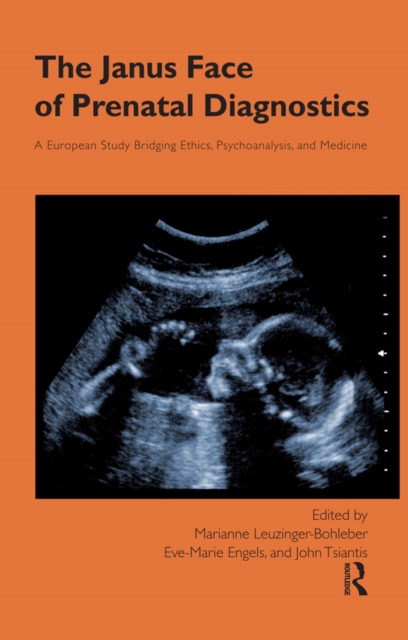
The janus face of prenatal diagnostics
Coping with modern technology in the life sciences (biology and medicine) became a major issue for people living in the Twentieth Century, and continues to be so in the present century. Biotechnology creates new opportunities and possibilities, but also new dangers, risks, and ethical concerns.
In this volume, ethical dilemmas in the context of a specific biomedical technology are discussed. Experts in ethics, philosophy, psychoanalysis, and medicine jointly investigated a field of prenatal and genetic research that seems particularly challenging: prenatal diagnostics. In many European countries amniocentesis, for example, is a routine diagnostic tool for women becoming pregnant after the age of thirty-five. In recent decades, enormous progress has been made in diagnosing genetically-based diseases and other serious prenatal abnormalities. Today, we know that a positive prenatal genetic diagnostic creates distress for all women and their partners, and necessitates making the difficult decision as to whether or not to allow the pregnancy to continue. As is demonstrated in this volume through the summaries of interviews with couples, the reactions of women and their partners who are facing this situation can be very different.
The new and innovative interdisciplinary dialogue on this topic that is presented in this volume offers a deeper understanding of the ethical dilemmas raised by prenatal and genetic diagnostics, and explores ways to support couples in this extremely difficult situation.
eBook

The Ethics of Consent and Choice in Prenatal Screening
Increasingly, notions of individual autonomy, personal \"choice\" and preference have become woven into our reproductive expectations. With respect to prenatal screening, the choices sought, offered or denied are shaped and interpreted through a range of so.
eBook
Choosing Between Possible Lives
To what extent should parents be able to choose the kind of child they have? The unfortunate phrase ‘designer baby’ has become familiar in debates surrounding reproduction. As a reference to current possibilities the term is misleading, but the phrase may indicate a societal concern of some kind about control and choice in the course of reproduction. Typically, people can choose whether to have a child. They may also have an interest in choosing, to some extent, the conditions under which they do so, such as whether they have a child with a serious disability or disease. The purpose of this book is to explore the difficult and controversial question of the appropriate ethical and legal extent of reproductive autonomy in this context. The book examines ethical, legal and public policy issues in prenatal screening, prenatal diagnosis (PND), selective abortion and preimplantation genetic diagnosis (PGD). It explores the ethics of these selection practices and the ability of current ethical guidelines and legal mechanisms, including the law on selective abortion and wrongful birth, to deal with advances in genetic and other knowledge in these areas. Unlike in the United States, in England the relevant law is not inherently rights-based, but the impact of the Human Rights Act 1998 inevitably raises questions about the proper scope of reproductive autonomy in this context. The implications of the analysis are considered for the development of relevant law, public policy and ethical guidelines and will be of interest to academics in medical law and ethics, health professionals, lawyers, those working on public policy and students with an interest in these issues.
eBook