
Catalogue Search | MBRL


Are you sure you want to remove the book from the shelf?

{{itemTitle}}
810,451
result(s) for
"Diagnostics"
Sort by:

Tenecteplase for Stroke at 4.5 to 24 Hours with Perfusion-Imaging Selection
Tenecteplase for thrombolysis in a 4.5-to-24-hour window did not improve disability outcomes at 90 days in patients with ischemic stroke who had been chosen on the basis of imaging. Most patients had endovascular thrombectomy.
Journal Article

Point-of-Care Ultrasonography
Point-of-care ultrasonography (POCUS) is performed by a physician at the bedside and is standard practice in obstetric, emergency, and musculoskeletal medicine. When compared with formal sonography, POCUS is equivalent in screening for abdominal aortic aneurysm and as accurate in diagnosing deep venous thrombosis. POCUS has high accuracy for diagnosing pneumonia and detecting acute decompensated heart failure but is less accurate than computed tomography for identifying pulmonary embolism. POCUS confirmation of intrauterine pregnancy rules out an ectopic pregnancy. In the third trimester of high-risk pregnancies, umbilical artery Doppler ultrasonography can improve perinatal outcomes. Musculoskeletal POCUS is used to diagnose and guide treatment of many joint and soft tissue conditions. It is as accurate as magnetic resonance imaging in the diagnosis of complete rotator cuff tears. Ultrasound guidance improves outcomes in the placement of central venous catheters and fluid drainage from body cavities and lumbar punctures. Ultrasonography can reduce the use of CT for diagnosis of appendicitis; however, negative scan results do not rule out disease. POCUS can accurately diagnose and rule out gallbladder pathology, and is effective for diagnosing urolithiasis. Focused cardiac ultrasonography can detect pericardial effusion and decreased systolic function, but is less accurate than lung ultrasonography at diagnosing acute heart failure. Limited evidence demonstrates a benefit of diagnosing testicular and gynecologic conditions. The American College of Emergency Physicians, the American Institute of Ultrasound in Medicine, the Society for Academic Emergency Medicine, the American College of Radiology, and others offer POCUS training. Training standards for POCUS have been defined for residency programs but are less established for credentialing. Illustration by Jonathan Dimes
Journal Article
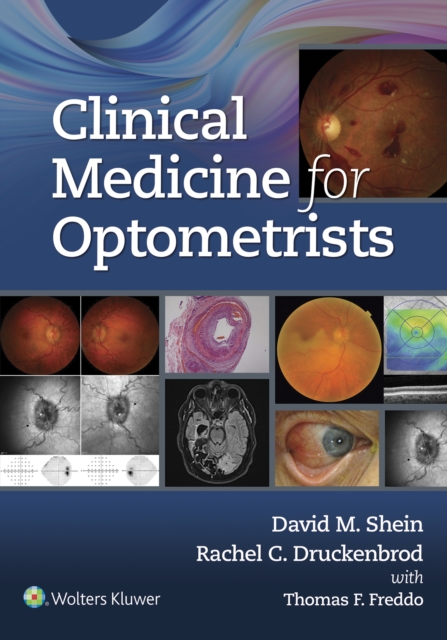
Clinical Medicine for Optometrists
Providing a solid foundation in clinical medicine for optometrists and optometry students, Clinical Medicine for Optometrists covers the systemic medical conditions that have serious impacts on ocular health and function, as well as the ocular exam findings that may be an early indication of significant systemic disease.
eBook

Systematic unenhanced CT for acute abdominal symptoms in the elderly patients improves both emergency department diagnosis and prompt clinical management
Objectives
To assess the added-value of systematic unenhanced abdominal computed tomography (CT) on emergency department (ED) diagnosis and management accuracy compared to current practice, in elderly patients with non-traumatic acute abdominal symptoms.
Methods
Institutional review board approval and informed consent were obtained. This prospective study included 401 consecutive patients 75 years of age or older, admitted to the ED with acute abdominal symptoms, and investigated by early systematic unenhanced abdominal CT scan. ED diagnosis and intended management before CT, after unenhanced CT, and after contrast CT if requested, were recorded. Diagnosis and management accuracies were evaluated and compared before CT (clinical strategy) and for two conditional strategies (current practice and systematic unenhanced CT). An expert clinical panel assigned a final diagnosis and management after a 3-month follow-up.
Results
Systematic unenhanced CT significantly improved the accurate diagnosis (76.8% to 85%,
p
=1.1x10
-6
) and management (88.5% to 95.8%,
p
=2.6x10
-6
) rates compared to current practice. It allowed diagnosing 30.3% of acute unsuspected pathologies, 3.4% of which were unexpected surgical procedure requirement.
Conclusions
Systematic unenhanced abdominal CT improves ED diagnosis accuracy and appropriate management in elderly patients presenting with acute abdominal symptoms compared to current practice.
Key Points
•
Systematic unenhanced CT improves significantly diagnosis accuracy compared to current practice.
•
Systematic unenhanced CT optimizes appropriate hospitalization by increasing the number of discharged patients.
•
Systematic unenhanced CT allows detection of about one-third of acute unsuspected abdominal conditions.
•
It should allow boosting emergency department management decision-making confidence in old patients.
Journal Article

Results of the Randomized Danish Lung Cancer Screening Trial with Focus on High-Risk Profiling
As of April 2015, participants in the Danish Lung Cancer Screening Trial had been followed for at least 5 years since their last screening.
Mortality, causes of death, and lung cancer findings are reported to explore the effect of computed tomography (CT) screening.
A total of 4,104 participants aged 50-70 years at the time of inclusion and with a minimum 20 pack-years of smoking were randomized to have five annual low-dose CT scans (study group) or no screening (control group).
Follow-up information regarding date and cause of death, lung cancer diagnosis, cancer stage, and histology was obtained from national registries. No differences between the two groups in lung cancer mortality (hazard ratio, 1.03; 95% confidence interval, 0.66-1.6; P = 0.888) or all-cause mortality (hazard ratio, 1.02; 95% confidence interval, 0.82-1.27; P = 0.867) were observed. More cancers were found in the screening group than in the no-screening group (100 vs. 53, respectively; P < 0.001), particularly adenocarcinomas (58 vs. 18, respectively; P < 0.001). More early-stage cancers (stages I and II, 54 vs. 10, respectively; P < 0.001) and stage IIIa cancers (15 vs. 3, respectively; P = 0.009) were found in the screening group than in the control group. Stage IV cancers were nonsignificantly more frequent in the control group than in the screening group (32 vs. 23, respectively; P = 0.278). For the highest-stage cancers (T4N3M1, 21 vs. 8, respectively; P = 0.025), this difference was statistically significant, indicating an absolute stage shift. Older participants, those with chronic obstructive pulmonary disease, and those with more than 35 pack-years of smoking had a significantly increased risk of death due to lung cancer, with nonsignificantly fewer deaths in the screening group.
No statistically significant effects of CT screening on lung cancer mortality were found, but the results of post hoc high-risk subgroup analyses showed nonsignificant trends that seem to be in good agreement with the results of the National Lung Screening Trial. Clinical trial registered with www.clinicaltrials.gov (NCT00496977).
Journal Article
Trial of Thrombectomy for Stroke with a Large Infarct of Unrestricted Size
In patients with acute stroke and a large infarct of unrestricted size, use of thrombectomy and medical care within 7 hours after symptom onset led to better functional outcomes and lower mortality than medical care alone.
Journal Article

Calcified or ossified benign soft tissue lesions that may simulate malignancy
The purpose of this article is to review calcified or ossified benign soft tissue lesions that may simulate malignancy. We review the clinical presentations, locations, imaging characteristics, and differential diagnostic considerations of myositis ossificans, tophaceous gout, benign vascular lesions, calcific tendinopathy with osseous involvement, periosteal chondroma, primary synovial chondromatosis, Hoffa’s disease, tumoral calcinosis, lipoma with metaplasia, calcifying aponeurotic fibroma, calcific myonecrosis, ancient schwannoma, and Castleman disease.
Journal Article

Evolution of Translational Omics
Technologies collectively called omics enable simultaneous measurement of an enormous number of biomolecules; for example, genomics investigates thousands of DNA sequences, and proteomics examines large numbers of proteins. Scientists are using these technologies to develop innovative tests to detect disease and to predict a patient's likelihood of responding to specific drugs. Following a recent case involving premature use of omics-based tests in cancer clinical trials at Duke University, the NCI requested that the IOM establish a committee to recommend ways to strengthen omics-based test development and evaluation. This report identifies best practices to enhance development, evaluation, and translation of omics-based tests while simultaneously reinforcing steps to ensure that these tests are appropriately assessed for scientific validity before they are used to guide patient treatment in clinical trials.
eBook

Automatic classification of focal liver lesions based on MRI and risk factors
Accurate classification of focal liver lesions is an important part of liver disease diagnostics. In clinical practice, the lesion type is often determined from the abdominal MR examination, which includes T2-weighted and dynamic contrast enhanced (DCE) MR images. To date, only T2-weighted images are exploited for automatic classification of focal liver lesions. In this study additional MR sequences and risk factors are used for automatic classification to improve the results and to make a step forward to a clinically useful aid for radiologists.
Clinical MRI data sets of 95 patients with in total 125 benign lesions (40 adenomas, 29 cysts and 56 hemangiomas) and 88 malignant lesions (30 hepatocellular carcinomas (HCC) and 58 metastases) were included in this study. Contrast curve, gray level histogram, and gray level co-occurrence matrix texture features were extracted from the DCE-MR and T2-weighted images. In addition, risk factors including the presence of steatosis, cirrhosis, and a known primary tumor were used as features. Fifty features with the highest ANOVA F-score were selected and fed to an extremely randomized trees classifier. The classifier evaluation was performed using the leave-one-out principle and receiver operating characteristic (ROC) curve analysis.
The overall accuracy for the classification of the five major focal liver lesion types is 0.77. The sensitivity/specificity is 0.80/0.78, 0.93/0.93, 0.84/0.82, 0.73/0.56, and 0.62/0.77 for adenoma, cyst, hemangioma, HCC, and metastasis, respectively.
The proposed classification system using features derived from clinical DCE-MR and T2-weighted images, with additional risk factors is able to differentiate five common types of lesions and is a step forward to a clinically useful aid for focal liver lesion diagnosis.
Journal Article

Imaging Characterization of Renal Masses
The detection of a renal mass is a relatively frequent occurrence in the daily practice of any Radiology Department. The diagnostic approaches depend on whether the lesion is cystic or solid. Cystic lesions can be managed using the Bosniak classification, while management of solid lesions depends on whether the lesion is well-defined or infiltrative. The approach to well-defined lesions focuses mainly on the differentiation between renal cancer and benign tumors such as angiomyolipoma (AML) and oncocytoma. Differential diagnosis of infiltrative lesions is wider, including primary and secondary malignancies and inflammatory disease, and knowledge of the patient history is essential. Radiologists may establish a possible differential diagnosis based on the imaging features of the renal masses and the clinical history. The aim of this review is to present the contribution of the different imaging techniques and image guided biopsies in the diagnostic management of cystic and solid renal lesions.
Journal Article