
Catalogue Search | MBRL


Are you sure you want to remove the book from the shelf?

{{itemTitle}}
70
result(s) for
"Dickens, Charles, 1812–1870"
Sort by:

The Cambridge introduction to Charles Dickens
\"Charles Dickens became immensely popular early on in his career as a novelist, and his appeal continues to grow with new editions prompted by recent television and film adaptations, as well as large numbers of students studying the Victorian novel. This lively and accessible introduction to Dickens focuses on the extraordinary diversity of his writing. Jon Mee discusses Dickens's novels, journalism and public performances, the historical contexts and his influence on other writers. In the process, five major themes emerge: Dickens the entertainer; Dickens and language; Dickens and London; Dickens, gender, and domesticity; and the question of adaptation, including Dickens's adaptations of his own work. These interrelated concerns allow readers to start making their own new connections between his famous and less widely read works and to appreciate fully the sheer imaginative richness of his writing, which particularly evokes the dizzying expansion of nineteenth-century London\"-- Provided by publisher.
Book

The body economic
The Body Economic revises the intellectual history of nineteenth-century Britain by demonstrating that political economists and the writers who often presented themselves as their literary antagonists actually held most of their basic social assumptions in common. Catherine Gallagher demonstrates that political economists and their Romantic and early-Victorian critics jointly relocated the idea of value from the realm of transcendent spirituality to that of organic \"life,\" making human sensations--especially pleasure and pain--the sources and signs of that value. Classical political economy, this book shows, was not a mechanical ideology but a form of nineteenth-century organicism, which put the body and its feelings at the center of its theories, and neoclassical economics built itself even more self-consciously on physiological premises. The Body Economic explains how these shared views of life, death, and sensation helped shape and were modified by the two most important Victorian novelists: Charles Dickens and George Eliot. It reveals how political economists interacted crucially with the life sciences of the nineteenth century--especially with psychophysiology and anthropology--producing the intellectual world that nurtured not only George Eliot's realism but also turn-of-the-century literary modernism.
eBook


American Literature and the Culture of Reprinting, 1834-1853
The antebellum period has long been identified with the belated emergence of a truly national literature. And yet, as Meredith L. McGill argues, a mass market for books in this period was built and sustained through what we would call rampant literary piracy: a national literature developed not despite but because of the systematic copying of foreign works. Restoring a political dimension to accounts of the economic grounds of antebellum literature, McGill unfolds the legal arguments and political struggles that produced an American \"culture of reprinting\" and held it in place for two crucial decades.In this culture of reprinting, the circulation of print outstripped authorial and editorial control. McGill examines the workings of literary culture within this market, shifting her gaze from first and authorized editions to reprints and piracies, from the form of the book to the intersection of book and periodical publishing, and from a national literature to an internally divided and transatlantic literary marketplace. Through readings of the work of Dickens, Poe, and Hawthorne, McGill seeks both to analyze how changes in the conditions of publication influenced literary form and to measure what was lost as literary markets became centralized and literary culture became stratified in the early 1850s.American Literature and the Culture of Reprinting, 1834-1853delineates a distinctive literary culture that was regional in articulation and transnational in scope, while questioning the grounds of the startlingly recent but nonetheless powerful equation of the national interest with the extension of authors' rights.
eBook

The Oxford handbook of Charles Dickens
This Handbook is a comprehensive and up-to-date collection on Dickens's life and works. It includes original chapters on all of Dickens's writing and new considerations of his contexts, from the social, political, and economic to the scientific, commercial, and religious. The contributions speak in new ways about his depictions of families, environmental degradation, and improvements of the industrial age, as well as the law, charity, and communications. His treatment of gender, his mastery of prose in all its varieties and genres, and his range of affects and dramatization all come under stimulating reconsideration. His understanding of British history, of empire and colonization, of his own nation and foreign ones, and of selfhood and otherness, like all the other topics, is explained in terms easy to comprehend and profoundly relevant to global modernity.
Book

The Pleasures of Memory
What are the sources of the commonly held presumption that reading literature should make people more just, humane, and sophisticated? Rendering literary history responsive to the cultural histories of reading, publishing, and education, The Pleasures of Memory illuminates the ways that Dickens's serial fiction shaped not only the popular practice of reading for pleasure and instruction associated with the growth of periodical publication in the nineteenth century but also the school subject we now know as English.Examining the full scope of Dickens's literary production, Winter shows how his serial fiction instigated specific reading practices by reworking the conventions of religious didactic tracts from which most Victorians learned to read. Incorporating an influential associationist psychology of learning and reading founded on the cumulative functioning of memory, Dickens's serial novels consistently lead readers to reflect on their reading as a form of shared experience, thus channeling their personal memories of Dickens's unforgettablescenes and characters into a public reception reaching across social classes. Dickens's celebrity authorship, Winter argues, represented both a successful marketing program for popular fiction and a cultural politics addressed to a politically unaffiliated, social-activist Victorian readership. As late-nineteenth-century educational reforms in Britain and the United States consolidated Dickens's heterogeneous constituency of readers into the masspopulations served by national and state school systems, however, Dickens's beloved novels came to embody the socially inclusive and humanizing goals of democratic education.
eBook

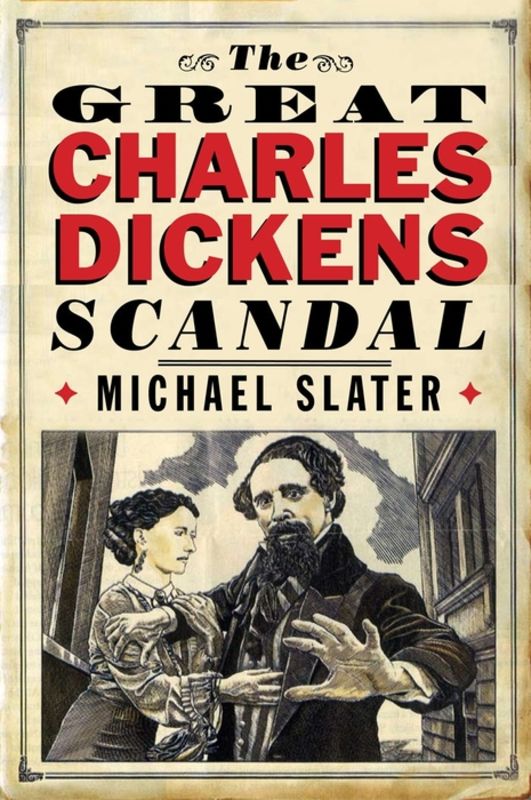
The Great Charles Dickens Scandal
Charles Dickens was regarded as the great proponent of hearth and home in Victorian Britain, but in 1858 this image was nearly shattered. With the breakup of his marriage that year, rumors of a scandalous relationship he may have conducted with the young actress Ellen \"Nelly\" Ternan flourished. For the remaining twelve years of his life, Dickens managed to contain the gossip. After his death, surviving family members did the same. But when the author's last living son died in 1934, there was no one to discourage rampant speculation. Dramatic revelations came from every corner-over Nelly's role as Dickens's mistress, their clandestine meetings, and even about his possibly fathering an illegitimate child by her.
This book presents the most complete account of the scandal and ensuing cover-up ever published. Drawing on the author's letters and other archival sources not previously available, Dickens scholar Michael Slater investigates what Dickens did or may have done, then traces the way the scandal was elaborated over succeeding generations. Slater shows how various writers concocted outlandish yet plausible theories while newspapers and book publishers vied for sensational revelations. With its tale of intrigue and a cast of well-known figures from Thackeray and Shaw to Orwell and Edmund Wilson, this engaging book will delight not only Dickens fans but also readers who appreciate tales of mystery, cover-up, and clever detection.
eBook


The Dickens Industry
Undoubtedly the best-selling author of his day and well loved by readers in succeeding generations, Charles Dickens was not always a favorite among critics. Celebrated for his novels advocating social reform, for half a century after his death he was ridiculed by those academics who condescended to write about him. Only the faithful band of devotees who called themselves Dickensians kept alive an interest in his work. Then, during the Second World War, he was resurrected by critics, and was soon being hailed as the foremost writer of his age, a literary genius alongside Shakespeare and Milton. More recently, Dickens has again been taken to task by a new breed of literary theorists who fault his chauvinism and imperialist attitudes. Whether he has been adored or despised, however, one thing is certain: no other Victorian novelist has generated more critical commentary. This book traces Dickens's reputation from the earliest reviews through the work of early 21st-century commentators, showing how judgments of Dickens changed with new standards for evaluating fiction. Mazzeno balances attention to prominent critics from the late 19th century through the first three quarters of the 20th with an emphasis on the past three decades, during which literary theory has opened up new ways of reading Dickens. What becomes clear is that, in attempting to provide fresh insight into Dickens's writings, critics often reveal as much about the predilections of their own age as they do about the novelist. Laurence W. Mazzeno is president emeritus of Alvernia University, Reading, Pennsylvania.
eBook