
Catalogue Search | MBRL


Are you sure you want to remove the book from the shelf?

{{itemTitle}}
13,450
result(s) for
"Diet, Reducing"
Sort by:

The new fat flush foods
Fat Flush returns with over 70 of the world's best fat blasting foods, seasonings, and supplements! The famous Fat Flush Plan has empowered millions of people to take control of their health and well-being. Now, the New Fat Flush Foods contains the very latest cutting-edge diet and detox revelations about the most highly revered superfoods-from your favorite comfort foods from childhood to new foods you will be anxious to try. In addition, you will discover expanded eating and storage tips and fresh Paleo, Ketogenic, vegan, and gluten-free options. The research based guidance and timeless wisdom will help you improve your health and that of your loved ones year round. The NEW Fat Flush Foods also includes how to: * Lose weight and eliminate stubborn fat * Increase your energy levels * Banish bloating and food cravings * Boost your cardiovascular system * Diminish digestive issues * Strengthen your immunity, and much more Here is everything you need to renew, restore, and reveal your best self EVER! Looking and feeling great has never tasted so good the Fat Flush way!
Book

Acceptability and potential effectiveness of commercial portion control tools amongst people with obesity
Exposure to large portion sizes is a risk factor for obesity. Specifically designed tableware may modulate how much is eaten and help with portion control. We examined the experience of using a guided crockery set (CS) and a calibrated serving spoon set (SS) by individuals trying to manage their weight. Twenty-nine obese adults who had completed 7–12 weeks of a community weight-loss programme were invited to use both tools for 2 weeks each, in a crossover design, with minimal health professional contact. A paper-based questionnaire was used to collect data on acceptance, perceived changes in portion size, frequency, and type of meal when the tool was used. Scores describing acceptance, ease of use and perceived effectiveness were derived from five-point Likert scales from which binary indicators (high/low) were analysed using logistic regression. Mean acceptance, ease of use and perceived effectiveness were moderate to high (3·7–4·4 points). Tool type did not have an impact on indicators of acceptance, ease of use and perceived effectiveness (P>0·32 for all comparisons); 55 % of participants used the CS on most days v. 21 % for the SS. The CS was used for all meals, whereas the SS was mostly used for evening meals. Self-selected portion sizes increased for vegetables and decreased for chips and potatoes with both tools. Participants rated both tools as equally acceptable, easy to use and with similar perceived effectiveness. Formal trials to evaluate the impact of such tools on weight control are warranted.
Journal Article

The new fat flush journal and shopping guide
The fat flush journal and shopping guide is your handy, take-anywhere companion to the fat flush plan.
Book

Changes in gut-microbiota-related metabolites and long-term improvements in lipoprotein subspecies in overweight and obese adults: the POUNDS lost trial
Background/objectivesAlterations in gut microbiota have been linked to obesity and impaired lipid metabolism. Lipoproteins are heterogeneous, and lipoprotein subspecies containing apolipoprotein C-III (apoCIII) have adverse associations with obesity and related cardiometabolic abnormalities. We investigated associations of weight-loss diet-induced decreases in atherogenic gut-microbial metabolites, trimethylamine N-oxide (TMAO) and L-carnitine, with improvements in atherogenic lipoproteins containing apoCIII among patients with obesity.Subjects/methodsThis study included overweight and obese adults who participated in a 2-year weight-loss dietary intervention, the POUNDS Lost trial. Blood levels of TMAO and L-carnitine were measured at baseline and 6 months after the intervention; 6-month changes in the metabolites were calculated. We evaluated 2-year changes in lipid profiles (n = 395) and cholesterol [Chol] in lipoprotein (very-low-density lipoprotein (VLDL), low-density lipoprotein (LDL), and high-density lipoprotein (HDL)) subfractions defined by the presence or absence of apoCIII (n = 277).ResultsThe initial (6-month) decrease in L-carnitine was significantly associated with long-term (2-year) reductions in non-HDL-Chol and LDL-Chol (p < 0.05). Also, the decrease in L-carnitine was significantly related to decreases in Chol in LDL with apoCIII (p = 0.034) and Chol in [LDL + VLDL] with apoCIII (p = 0.018). We found significant interactions between dietary fat and TMAO on changes in LDL-Chol (Pinteraction = 0.013) and Chol in [LDL + VLDL] with apoCIII (Pinteraction = 0.0048); a greater increase in TMAO was related to lesser improvements in the lipoprotein outcomes if participants consumed a high-fat compared to a low-fat diet.ConclusionsChanges in TMAO and L-carnitine induced by weight-loss diets were associated with long-term improvements in atherogenic lipoproteins containing apoCIII, implicating that these metabolic changes might be predictive of an individual’s response to the dietary treatment to modify the unfavorable lipid profiles in obese patients. Dietary fat intake might modify associations of TMAO changes with long-term improvements of atherogenic cholesterol metabolism in overweight and obese adults.ClinicalTrials.gov IdentifierNCT00072995
Journal Article
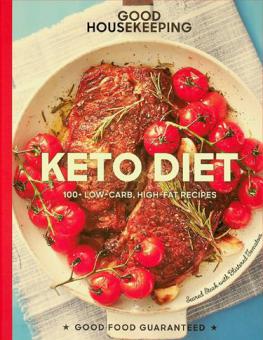
Keto diet : 100+ low-carb, high-fat recipes
Keto has become the diet of choice for losing weight--and it's also winning over converts who want to eat better and live healthier. Followers claim the popular high-fat, low-carb eating plan has helped them quickly shed pounds, while also boosting energy and relieving other ailments such as inflammation. But the diet's aim of inducing ketosis--a metabolic process where your body burns fat instead of carbs for energy--can leave dieters feeling like they're faced with restrictive meal options and difficult, overwhelming guidelines. Good Housekeeping solves the problem with 60 keto-approved, appetizing recipes made with healthy fats, delicious low-carb vegetables and fruits, and lean proteins. With a primer on how to kick-start your ketogenic eating, and tips and tricks throughout from the Good Housekeeping Test Kitchen, this book will become your essential reference for integrating a popular and successful diet into your lifestyle.
Book

Improving Compliance with Very Low Energy Diets (VLEDs) Prior to Bariatric Surgery—a Randomised Controlled Trial of Two Formulations
IntroductionPreoperative very low energy diets (VLEDs) improve access during bariatric surgery. Compliance with traditional VLED is variable, mainly due to gastrointestinal side effects. Formulite™ is a new formulation of VLED, with higher protein, soluble fibre and probiotics.AimsTo compare traditional VLED (Optifast™) with the new VLED (Formulite™) and assess compliance, weight loss, satisfaction, side effects and surgical access.MethodsThis was a randomised double-blinded study involving patients scheduled for bariatric surgery. The primary outcome was compliance, assessed by urinary ketone concentration and proportion of patients in ketosis at 2 weeks. Secondary outcomes were weight loss, satisfaction and patient reported outcomes, gastrointestinal side effects and operative conditions.ResultsThere were 69 participants: 35 in the Formulite™ group and 34 in the Optifast™ group. Ketosis at 2 weeks was achieved in both groups (88.5% vs 83.3%, Formulite™ vs. Optifast™, p = 0.602). Urinary ketones were higher with Formulite™ (1.5 vs 15 mmol/L, p = 0.030). Total body weight loss percentage, hunger and operative conditions were similar in both groups. Formulite™ produced less flatulence (score 3 vs 2, p = 0.010) and emotional eating (score 2 vs 1, p = 0.037); however, Optifast™ ranked higher in terms of taste (score 4 vs 3, p = 0.001) and overall satisfaction (score 5 vs 7, p = 0.011).ConclusionsCompliance over 2 weeks was high in both VLEDs with most subjects achieving ketosis. Overall satisfaction was moderately high, although variable. Whilst Formulite™ is a viable alternative to Optifast™, better formulations of VLED that addresses key adverse effects, whilst achieving ketosis, would be of significant value.
Journal Article


Very-Low-Calorie Ketogenic Diets With Whey, Vegetable, or Animal Protein in Patients With Obesity: A Randomized Pilot Study
Abstract
Context
We compared the efficacy, safety, and effect of 45-day isocaloric very-low-calorie ketogenic diets (VLCKDs) incorporating whey, vegetable, or animal protein on the microbiota in patients with obesity and insulin resistance to test the hypothesis that protein source may modulate the response to VLCKD interventions.
Subjects and Methods
Forty-eight patients with obesity (19 males and 29 females, homeostatic model assessment (HOMA) index ≥ 2.5, aged 56.2 ± 6.1 years, body mass index [BMI] 35.9 ± 4.1 kg/m2) were randomly assigned to three 45-day isocaloric VLCKD regimens (≤800 kcal/day) containing whey, plant, or animal protein. Anthropometric indexes; blood and urine chemistry, including parameters of kidney, liver, glucose, and lipid metabolism; body composition; muscle strength; and taxonomic composition of the gut microbiome were assessed. Adverse events were also recorded.
Results
Body weight, BMI, blood pressure, waist circumference, HOMA index, insulin, and total and low-density lipoprotein cholesterol decreased in all patients. Patients who consumed whey protein had a more pronounced improvement in muscle strength. The markers of renal function worsened slightly in the animal protein group. A decrease in the relative abundance of Firmicutes and an increase in Bacteroidetes were observed after the consumption of VLCKDs. This pattern was less pronounced in patients consuming animal protein.
Conclusions
VLCKDs led to significant weight loss and a striking improvement in metabolic parameters over a 45-day period. VLCKDs based on whey or vegetable protein have a safer profile and result in a healthier microbiota composition than those containing animal proteins. VLCKDs incorporating whey protein are more effective in maintaining muscle performance.
Journal Article


Effect of A Very Low-Calorie Ketogenic Diet on Food and Alcohol Cravings, Physical and Sexual Activity, Sleep Disturbances, and Quality of Life in Obese Patients
Psychological well-being and hunger and food control are two relevant factors involved in the success of weight-loss therapy in treating obesity. Thus, this study aims to evaluate food and alcohol cravings, physical and sexual activity, sleep, and life quality (QoL) in obese patients following a very low-calorie ketogenic (VLCK) diet, as well as the role of weight lost and ketosis on these parameters. A battery of psychological test was performed in twenty obese patients (12 females, 47.2 ± 10.2 year and BMI of 35.5 ± 4.4) through the course of a 4-month VLCK diet on four subsequent visits: baseline, maximum ketosis, reduced ketosis, and endpoint. Each subject acted as their own control. Relevantly, the dietary-induced changes in body composition (7.7 units of BMI lost, 18 kg of fat mass (1.2 kg of visceral fat mass)) were associated with a statistically significant improvement in food craving scores, physical activity, sleepiness, and female sexual function. Overall, these results also translated in a notable enhancement in QoL of the treated obese patients. Therefore, the rapid and sustained weight and fat mass (FM) loss induced by the VLCK diet is associated with good food control and improvements in the psychological well-being parameters in obese subjects, which could contribute to the long-term success of this therapy.
Journal Article