
Catalogue Search | MBRL


Are you sure you want to remove the book from the shelf?

{{itemTitle}}
765
result(s) for
"Difference engine"
Sort by:

The Computer from Pascal to von Neumann
In 1942, Lt. Herman H. Goldstine, a former mathematics professor, was stationed at the Moore School of Electrical Engineering at the University of Pennsylvania. It was there that he assisted in the creation of the ENIAC, the first electronic digital computer. The ENIAC was operational in 1945, but plans for a new computer were already underway. The principal source of ideas for the new computer was John von Neumann, who became Goldstine's chief collaborator. Together they developed EDVAC, successor to ENIAC. After World War II, at the Institute for Advanced Study, they built what was to become the prototype of the present-day computer. Herman Goldstine writes as both historian and scientist in this first examination of the development of computing machinery, from the seventeenth century through the early 1950s. His personal involvement lends a special authenticity to his narrative, as he sprinkles anecdotes and stories liberally through his text.
eBook

When Computers Were Human
Before Palm Pilots and iPods, PCs and laptops, the term \"computer\" referred to the people who did scientific calculations by hand. These workers were neither calculating geniuses nor idiot savants but knowledgeable people who, in other circumstances, might have become scientists in their own right. When Computers Were Human represents the first in-depth account of this little-known, 200-year epoch in the history of science and technology. Beginning with the story of his own grandmother, who was trained as a human computer, David Alan Grier provides a poignant introduction to the wider world of women and men who did the hard computational labor of science. His grandmother's casual remark, \"I wish I'd used my calculus,\" hinted at a career deferred and an education forgotten, a secret life unappreciated; like many highly educated women of her generation, she studied to become a human computer because nothing else would offer her a place in the scientific world. The book begins with the return of Halley's comet in 1758 and the effort of three French astronomers to compute its orbit. It ends four cycles later, with a UNIVAC electronic computer projecting the 1986 orbit. In between, Grier tells us about the surveyors of the French Revolution, describes the calculating machines of Charles Babbage, and guides the reader through the Great Depression to marvel at the giant computing room of the Works Progress Administration. When Computers Were Human is the sad but lyrical story of workers who gladly did the hard labor of research calculation in the hope that they might be part of the scientific community. In the end, they were rewarded by a new electronic machine that took the place and the name of those who were, once, the computers.
eBook

Reading and lexical-decision tasks generate different patterns of individual variability as a function of condition difficulty
We reanalyzed previous experiments based on lexical-decision and reading-aloud tasks in children with dyslexia and control children and tested the prediction of the difference engine model (DEM) that mean condition reaction times (RTs) and standard deviations (
SD
s) would be linearly related (Myerson et al.,
2003
). Then we evaluated the slope and the intercept with the
x
-axis of these linear functions in comparison with previously reported values (i.e., slope of about 0.30 and intercept of about 300 ms). In the case of lexical decision, the parameters were close to these values; by contrast, in the case of reading aloud, a much steeper slope (0.66) and a greater intercept (482.6 ms) were found. Therefore, interindividual variability grows at a much faster rate as a function of condition difficulty for reading than for lexical-decision tasks (or for other tasks reported in the literature). According to the DEM, the slope of the regression that relates means and
SD
s indicates the degree of correlation among the durations of the stages of processing. We propose that the need for a close coupling between orthographic and phonological processing in reading is what drives the particularly strong relationship between performance and interindividual variability that we observed in reading tasks.
Journal Article

Slowing in reading and picture naming: the effects of aging and developmental dyslexia
We examined the slowing in vocal reaction times shown by dyslexic (compared to control) children with that of older (compared to younger) adults using an approach focusing on the detection of global, non-task-specific components. To address this aim, data were analyzed with reference to the difference engine (DEM) and rate and amount (RAM) models. In Experiment 1, typically developing children, children with dyslexia (both attending sixth grade), younger adults and older adults read words and non-words and named pictures. In Experiment 2, word and picture conditions were presented to dyslexic and control children attending eighth grade. In both experiments, dyslexic children were delayed in reading conditions, while they were unimpaired in naming pictures (a finding which indicates spared access to the phonological lexicon). The reading difficulty was well accounted for by a single multiplicative factor while only the residual effect of length (but not frequency and lexicality) was present after controlling for over-additivity using a linear mixed effects model with random slopes on critical variables. Older adults were slower than younger adults across reading and naming conditions. This deficit was well described by a single multiplicative factor. Thus, while slowing of information processing is limited to orthographic stimuli in dyslexic children, it cuts across verbal tasks in older adults. Overall, speed differences in groups such as dyslexic children and older adults can be effectively described with reference to deficits in domains encompassing a variety of experimental conditions rather than deficits in single specific task/conditions. The DEM and RAM prove effective in teasing out global vs. specific components of performance.
Journal Article

An Analysis Model Combining Gamma-Type Stirling Engine and Power Converter
Waste heat is a potential source for powering our living environment. It can be harvested and transformed into electricity. Ohmic heat is a common type of waste heat. However, waste heat has the following limitations: wide distribution, insufficient temperature difference (ΔT < 70 K) for triggering turbines, and producing voltage below the open voltage of the battery. This paper proposes an energy harvester model that combines a gamma-type Stirling engine and variable capacitance. The energy harvester model is different from Tavakolpour-Saleh’s free-piston-type engine [7.1 W at ΔT = 407 K (273–680 K)]. The gamma-type Stirling engine is a low-temperature-difference engine. It can be triggered by a minimum ΔT value of 12 K (293–305 K). The triggering force in the variable capacitance is almost zero. Furthermore, the gamma-type Stirling engine is suitable for harvesting waste heat at room temperature. This study indicates that 21 mW of energy can be produced at ΔT = 30 K (293–323 K) for a bias voltage of 70 V and volume of 103.25 cc. Because of the given bias voltage, the energy harvester can break through the open voltage of the battery to achieve energy storage at a low temperature difference.
Journal Article

Study of cycle output improvement by work-fluid including phase change material
This paper deals with the output improvement of heating and cooling cycle by using the work-fluid including phase change material. The experimental study is carried out by heat exchange between work-fluid and heat transfer surface. The work-fluid is flown to a high temperature or a low temperature heat transfer surface from the narrow path. In order to increase the amount of the heat transmission, a trace of Diethylether (boiling point 34.8 °C), as a phase change material (PCM), is added to the work-fluid. The parameters of the experiment are additive amount of PCM, the rotational speed of the displacer piston and the temperature of heat transfer surface. It is clarified that the increasing of engine cycle output is brought by the PCM addition. The effect of PCM addition is evaluated by output ratio which is defined from the experimental cycle output data. The requirements for acquiring the increasing effect of output by adding PCM are clarified.
Journal Article

Impact of Forest Fires on Air Quality in Wolgan Valley, New South Wales, Australia—A Mapping and Monitoring Study Using Google Earth Engine
Forests are an important natural resource and are instrumental in sustaining environmental sustainability. Burning biomass in forests results in greenhouse gas emissions, many of which are long-lived. Precise and consistent broad-scale monitoring of fire intensity is a valuable tool for analyzing climate and ecological changes related to fire. Remote sensing and geographic information systems provide an opportunity to improve current practice’s accuracy and performance. Spectral indices techniques such as normalized burn ratio (NBR) have been used to identify burned areas utilizing satellite data, which aid in distinguishing burnt areas using their standard spectral responses. For this research, we created a split-panel web-based Google Earth Engine app for the geo-visualization of the region severely affected by forest fire using Sentinel 2 weekly composites. Then, we classified the burn severity in areas affected by forest fires in Wolgan Valley, New South Wales, Australia, and the surrounding area through Difference Normalized Burn Ratio (dNBR). The result revealed that the region’s burnt area increased to 6731 sq. km in December. We also assessed the impact of long-term rainfall and land surface temperature (LST) trends over the study region to justify such incidents. We further estimated the effect of such incidents on air quality by analyzing the changes in the column number density of carbon monoxide and nitrogen oxides. The result showed a significant increase of about 272% for Carbon monoxide and 45% for nitrogen oxides. We conclude that, despite fieldwork constraints, the usage of different NBR and web-based application platforms may be highly useful for forest management to consider the propagation of fire regimes.
Journal Article

Not on the Shelves
Sometimes, the best way to figure out where you'd like to go is to imagine what you'll have when you get there...
Journal Article
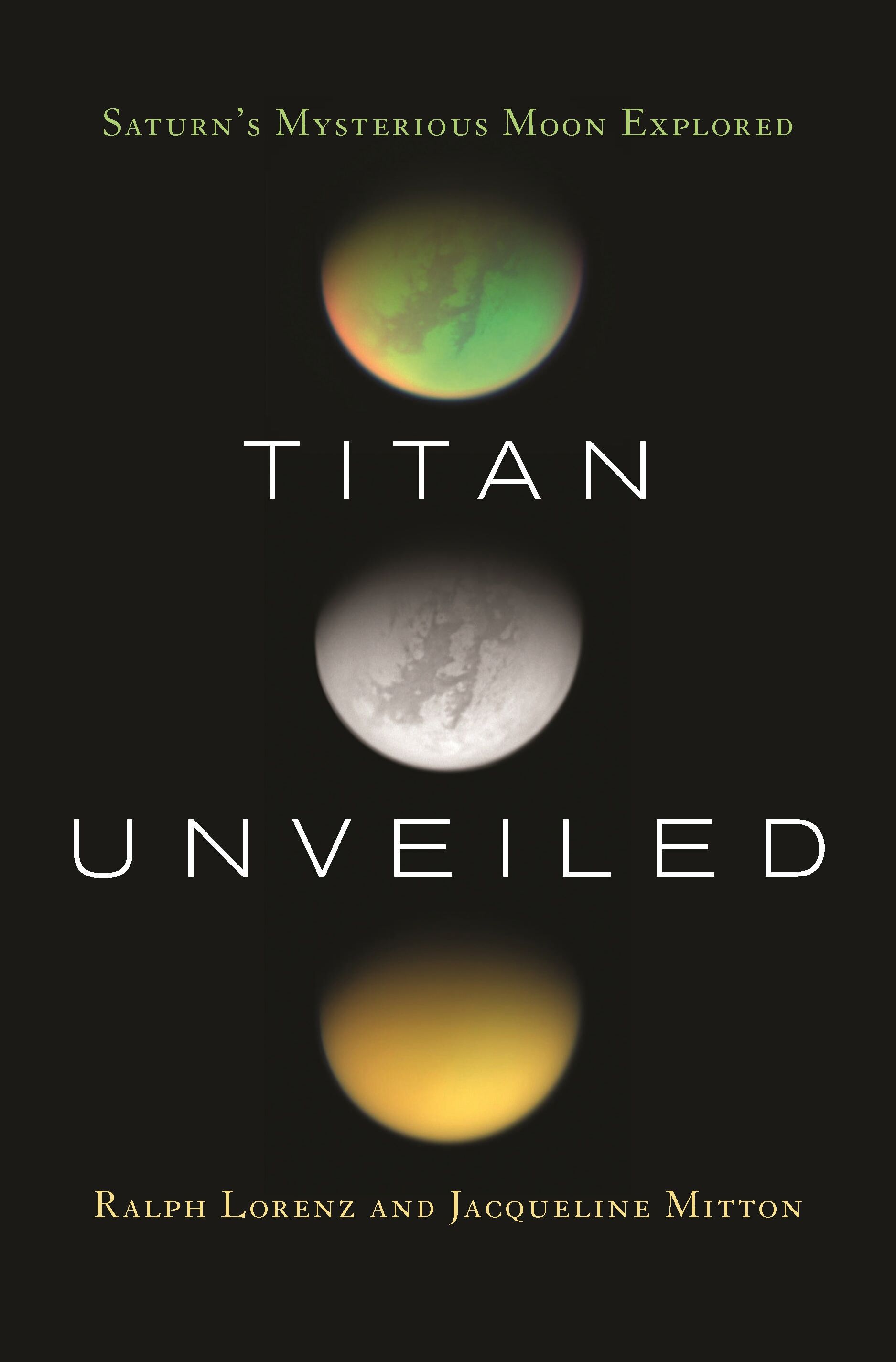
Titan Unveiled
For twenty-five years following the Voyager mission, scientists speculated about Saturn's largest moon, a mysterious orb clouded in orange haze. Finally, in 2005, the Cassini-Huygens probe successfully parachuted down through Titan's atmosphere, all the while transmitting images and data. In the early 1980s, when the two Voyager spacecraft skimmed past Titan, Saturn's largest moon, they transmitted back enticing images of a mysterious world concealed in a seemingly impenetrable orange haze.Titan Unveiledis one of the first general interest books to reveal the startling new discoveries that have been made since the arrival of the Cassini-Huygens mission to Saturn and Titan.
Ralph Lorenz and Jacqueline Mitton take readers behind the scenes of this mission. Launched in 1997, Cassini entered orbit around Saturn in summer 2004. Its formidable payload included the Huygens probe, which successfully parachuted down through Titan's atmosphere in early 2005, all the while transmitting images and data--and scientists were startled by what they saw. One of those researchers was Lorenz, who gives an insider's account of the scientific community's first close encounter with an alien landscape of liquid methane seas and turbulent orange skies. Amid the challenges and frayed nerves, new discoveries are made, including methane monsoons, equatorial sand seas, and Titan's polar hood. Lorenz and Mitton describe Titan as a world strikingly like Earth and tell how Titan may hold clues to the origins of life on our own planet and possibly to its presence on others.
Generously illustrated with many stunning images,Titan Unveiledis essential reading for anyone interested in space exploration, planetary science, or astronomy.
A new afterword brings readers up to date on Cassini's ongoing exploration of Titan, describing the many new discoveries made since 2006.
eBook
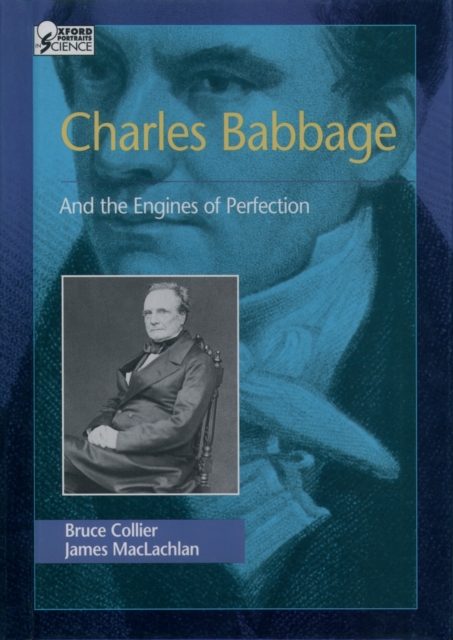
Charles Babbage, and the engines of perfection
Charles Babbage, \"the grandfather of the modern computer,\" did not live to see even one of his calculating machines at work.A dazzling genius with vision extending far beyond the limitations of the Victorian age, Babbage successfully calculated a table of logarithms during his years at Cambridge University, allowing mathematical calculations to.
eBook