
Catalogue Search | MBRL


Are you sure you want to remove the book from the shelf?

{{itemTitle}}
86,034
result(s) for
"Digestive system."
Sort by:

The science of the digestive system
Explores the human digestive system using simple flowcharts to break down difficult concepts into accessible chunks.
Book
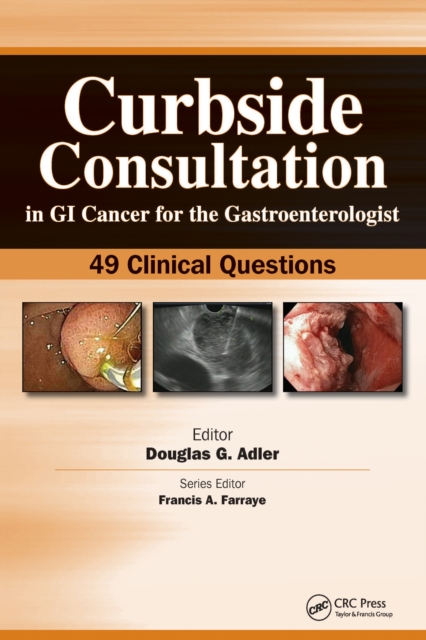
Curbside Consultation in GI Cancer for the Gastroenterologist
Are you looking for concise, practical answers to questions that are often left unanswered by traditional cancer references that are not designed for gastroenterologists? Are you seeking brief, evidence-based advice for complicated cases or patients with complications that need management? Curbside Consultation in GI Cancer for the Gastroenterologist: 49 Clinical Questions provides quick and direct answers to the thorny questions commonly posed during a \"curbside consultation\" between colleagues.
Dr. Douglas G. Adler has designed this unique reference, which offers expert advice, preferences, and opinions on tough clinical questions commonly associated with GI cancer. The unique Q&A format provides quick access to current information related to GI cancer with the simplicity of a conversation between two colleagues. Numerous images, diagrams, and references are included to enhance the text and to illustrate the treatment of GI cancer patients.
Curbside Consultation in GI Cancer for the Gastroenterologist: 49 Clinical Questions provides information basic enough for residents while also incorporating expert advice that even high-volume clinicians will appreciate. Gastroenterologists, fellows and residents in training, surgical attendings, and surgical residents will benefit from the user-friendly and casual format and the expert advice contained within.
Some of the questions that are answered:
An 81-year-old man is found to have unresectable esophageal cancer and malignant dysphagia. Should he have a stent? A nasogastric feeding tube? A PEG tube?
How is tumor-related bleeding from gastric cancers best approached?
Do patients with pancreatic cancer and jaundice need to have an ERCP preoperatively?
What is the role of ERCP and EUS in patients with suspected cholangiocarcinoma?
Why are rectal cancers so different from colon cancers with regards to medical and surgical management?
Curbside Consultation in GI Cancer for the Gastroenterologist: 49 Clinical Questions illustrates how patients at different points in their treatment may go back and forth between specialists to receive coordination of care, and incorporates input from gastroenterologists, surgeons, radiologists, and oncologists. While providing up-to-date information, this book will help gastroenterologists to manage complex cancer-related issues and guide physicians through the maze of cancer-related treatments available.
Ideal for practicing gastroenterologists, gastroenterology fellows, surgeons, oncologists, residents, and medical students, Curbside Consultation in GI Cancer for the Gastroenterologist: 49 Clinical Questions is sure to benefit anyone caring for patients with gastrointestinal cancers.
eBook

Your digestive system
Presents information about the digestive system, looking at the tongue, esophagus, stomach, and intestines that compose it, as well as how they work together to keep the body healthy.
Book

Short-course radiotherapy followed by chemotherapy before total mesorectal excision (TME) versus preoperative chemoradiotherapy, TME, and optional adjuvant chemotherapy in locally advanced rectal cancer (RAPIDO): a randomised, open-label, phase 3 trial
SummaryBackgroundSystemic relapses remain a major problem in locally advanced rectal cancer. Using short-course radiotherapy followed by chemotherapy and delayed surgery, the Rectal cancer And Preoperative Induction therapy followed by Dedicated Operation (RAPIDO) trial aimed to reduce distant metastases without compromising locoregional control. MethodsIn this multicentre, open-label, randomised, controlled, phase 3 trial, participants were recruited from 54 centres in the Netherlands, Sweden, Spain, Slovenia, Denmark, Norway, and the USA. Patients were eligible if they were aged 18 years or older, with an Eastern Cooperative Oncology Group (ECOG) performance status of 0–1, had a biopsy-proven, newly diagnosed, primary, locally advanced rectal adenocarcinoma, which was classified as high risk on pelvic MRI (with at least one of the following criteria: clinical tumour [cT] stage cT4a or cT4b, extramural vascular invasion, clinical nodal [cN] stage cN2, involved mesorectal fascia, or enlarged lateral lymph nodes), were mentally and physically fit for chemotherapy, and could be assessed for staging within 5 weeks before randomisation. Eligible participants were randomly assigned (1:1), using a management system with a randomly varying block design (each block size randomly chosen to contain two to four allocations), stratified by centre, ECOG performance status, cT stage, and cN stage, to either the experimental or standard of care group. All investigators remained masked for the primary endpoint until a prespecified number of events was reached. Patients allocated to the experimental treatment group received short-course radiotherapy (5 × 5 Gy over a maximum of 8 days) followed by six cycles of CAPOX chemotherapy (capecitabine 1000 mg/m 2 orally twice daily on days 1–14, oxaliplatin 130 mg/m 2 intravenously on day 1, and a chemotherapy-free interval between days 15–21) or nine cycles of FOLFOX4 (oxaliplatin 85 mg/m 2 intravenously on day 1, leucovorin [folinic acid] 200 mg/m 2 intravenously on days 1 and 2, followed by bolus fluorouracil 400 mg/m 2 intravenously and fluorouracil 600 mg/m 2 intravenously for 22 h on days 1 and 2, and a chemotherapy-free interval between days 3–14) followed by total mesorectal excision. Choice of CAPOX or FOLFOX4 was per physician discretion or hospital policy. Patients allocated to the standard of care group received 28 daily fractions of 1·8 Gy up to 50·4 Gy or 25 fractions of 2·0 Gy up to 50·0 Gy (per physician discretion or hospital policy), with concomitant twice-daily oral capecitabine 825 mg/m 2 followed by total mesorectal excision and, if stipulated by hospital policy, adjuvant chemotherapy with eight cycles of CAPOX or 12 cycles of FOLFOX4. The primary endpoint was 3-year disease-related treatment failure, defined as the first occurrence of locoregional failure, distant metastasis, new primary colorectal tumour, or treatment-related death, assessed in the intention-to-treat population. Safety was assessed by intention to treat. This study is registered with the EudraCT, 2010-023957-12, and ClinicalTrials.gov, NCT01558921, and is now complete. FindingsBetween June 21, 2011, and June 2, 2016, 920 patients were enrolled and randomly assigned to a treatment, of whom 912 were eligible (462 in the experimental group; 450 in the standard of care group). Median follow-up was 4·6 years (IQR 3·5–5·5). At 3 years after randomisation, the cumulative probability of disease-related treatment failure was 23·7% (95% CI 19·8–27·6) in the experimental group versus 30·4% (26·1–34·6) in the standard of care group (hazard ratio 0·75, 95% CI 0·60–0·95; p=0·019). The most common grade 3 or higher adverse event during preoperative therapy in both groups was diarrhoea (81 [18%] of 460 patients in the experimental group and 41 [9%] of 441 in the standard of care group) and neurological toxicity during adjuvant chemotherapy in the standard of care group (16 [9%] of 187 patients). Serious adverse events occurred in 177 (38%) of 460 participants in the experimental group and, in the standard of care group, in 87 (34%) of 254 patients without adjuvant chemotherapy and in 64 (34%) of 187 with adjuvant chemotherapy. Treatment-related deaths occurred in four participants in the experimental group (one cardiac arrest, one pulmonary embolism, two infectious complications) and in four participants in the standard of care group (one pulmonary embolism, one neutropenic sepsis, one aspiration, one suicide due to severe depression). InterpretationThe observed decreased probability of disease-related treatment failure in the experimental group is probably indicative of the increased efficacy of preoperative chemotherapy as opposed to adjuvant chemotherapy in this setting. Therefore, the experimental treatment can be considered as a new standard of care in high-risk locally advanced rectal cancer. FundingDutch Cancer Foundation, Swedish Cancer Society, Spanish Ministry of Economy and Competitiveness, and Spanish Clinical Research Network.
Journal Article

Understanding food and digestion
Explains how the human body digests, utilizes and eliminates the food it ingests.
Book

Integrating inflammation, nutrition, and immunity: the CALLY index as a prognostic tool in digestive system cancers - a systematic review and meta-analysis
Background
Digestive system cancers remain a leading cause of cancer-related mortality globally, underscoring the need for reliable prognostic tools. The C-reactive protein-Albumin-Lymphocyte (CALLY) index, which reflects inflammation, nutrition, and immunity, has shown potential in predicting survival. However, comprehensive evaluations of its role in digestive system cancers are still limited.
Methods
A meta-analysis of English-language studies from online databases was performed to assess the prognostic value of the CALLY index. Pooled hazard ratios (HRs) were calculated for overall survival (OS), disease-free survival (DFS), recurrence-free survival (RFS), and cancer-specific survival (CSS).
Results
A total of eighteen articles (19 studies, encompassing 7,951 patients) were included. A lower CALLY index was significantly associated with poorer outcomes across all survival endpoints. The pooled HR for OS was 1.973 (95% CI: 1.734–2.244), with HRs for DFS, RFS, and CSS being 2.093 (95% CI: 1.682–2.604), 1.462 (95% CI: 1.292–1.654), and 2.456 (95% CI: 1.887–3.221), respectively (all
P
< 0.001). Subgroup analyses for OS demonstrated consistent prognostic significance across various treatment strategies, cancer types, cutoff values, sample sizes, and regions. Notably, the CALLY index was a strong predictor of OS in surgical patients (HR = 2.014, 95% CI: 1.794–2.260,
P
< 0.001). Sensitivity analyses validated the robustness of these findings, with minimal publication bias (Egger’s test
P
= 0.053).
Conclusions
The CALLY index serves as a cost-effective and reliable biomarker for predicting prognosis in digestive system cancers. Its utility as a pre-treatment risk stratification tool, which integrates key factors of inflammation, nutrition, and immunity, renders it valuable for guiding clinical decision-making.
Journal Article

20 fun facts about the digestive system
\"From the mouth and esophagus to the small and large intestine, re aders take a journey through the human body via the digestive tract, and enjoy learning about processes the digestive system does without us even knowing\"-- Provided by publisher.
Book

Enzalutamide with Standard First-Line Therapy in Metastatic Prostate Cancer
In men with metastatic, hormone-sensitive prostate cancer who were receiving testosterone suppression, the addition of enzalutamide led to significantly longer progression-free and overall survival than the addition of standard nonsteroidal antiandrogen therapy. The better outcome was less clear among patients who had received docetaxel.
Journal Article


177Lu-Dotatate plus long-acting octreotide versus high‑dose long-acting octreotide in patients with midgut neuroendocrine tumours (NETTER-1): final overall survival and long-term safety results from an open-label, randomised, controlled, phase 3 trial
The primary analysis of the phase 3 NETTER-1 trial showed significant improvement in progression-free survival with 177Lu-Dotatate plus long-acting octreotide versus high-dose long-acting octreotide alone in patients with advanced midgut neuroendocrine tumours. Here, we report the prespecified final analysis of overall survival and long-term safety results.
This open-label, randomised, phase 3 trial enrolled patients from 41 sites in eight countries across Europe and the USA. Patients were 18 years and older with locally advanced or metastatic, well differentiated, somatostatin receptor-positive midgut neuroendocrine tumours (Karnofsky performance status score ≥60) and disease progression on fixed-dose long-acting octreotide. Patients were randomly assigned (1:1) via an interactive web-based response system to intravenous 177Lu-Dotatate 7·4 GBq (200 mCi) every 8 weeks (four cycles) plus intramuscular long-acting octreotide 30 mg (177Lu-Dotatate group) or high-dose long-acting octreotide 60 mg every 4 weeks (control group). The primary endpoint of progression-free survival has been previously reported; here, we report the key secondary endpoint of overall survival in the intention-to-treat population. Final overall survival analysis was prespecified to occur either after 158 deaths or 5 years after the last patient was randomised, whichever occurred first. During long-term follow-up, adverse events of special interest were reported in the 177Lu-Dotatate group only. This trial is registered with ClinicalTrials.gov, NCT01578239.
From Sept 6, 2012, to Jan 14, 2016, 231 patients were enrolled and randomly assigned for treatment. The prespecified final analysis occurred 5 years after the last patient was randomly assigned (when 142 deaths had occurred); median follow-up was 76·3 months (range 0·4–95·0) in the 177Lu-Dotatate group and 76·5 months (0·1–92·3) in the control group. The secondary endpoint of overall survival was not met: median overall survival was 48·0 months (95% CI 37·4–55·2) in the 177Lu-Dotatate group and 36·3 months (25·9–51·7) in the control group (HR 0·84 [95% CI 0·60–1·17]; two-sided p=0·30). During long-term follow-up, treatment-related serious adverse events of grade 3 or worse were recorded in three (3%) of 111 patients in the 177Lu-Dotatate group, but no new treatment-related serious adverse events were reported after the safety analysis cutoff. Two (2%) of 111 patients given 177Lu-Dotatate developed myelodysplastic syndrome, one of whom died 33 months after randomisation (this person was the only the only reported 177Lu-Dotatate treatment-related death). No new cases of myelodysplastic syndrome or acute myeloid leukaemia were reported during long-term follow-up.
177Lu-Dotatate treatment did not significantly improve median overall survival versus high-dose long-acting octreotide. Despite final overall survival not reaching statistical significance, the 11·7 month difference in median overall survival with 177Lu-Dotatate treatment versus high-dose long-acting octreotide alone might be considered clinically relevant. No new safety signals were reported during long-term follow-up.
Advanced Accelerator Applications, a Novartis company.
Journal Article