
Catalogue Search | MBRL


Are you sure you want to remove the book from the shelf?

{{itemTitle}}
3,251
result(s) for
"Digital architecture software"
Sort by:

Learning FPGAs : digital design for beginners with Mojo and Lucid HDL
\"Learn how to design digital circuits with FPGAs (field-programmable gate arrays), the devices that reconfigure themselves to become the very hardware circuits you set out to program. With this practical guide, author Justin Rajewski shows you hands-on how to create FPGA projects, whether you're a programmer, engineer, product designer, or maker. You'll quickly go from the basics to designing your own processor. Designing digital circuits used to be a long and costly endeavor that only big companies could pursue. FPGAs make the process much easier, and now they're affordable enough even for hobbyists. If you're familiar with electricity and basic electrical components, this book starts simply and progresses through increasingly complex projects\"--Publisher's description.
Book

Toward the formulation of a proposed frame for the formal and structural specifications of the modern parametric digital architecture
Background
This research paper contributes to presenting a proposed framework for the formal and structural specifications of parametric digital architecture in order to increase knowledge and know-how in this field closely to specialists and those interested in it through the research methodology, which is divided first into the theoretical background to include a presentation of the definition of digital architecture and the most important pioneers of digital architecture, digital building materials and construction mechanisms parametric digital and what are the most important computer software used in parametric digital architecture in terms of design and construction implementation and identifying the most important digital specifications and characteristics that were mentioned in previous studies in this field and what are the unconventional digital esthetic values, then comes the role of the applied study in formulating a comprehensive matrix of parametric design modern and its impact on the development of traditional architectural models in digital architecture.
Results
The research study found that both (unrealistic shape) and (typical interaction) ranked first with the highest percentage reaching 100% in all study cases. The ratio of the volume of each to the total volume of all elements of morphological characteristics and non-traditional esthetic values was 8%, the most important characteristic of buildings in parametric digital architecture, in most of them, is the lack of realism to a very significant degree, and we always find a clear increase in the interaction, vitality and dynamism of buildings with the surrounding environment.
Conclusions
The most important characteristic of buildings in parametric digital architecture, in most of them, is the lack of realism to a very significant degree, and we always find a clear increase in the interaction, vitality and dynamism of buildings with the surrounding environment. While we conclude that the least characteristic of the parametric digital buildings is the simulation of nature or the tendency to everything that is traditional, as well it is often inclined to everything strange and unfamiliar.
Journal Article

The Role of Visualization Software in Architectural Education
The architectural profession is today confronted with an increasingly complex and challenging environment. From the local to global, the international to the vernacular, architects have to continually adjust and adapt their practice in a fast-changing milieu to engage with new shifting conditions both within the profession and externally. Schools of architecture are struggling to keep up with the current issues that are transforming architecture practice. From sketching and drafting to 3D rendering, to animation, and reaching to the Virtual Reality (VR), and Augmented Reality (AR), there is a rapid crazy change in the technology interfered informally in Architecture Education in the way that result in a bad effect on imagination and creativity skills of the architecture students. The research aims to \"Pave the way for architecture instructors and head of departments in using the visualization software in a better way in different courses and architecture programs\". By using a descriptive, analytical, and inductive methodology (interviews & questionnaire). The research starts with the theoretical background to discuss the visualization programs, and techniques, their importance, and pros and cons, then, the research develops a questionnaire and some interviews with academics, practitioners, and information computer technology (ICTs) specialists to know their opinions in using the visualization techniques in the architecture education. Finally, the research ends up with a wider discussion and a road map to develop guidelines for using visualization techniques in architecture education and to draw a Model for plug-inn of digital visualizations and manuals techniques in different modules in architecture and urban design education.
Journal Article

Software Architecture Reconstruction: A Process-Oriented Taxonomy
To maintain and understand large applications, it is important to know their architecture. The first problem is that unlike classes and packages, architecture is not explicitly represented in the code. The second problem is that successful applications evolve over time, so their architecture inevitably drifts. Reconstructing the architecture and checking whether it is still valid is therefore an important aid. While there is a plethora of approaches and techniques supporting architecture reconstruction, there is no comprehensive software architecture reconstruction state of the art and it is often difficult to compare the approaches. This paper presents a state of the art in software architecture reconstruction approaches.
Journal Article
Hierarchical Clustering for Software Architecture Recovery
Gaining an architectural level understanding of a software system is important for many reasons. When the description of a system's architecture does not exist, attempts must be made to recover it. In recent years, researchers have explored the use of clustering for recovering a software system's architecture, given only its source code. The main contributions of this paper are given as follows. First, we review hierarchical clustering research in the context of software architecture recovery and modularization. Second, to employ clustering meaningfully, it is necessary to understand the peculiarities of the software domain, as well as the behavior of clustering measures and algorithms in this domain. To this end, we provide a detailed analysis of the behavior of various similarity and distance measures that may be employed for software clustering. Third, we analyze the clustering process of various well-known clustering algorithms by using multiple criteria, and we show how arbitrary decisions taken by these algorithms during clustering affect the quality of their results. Finally, we present an analysis of two recently proposed clustering algorithms, revealing close similarities in their apparently different clustering approaches. Experiments on four legacy software systems provide insight into the behavior of well-known clustering algorithms and their characteristics in the software domain.
Journal Article
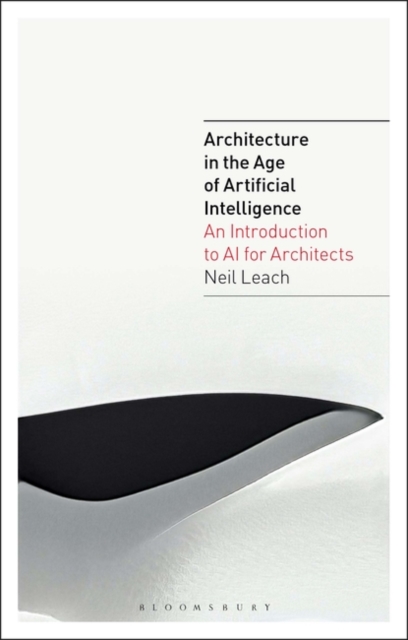
Architecture in the Age of Artificial Intelligence
Artificial intelligence is everywhere – from the apps on our phones to the algorithms of search engines. Without us noticing, the AI revolution has arrived. But what does this mean for the world of design? The first volume in a two-book series, Architecture in the Age of Artificial Intelligence introduces AI for designers and considers its positive potential for the future of architecture and design. Explaining what AI is and how it works, the book examines how different manifestations of AI will impact the discipline and profession of architecture. Highlighting current case-studies as well as near-future applications, it shows how AI is already being used as a powerful design tool, and how AI-driven information systems will soon transform the design of buildings and cities. Far-sighted, provocative and challenging, yet rooted in careful research and cautious speculation, this book, written by architect and theorist Neil Leach, is a must-read for all architects and designers – including students of architecture and all design professionals interested in keeping their practice at the cutting edge of technology.
eBook

Human digital twin: a survey
The concept of the Human Digital Twin (HDT) has recently emerged as a new research area within the domain of digital twin technology. HDT refers to the replica of a physical-world human in the digital world. Currently, research on HDT is still in its early stages, with a lack of comprehensive and in-depth analysis from the perspectives of universal frameworks, core technologies, and applications. Therefore, this paper conducts an extensive literature review on HDT research, analyzing the underlying technologies and establishing typical frameworks in which the core HDT functions or components are organized. Based on the findings from the aforementioned work, the paper proposes a generic architecture for the HDT system and describes the core function blocks and corresponding technologies. Subsequently, the paper presents the state of the art of HDT technologies and their applications in the healthcare, industry, and daily life domains. Finally, the paper discusses various issues related to the development of HDT and points out the trends and challenges of future HDT research and development.
Journal Article

Platform Architecture and Quality Trade-offs of Multihoming Complements
Multihoming, the decision to design a complement to operate on multiple platforms, is becoming increasingly common in many platform markets. Perceived wisdom suggests that multihoming is beneficial for complement providers as they expand their market reach, but it reduces differentiation among competing platforms as the same complements become available on different platforms. We argue that complement providers face trade-offs when designing their products for multiple platform architectures—they must decide how far to specialize the complement to each platform’s technological specifications. Because of these trade-offs, multihoming complements can have different quality performance across platforms. In a study of the U.S. video game industry, we find that multihoming games have lower-quality performance on a technologically more complex console than on a less complex one. Also, games designed for and released on a focal platform have lower-quality performance on platforms they are subsequently multihomed to. However, games that are released on the complex platform with a delay suffer a smaller drop in quality on complex platforms. This has important implications for platform competition, and for managers considering expanding their reach through multihoming.
The online appendix is available at
https://doi.org/10.1287/isre.2018.0779
.
Journal Article

Fault Tolerant Systems
There are many applications in which the reliability of the overall system must be far higher than the reliability of its individual components. In such cases, designers devise mechanisms and architectures that allow the system to either completely mask the effects of a component failure or recover from it so quickly that the application is not seriously affected. This is the work of fault-tolerant designers and their work is increasingly important and complex not only because of the increasing number of “mission critical” applications, but also because the diminishing reliability of hardware means that even systems for non-critical applications will need to be designed with fault-tolerance in mind. Reflecting the real-world challenges faced by designers of these systems, this book addresses fault tolerance design with a systems approach to both hardware and software. No other text on the market takes this approach, nor offers the comprehensive and up-to-date treatment the authors provide. Students, designers and architects of high performance processors will value this comprehensive overview of the field.
eBook

Securing critical infrastructures with a cybersecurity digital twin
With the diffusion of integrated design environments and tools for visual threat modeling for critical infrastructures, the concept of Digital Twin (DT) is gaining momentum in the field of cybersecurity. Its main use is for enabling attack simulations and evaluation of countermeasures, without causing outage of the physical system. However, the use of a DT is considered foremost as a facilitator of system operation rather than an integral part of its architecture design. In this work, we introduce a specific architecture view in the system representation, called Cybersecurity View. From it, we derive a cybersecurity Digital Twin as part of the security-by-design practice for Industrial Automation and Control Systems used in Critical Infrastructures. Not only this digital twin serves the purpose of simulating cyber-attacks and devising countermeasures, but its design and function are also directly tied to the architecture model of the system for which the cybersecurity requirements are posed. Moreover, this holds regardless of whether the model is generated as part of the development cycle or through an empirical observation of the system as-is. With this, we enable the identification of adequate cybersecurity measures for the system, while improving the overall system design. To demonstrate the practical usefulness of the proposed methodology, its application is illustrated through two real-world use cases: the Cooperative Intelligent Transport System (C-ITS) and the Road tunnel scenario.
Journal Article