
Catalogue Search | MBRL


Are you sure you want to remove the book from the shelf?

{{itemTitle}}
120,119
result(s) for
"Digital communications."
Sort by:

The future of digital communication : the metaverse
\"This collection of essays explores the present and future of digital communication through a range of interdisciplinary approaches all of which focus on the so-called metaverse. The metaverse is a combination of multiple elements of technology - including virtual reality, augmented reality, and video - where users \"live\" within a digital universe. The vision for this new universe is that its users can work, play, and stay connected with friends through everything. Such a vision is hinted at in existing phenomena such as online game universes\"-- Provided by publisher.
BOOK

Net locality : why location matters in a networked world
The first book to provide an introduction to the new theory of Net Locality and the profound effect on individuals and societies when everything is located or locatable. * Describes net locality as an emerging form of location awareness central to all aspects of digital media, from mobile phones, to Google Maps, to location-based social networks and games, such as Foursquare and facebook. * Warns of the threats these technologies, such as data surveillance, present to our sense of privacy, while also outlining the opportunities for pro-social developments. * Provides a theory of the web in the context of the history of emerging technologies, from GeoCities to GPS, Wi-Fi, Wiki Me, and Google Android.
eBook


Unruly Souls
Amid growing digital activism to address gender-based violence, institutional racism, and homophobia in U.S. society, Unruly Souls explores the intersectional feminist activism among young people within Islam and Evangelical Christianity. These religious misfits—marginalized from traditional religious spaces due to their sexuality, gender, or race—employ the creative tactics of digital media in their work to seek justice and to display their fundamental equality in the eyes of God. Through an analysis of various digital projects from hip-hop music videos and Instagram accounts to Twitter hashtags and podcasts, Kristin Peterson argues that the hybrid, flexible, playful, and sensory nature of digital media facilitate intersectional feminist activism within and beyond religious communities. Drawing on work from queer theory, decolonial theory, and Black feminist theory, this study explores how those who have been marginalized are able to effectively deploy their disregarded status along with digital media tactics to cultivate empathetic communities for those recovering from religious trauma.
eBook
Constant Disconnection
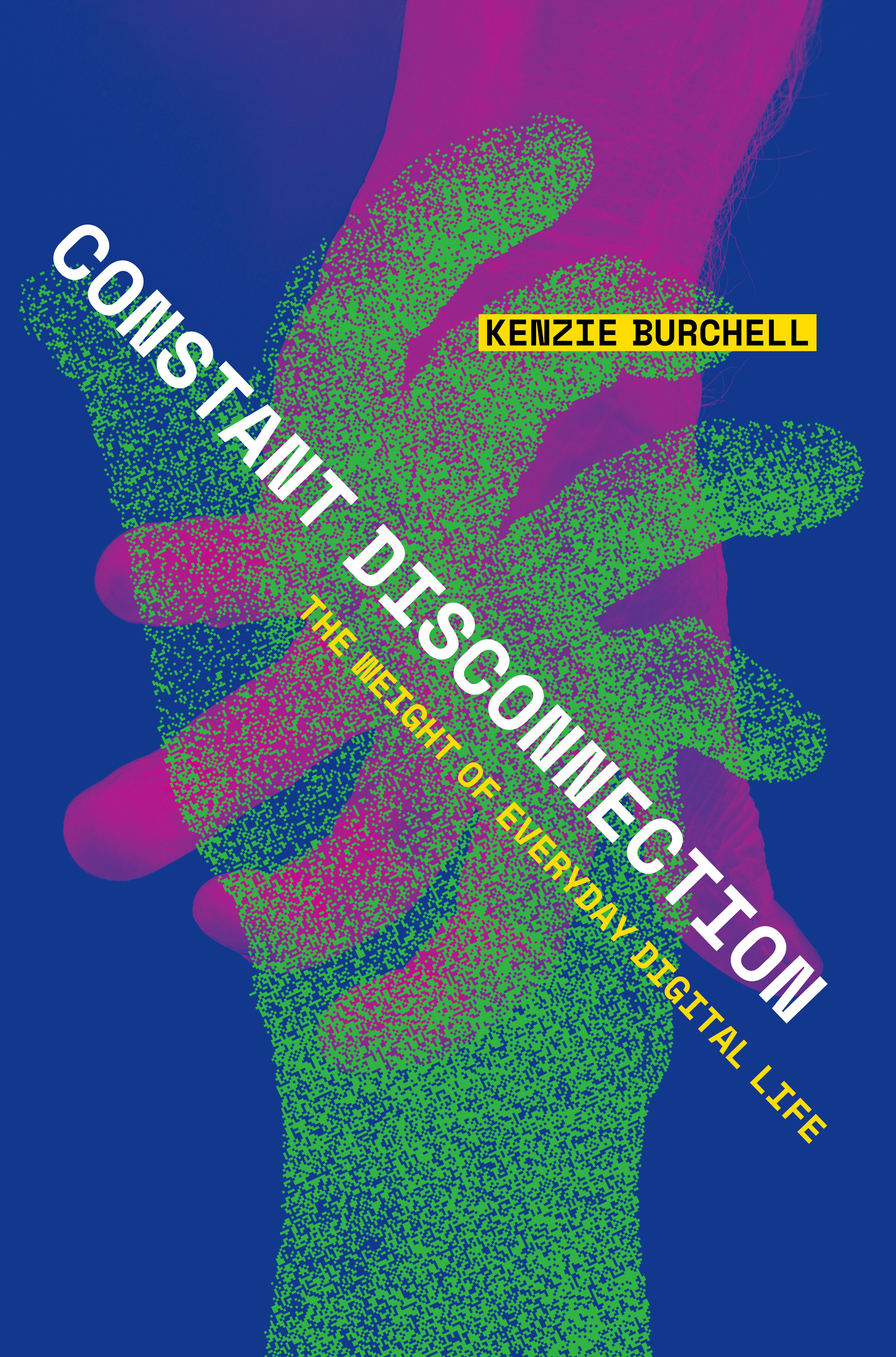
The weight of constant digital connection is the default condition of working life, home life, and everyday personal life – driving us to engage more with platforms than with people, a new state of constant disconnection that we cannot escape. Overflowing email inboxes, deluges of mobile phone notifications and torrents of social media posts—the flow of communication in its abundance is today's individualized interface for interpersonal and professional practices. Communication technologies and their use are both the needle and the thread of the wider social tapestry of everyday contemporary life. This ever-changing communication environment is where the neoliberal economic policies of the West and the commercial imperatives of the platform and data-mining industries meet. It is where the contradictions they produce can be felt day-to-day by citizens-turned-users. How does it feel to live at the pressure points of intersecting economic realities and why does it matter? Drawing on extensive sociological research, Burchell examines how individuals try to manage connection as participation in everyday life and how, on a larger scale, the ever-expanding knowledge, communication, and data-driven economies depend on the very pressures that result from our disparate communication needs. With so much time spent managing the pressures of our communication environment, we often overlook the way media technologies produce systemic tensions that are reshaping how we interact with each other and what we understand to be social connection today.
eBook


Strategic Corporate Communication in the Digital Age
Strategic Corporate Communication in the Digital Age explores how contemporary communication approaches are crossing boundaries as innovative media formats and digital transformations offer new challenges and opportunities to academia and practitioners.
eBook


The Semiotics of Emoji
Shortlisted for the BAAL Book Prize 2017 Emoji have gone from being virtually unknown to being a central topic in internet communication. What is behind the rise and rise of these winky faces, clinking glasses and smiling poos? Given the sheer variety of verbal communication on the internet and English's still-controversial role as lingua mundi for the web, these icons have emerged as a compensatory universal language. The Semiotics of Emoji looks at what is officially the world's fastest-growing form of communication. Emoji, the colourful symbols and glyphs that represent everything from frowning disapproval to red-faced shame, are fast becoming embedded into digital communication. Controlled by a centralized body and regulated across the web, emoji seems to be a language: but is it? The rapid adoption of emoji in such a short span of time makes it a rich study in exploring the functions of language. Professor Marcel Danesi, an internationally-known expert in semiotics, branding and communication, answers the pertinent questions. Are emoji making us dumber? Can they ultimately replace language? Will people grow up emoji literate as well as digitally native? Can there be such a thing as a Universal Visual Language? Read this book for the answers.
eBook