
Catalogue Search | MBRL


Are you sure you want to remove the book from the shelf?

{{itemTitle}}
252,064
result(s) for
"Digital computers"
Sort by:

How a computer is made
Today's computers come in all shapes and sizes, but not many people actually know how they're made. The journey from circuits and wires to a ready-to-use computer is a fascinating exploration of science and engineering. Readers get a look inside their laptops, desktops, and even their tablets as theyre shown step-by-step how these electronic marvels are assembled. Readers will love knowing what goes on inside their own machines, and color photographs and simple instructions will show them how they can build their own computer!
Book
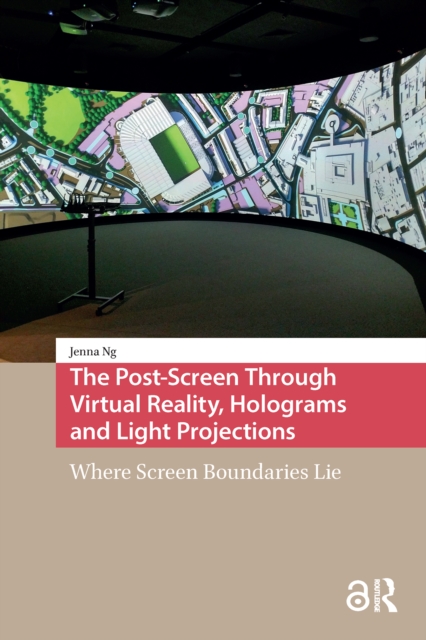
The Post-Screen Through Virtual Reality, Holograms and Light Projections
Screens are ubiquitous today. They display information; present image worlds; are portable; connect to mobile networks; mesmerize. However, contemporary screen media also seek to eliminate the presence of the screen and the visibilities of its boundaries. As what is image becomes increasingly indistinguishable against the viewer’s actual surroundings, this unsettling prompts re-examination about not only what is the screen, but also how the screen demarcates and what it stands for in relation to our understanding of our realities in, outside and against images. Through case studies drawn from three media technologies – Virtual Reality; holograms; and light projections – this book develops new theories of the surfaces on and spaces in which images are displayed today, interrogating critical lines between art and life; virtuality and actuality; truth and lies. What we have today is not just the contestation of the real against illusion or the unreal, but the disappearance itself of difference and a gluttony of the unreal which both connect up to current politics of distorted truth values and corrupted terms of information. The Post-Screen Through Virtual Reality, Holograms and Light Projections: Where Screen Boundaries Lie is thus about not only where the image’s borders and demarcations are established, but also the screen boundary as the instrumentation of today’s intense virtualizations that do not tell the truth. In all this, a new imagination for images emerges, with a new space for cultures of presence and absence, definitions of object and representation, and understandings of dis- and re-placement – the post-screen.
eBook


Designer’s Guide to VHDL (3rd Edition)
VHDL, the IEEE standard hardware description language for describing digital electronic systems, allows engineers to describe the structure and specify the function of a digital system as well as simulate and test it before manufacturing. In addition, designers use VHDL to synthesize a more detailed structure of the design, freeing them to concentrate on more strategic design decisions and reduce time to market. Adopted by designers around the world, the VHDL family-of-standards have recently been revised to address a range of issues, including portability across synthesis tools. This best-selling comprehensive tutorial for the language and authoritative reference on its use in hardware design at all levels, from system to gates, has been revised to reflect the new IEEE standard, VHDL-2001. The author presents the entire description language and builds a modeling methodology based on successful software engineering techniques. This second edition updates the first, retaining the author’s unique ability to teach this complex subject to a broad audience of students and practicing professionals.
eBook

Playing with Sound
An examination of the player's experience of sound in video games and the many ways that players interact with the sonic elements in games. In Playing with Sound , Karen Collins examines video game sound from the player's perspective. She explores the many ways that players interact with a game's sonic aspects—which include not only music but also sound effects, ambient sound, dialogue, and interface sounds—both within and outside of the game. She investigates the ways that meaning is found, embodied, created, evoked, hacked, remixed, negotiated, and renegotiated by players in the space of interactive sound in games. Drawing on disciplines that range from film studies and philosophy to psychology and computer science, Collins develops a theory of interactive sound experience that distinguishes between interacting with sound and simply listening without interacting. Her conceptual approach combines practice theory (which focuses on productive and consumptive practices around media) and embodied cognition (which holds that our understanding of the world is shaped by our physical interaction with it). Collins investigates the multimodal experience of sound, image, and touch in games; the role of interactive sound in creating an emotional experience through immersion and identification with the game character; the ways in which sound acts as a mediator for a variety of performative activities; and embodied interactions with sound beyond the game, including machinima, chip-tunes, circuit bending, and other practices that use elements from games in sonic performances.
eBook


The Future of Computing Performance
The end of dramatic exponential growth in single-processor performance marks the end of the dominance of the single microprocessor in computing. The era of sequential computing must give way to a new era in which parallelism is at the forefront. Although important scientific and engineering challenges lie ahead, this is an opportune time for innovation in programming systems and computing architectures. We have already begun to see diversity in computer designs to optimize for such considerations as power and throughput. The next generation of discoveries is likely to require advances at both the hardware and software levels of computing systems.
There is no guarantee that we can make parallel computing as common and easy to use as yesterday's sequential single-processor computer systems, but unless we aggressively pursue efforts suggested by the recommendations in this book, it will be \"game over\" for growth in computing performance. If parallel programming and related software efforts fail to become widespread, the development of exciting new applications that drive the computer industry will stall; if such innovation stalls, many other parts of the economy will follow suit.
The Future of Computing Performance describes the factors that have led to the future limitations on growth for single processors that are based on complementary metal oxide semiconductor (CMOS) technology. It explores challenges inherent in parallel computing and architecture, including ever-increasing power consumption and the escalated requirements for heat dissipation. The book delineates a research, practice, and education agenda to help overcome these challenges. The Future of Computing Performance will guide researchers, manufacturers, and information technology professionals in the right direction for sustainable growth in computer performance, so that we may all enjoy the next level of benefits to society.
eBook

JAVA Basics Using ChatGPT/GPT-4
Encourages readers to compare and contrast hand-written code with ChatGPT-generated code.This approach fosters discussions on code efficiency, readability, and maintainability, enhancing understanding of programming paradigms and techniques.
eBook