Catalogue Search | MBRL


Are you sure you want to remove the book from the shelf?

{{itemTitle}}
197,050
result(s) for
"Digital electronics."
Sort by:

Ultra-Low Input Power Conversion Circuits based on Tunnel-FETs
The increasing demand in electronic portability imposes low power consumption as a key metric to analog and digital circuit design. Tunnel FET (TFET) devices have been explored mostly in digital circuits, showing promising results for ultra-low power and energy efficient circuit applications. The TFET presents a low inverse sub-threshold slope (SS) that allows a low leakage energy consumption, desirable in many digital circuits, especially memories. In this book, the TFET is explored as an alternative technology also for ultra-low power and voltage conversion and management circuits, suitable for weak energy harvesting (EH) sources. The TFET distinct electrical characteristics under reverse bias conditions require changes in conventional circuit topologies. In this book, ultra-low input power conversion circuits based on TFETs are designed and analyzed, evaluating their performance as rectifiers, charge pumps and power management circuits (PMC) for RF and DC EH sources.
eBook


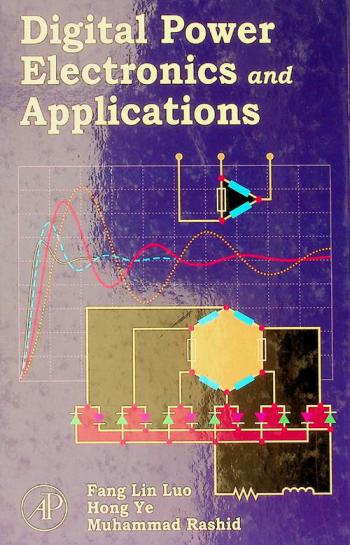
Digital power electronics and applications
The purpose of this book is to describe the theory of Digital Power Electronics and its applications.The authors apply digital control theory to power electronics in a manner thoroughly different from the traditional, analog control scheme.
eBook
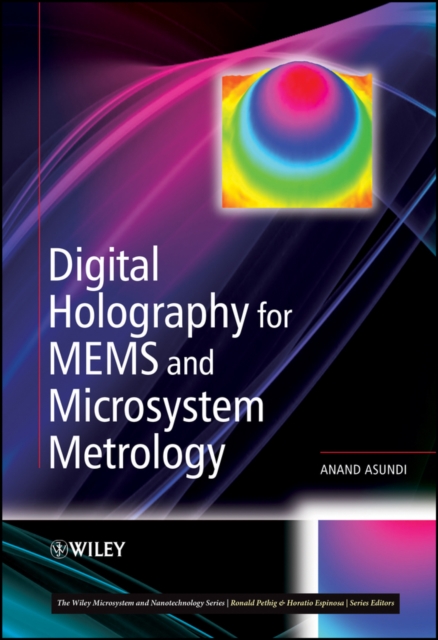
Digital holography for MEMS and microsystem metrology
Approaching the topic of digital holography from the practical perspective of industrial inspection, Digital Holography for MEMS and Microsystem Metrology describes the process of digital holography and its growing applications for MEMS characterization, residual stress measurement, design and evaluation, and device testing and inspection.
eBook

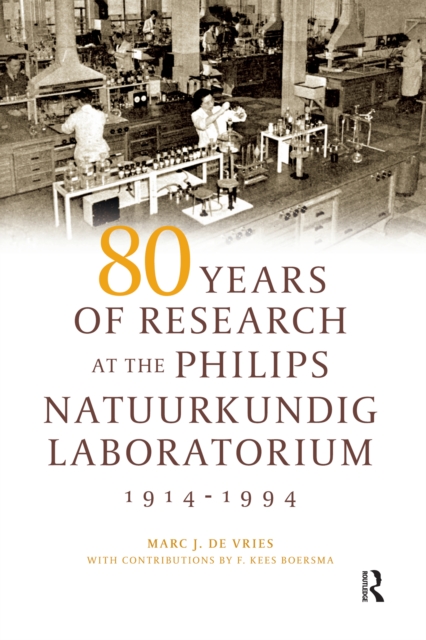
80 Years of Research at the Philips Natuurkundig Laboratorium 1914-1994: The Role of the National Lab at Philips
Histories of major industrial research laboratories are an essential contribution to the history of technology. This book offers a description of the way one of such laboratories has changed its ambitions and activities in the course of time. In the 80-year period that is described here, the Philips Natuurkundig Laboratorium has played different roles for the Philips company - today one of the world's largest electronics company - which was founded in 1891 in the Netherlands. The history of this laboratory is described in three main periods, each characterized by its goals, available means, organizational structures, research culture, and external relations. For each period the general story line is alternated by case study descriptions.The Philips Natuurkundig Laboratorium was founded in 1914. The term 'Natuurkundig' (in English: of physics) indicated that the task of the new laboratory was to conduct research of physics. Initially this research was related to light bulbs. At that time the Philips company, led by the two Philips brothers Anton and Gerard, was primarily a light bulb producing company. Soon the Nat.Lab. (this is the commonly used abbreviation of the full name) became the main source of inventions that would support the company in extending its product portfolio. In the course of time the goal of the lab's activities shifted in response to changes in its context, both within the Philips company and in a broader national and international context. Today the Philips Natuurkundig laboratorium is part of a worldwide research organization, Philips Research that generates options for new and improved products and processes and produces important patents in those electronics markets in which the company is active. It is still one of the world's major private research organizations. A key characteristic is the wide range of disciplines that are represented: from electrical engineering and physics to chemistry, mathematics, mechanics, information technology and software.
eBook