
Catalogue Search | MBRL


Are you sure you want to remove the book from the shelf?

{{itemTitle}}
463
result(s) for
"Dingo"
Sort by:


Wild dog dreaming : love and extinction
We are living in the midst of the Earth's sixth great extinction event, the first one caused by a single species: our own. In Wild Dog Dreaming, Deborah Bird Rose explores what constitutes an ethical relationship with nonhuman others in this era of loss. She asks, Who are we, as a species? How do we fit into the Earth's systems? Amidst so much change, how do we find our way into new stories to guide us? Rose explores these questions in the form of a dialogue between science and the humanities. Drawing on her conversations with Aboriginal people, for whom questions of extinction are up-close and very personal, Rose develops a mode of exposition that is dialogical, philosophical, and open-ended. An inspiration for Rose—and a touchstone throughout her book—is the endangered dingo of Australia. The dingo is not the first animal to face extinction, but its story is particularly disturbing because the threat to its future is being actively engineered by humans. The brazenness with which the dingo is being wiped out sheds valuable, and chilling, light on the likely fate of countless other animal and plant species. \"People save what they love,\" observed Michael Soulé, the great conservation biologist. We must ask whether we, as humans, are capable of loving—and therefore capable of caring for—the animals and plants that are disappearing in a cascade of extinctions. Wild Dog Dreaming engages this question, and the result is a bold account of the entangled ethics of love, contingency, and desire.
eBook

Dingo
Follow a dingo as she leaves the comfort of her pack and travels into the darkening landscape. Softly and fleetly, she runs through the forest, sniffing the air and the ground as she searches for food for her family. With glorious paintings and lyrical text, Dingo offers readers a glimpse into the life of Australia's fascinating and beautiful wild dogs.
Book

Dingo Bold
Dingo Bold is a thought-provoking exploration of the
relationship between people and dingoes. At its heart is Rowena
Lennox's encounter with a dingo on the beach on K'gari (Fraser
Island), a young male she nicknames Bold. Struck by this
experience, and by the intense, often polarised opinions expressed
in public conversations about dingo conservation and control, she
sets out to understand the complex relationship between humans and
dingoes.
Weaving together ecological data, interviews with people
connected personally and professionally with K'gari's dingoes, and
Lennox's expansive reading of literary, historical and scientific
accounts, Dingo Bold considers what we know about the
history of relations between dingoes and humans, and what
preconceptions shape our attitudes today. Do we see dingoes as
native wildlife or feral dogs? Wild or domesticated animals? A
tourist attraction or a threat? And how do our answers to these
questions shape our interactions with them?
Dingo Bold is both a moving memoir of love and loss
through Lennox's observations of the natural world and an important
contribution to wider conversations about conservation and animal
welfare.
\"Combining natural history, Indigenous culture, folklore,
memoir, and environmental politics, this is an elegantly written
and affectionate tribute to Australia's most maligned and least
understood native animal.\" Jacqueline Kent
\"Fuelled by empathy, curiosity and passion, and informed by
research, data and observation, this moving and compelling book
speaks to the heart and to the head. Rowena Lennox poses questions
about our relationship with dingoes - and our role in the natural
world - that are as bold and lively as her subject.\" Debra
Adelaide
eBook
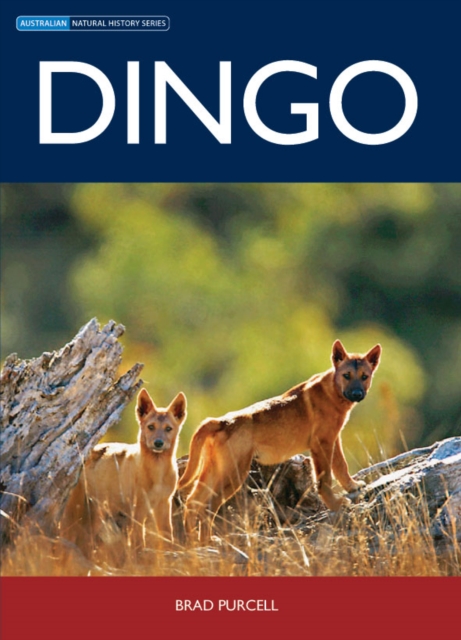
Dingo
Many present-day Australians see the dingo as a threat and a pest to human production systems. An alternative viewpoint, which is more in tune with Indigenous culture, allows others to see the dingo as a means to improve human civilisation. The dingo has thus become trapped between the status of pest animal and totemic creature. This book helps readers to recognise this dichotomy, as a deeper understanding of dingo behaviour is now possible through new technologies which have made it easier to monitor their daily lives. Recent research on genetic structure has indicated that dingo 'purity' may be a human construct and the genetic relatedness of wild dingo packs has been analysed for the first time. GPS telemetry and passive camera traps are new technologies that provide unique ways to monitor movements of dingoes, and analyses of their diet indicate that dietary shifts occur during the different biological seasons of dingoes, showing that they have a functional role in Australian landscapes. Dingo brings together more than 50 years of observations to provide a comprehensive portrayal of the life of a dingo. Throughout this book dingoes are compared with other hypercarnivores, such as wolves and African wild dogs, highlighting the similarities between dingoes and other large canid species around the world.
eBook

Remote sensing of trophic cascades: multi‐temporal landsat imagery reveals vegetation change driven by the removal of an apex predator
ContextTrophic cascade theory predicts that predators indirectly benefit plants by limiting herbivore consumption. As humans have removed large predators from most terrestrial ecosystems the effect of their absence is unrecognized.ObjectivesA manipulation of dingo populations across Australia’s dingo-proof fence, within the Strzelecki Desert, was used to assess how predator absence has altered vegetation cover dynamics at landscape and site scales.MethodsLandscape-scale analysis used Landsat fractional vegetation cover time series statistics to classify landforms and examine vegetation dynamics either side of the dingo fence. Generalised additive models were used to analyse the influence of predator absence on site-scale observations of fauna abundance and vegetation cover.ResultsThe location of the dingo fence was visible as a change in both the standard deviation and maximum of non-photosynthetic vegetation (NPV) cover (e.g. wood and dry leaves) over 32 years (1988–2020). On average, NPV cover of swales decreased in the standard deviation by 1.4% and in the maximum by 5.0% where dingo abundance was reduced. The differences were consistent with suppressed vegetation growth following rainfall, due to high grazing pressure, where predators were rare. The landscape-scale analysis was supported by site-scale observations.ConclusionsThe influence of the trophic cascade was observable at both the landscape and site scales, suggesting that apex predator removal has significantly affected the arid ecosystem’s responses to resource pulses. Analogous effects may exist across the large areas of the planet over which apex predators have been extirpated.
Journal Article

An Assessment of the Population Dynamics and Evolutionary History of the Dingo
Dingoes (Canis familiaris) are an iconic Australian species and the top land predator. Much interest exists in their radiation process and evolutionary history in Australia. Recent research indicated that two evolutionarily independent units exist and that detected effective population size changes are due to the active control of this species. However, these conclusions have been critiqued because they were not explicitly tested or because the model assumptions may not be met in dingoes. We set out to statistically test these hypotheses by comparing alternative migration models and carrying out demographic analyses. We conclude that there is strong statistical support for the existence of the two evolutionary units. However, the analysis carried out to estimate the time of the effective population size changes does not have the required power to conclusively demonstrate whether the current management is having an impact on dingo populations. Future studies and different approaches will be needed to test this hypothesis. Dingoes (Canis familiaris) are an iconic Australian species and the top land predator. Recent research indicated that two evolutionarily independent units exist and that the detected effective population size changes are due to the active control of this species. However, these conclusions have been critiqued by some because they were not explicitly tested or because the model assumptions may not be met in dingoes. We set out to statistically test these hypotheses by comparing alternative migration models and carrying out demographic analyses.
Journal Article

Unmanned Aerial Vehicles (UAVs) and Artificial Intelligence Revolutionizing Wildlife Monitoring and Conservation
Surveying threatened and invasive species to obtain accurate population estimates is an important but challenging task that requires a considerable investment in time and resources. Estimates using existing ground-based monitoring techniques, such as camera traps and surveys performed on foot, are known to be resource intensive, potentially inaccurate and imprecise, and difficult to validate. Recent developments in unmanned aerial vehicles (UAV), artificial intelligence and miniaturized thermal imaging systems represent a new opportunity for wildlife experts to inexpensively survey relatively large areas. The system presented in this paper includes thermal image acquisition as well as a video processing pipeline to perform object detection, classification and tracking of wildlife in forest or open areas. The system is tested on thermal video data from ground based and test flight footage, and is found to be able to detect all the target wildlife located in the surveyed area. The system is flexible in that the user can readily define the types of objects to classify and the object characteristics that should be considered during classification.
Journal Article
Genomic signatures of bottleneck and founder effects in dingoes
Dingoes arrived in Australia during the mid‐Holocene and are the top‐order terrestrial predator on the continent. Although dingoes subsequently spread across the continent, the initial founding population(s) could have been small. We investigated this hypothesis by sequencing the whole genomes of three dingoes and also obtaining the genome data from nine additional dingoes and 56 canines, including wolves, village dogs and breed dogs, and examined the signatures of bottlenecks and founder effects. We found that the nucleotide diversity of dingoes was low, 36% less than highly inbred breed dogs and 3.3 times lower than wolves. The number of runs of homozygosity (RoH) segments in dingoes was 1.6–4.7 times higher than in other canines. While examining deleterious mutational load, we observed that dingoes carried elevated ratios of nonsynonymous‐to‐synonymous diversities, significantly higher numbers of homozygous deleterious Single Nucleotide Variants (SNVs), and increased numbers of loss of function SNVs, compared to breed dogs, village dogs, and wolves. Our findings can be explained by bottlenecks and founder effects during the establishment of dingoes in mainland Australia. These findings highlight the need for conservation‐based management of dingoes and the need for wildlife managers to be cognisant of these findings when considering the use of lethal control measures across the landscape. Dingoes arrived in Australia during the mid‐Holocene. Although dingoes subsequently spread across the continent, the initial founding population(s) could have been small. We investigated this hypothesis by comparing the whole genomes of dingoes and other canines. We found that the nucleotide diversity of dingoes was lower, the number of runs of homozygosity (RoH) segments was higher and the numbers of homozygous deleterious Single Nucleotide Variants (SNVs), and loss of function SNVs were higher than those observed for breed dogs, village dogs, and wolves. Our findings can be explained by bottlenecks and founder effects during the establishment of dingoes in mainland Australia.
Journal Article

Cautioning against overemphasis of normative constructs in conservation decision making
Questions around how to conserve nature are increasingly leading to dissonance in conservation planning and action. While science can assist in unraveling the nature of conservation challenges, conservation responses rely heavily on normative positions and constructs to order actions, aid interpretations, and provide motivation. However, problems can arise when norms are mistaken for science or when they stymy scientific rigor. To highlight these potential pitfalls, we used the ethics-based tool of argument analysis to assess a controversial conservation intervention, the Pelorus Island Goat Control Program. The program proponents’ argument for restorative justice was unsound because it relied on weak logical construction overly entrenched in normative assumptions. Overreliance on normative constructs, particularly the invocation of tragedy, creates a sense of urgency that can subvert scientific and ethical integrity, obscure values and assumptions, and increase the propensity for flawed logic. This example demonstrates how the same constructs that drive biodiversity conservation can also drive poor decision making, spur public backlash, and justify poor animal welfare outcomes. To provide clarity, a decision-making flowchart we devised demonstrates how values, norms, and ethics influence one another. We recommend practitioners follow 3 key points to improve decision making: be aware of values, as well as normative constructs and ethical theories that those values inform; be mindful of overreliance on either normative constructs or ethics when deciding action is justified; and be logically sound and transparent when building justifications. We also recommend 5 key attributes that practitioners should be attentive to when making conservation decisions: clarity, transparency, scientific integrity, adaptiveness, and compassion. Greater attention to the role of norms in decision making will improve conservation outcomes and garner greater public support for actions.
Cada vez más, las dudas en torno a cómo conservar la naturaleza llevan a la disonancia en la acción y planeación de la conservación. Mientras que la ciencia puede asistir en el entendimiento de la naturaleza de los retos de conservación, las respuestas de conservación dependen enormemente de posiciones y constructos normativos para ordenar acciones, apoyar a las interpretaciones y proporcionar motivación. Sin embargo, pueden surgir problemas cuando se confunde a las normas con la ciencia o cuando obstaculizan el rigor científico. Con el objetivo de resaltar estos potenciales inconvenientes, usamos el análisis de argumentos, una herramienta basada en la ética, para evaluar una controversial intervención de conservación: el Programa de Control de Cabras en Isla Pelorus. El argumento de justicia restaurativa de quienes propusieron el programa era irracional pues dependía de una débil construcción lógica demasiado arraigada en suposiciones normativas. La sobredependencia de constructos normativos, particularmente la invocación de la tragedia, genera una sensación de urgencia que puede subvertir la integridad científica y ética, oscurecer los valores y las suposiciones e incrementar la tendencia hacia la lógica defectuosa. Este ejemplo demuestra cómo los mismos constructos que guían la conservación de la biodiversidad también pueden llevar a una toma pobre de decisiones, incitar a respuestas negativas del público y a justificar los malos resultados de bienestar animal. Para proporcionar claridad, diseñamos un diagrama de flujo de toma de decisiones que demuestra cómo los valores, las normas y la ética influyen unas sobre las otras. Les recomendamos a los practicantes que sigan tres puntos clave para mejorar la toma de decisiones: tener conciencia de los valores, así como de los constructos normativos y las teorías éticas a las que esos valores informan; estar consciente de la sobredependencia tanto de los constructos normativos como de la ética cuando se decide si una acción está justificada; y ser racional y transparente de manera lógica cuando se construyan las justificaciones. También recomendamos cinco atributos clave a los cuales los practicantes deben estar atentos cuando se toman decisiones de conservación: claridad, transparencia, integridad científica, adaptabilidad y compasión. Una mayor atención al papel de las normas en la toma de decisiones mejorará los resultados de conservación y acumulará un mayor respaldo del público para las acciones.
关于“如何进行自然保护” 的争论已经越来越多地引发了保护规划与保护行动之间的不协调。虽然科学 有助于阐明保护挑战的本质,但相应的保护行动却很大程度上依赖于社会规范的立场与概念,以指导行动,帮助 理解并激发保护积极性。然而,当这呰规范被误认为是科学事实,或是有损科学严谨性时,就会出现一系列问 题。为了凸显这些潜在的误区,我们用基于伦理的论证分析工具评估了一项有争议的保护干预措施一一Pelorus 岛的山羊控制计划。该计划的支持者对保护中恢复性司法的论证依据是不健全的,因为它是建立在深深根植于 规范假设的薄弱逻辑结构之上。过度依赖规范概念(特別是以悲剧为参考)引发的紧迫感可能会破坏科学和伦 理的完整性,模糊价值观及假设,并增加对错误逻辑的偏向性。本案例表明,相同的理念在推动生物多祥性保护 的同时也可能导致糟糙的决策,引起公众的抵制, 或使不良动物福利显得合乎情理。为进ー步说明,我们还设计 了决策流程图来展示价值观、社会规范和伦理是如何相互影响的。另外,我们建议保护实践者应遵循以下三个 关键点来提升保护决策:理解价值观及其包含的规范概念和伦理理论;在评估保护行动的合理性时,应注意不要 过度依赖规范概念或伦理观念;在确定保护决策的依据时做到逻辑清晰完整。我们还建议保护实践者在保护决 策中注意五个关键属性:明确性、透明性、科学完整性、适应性以及怜悯心。加强重视社会规范在决策中的作 用,可以提高保护成效,并为保护行动获得更多的公众支持。
Journal Article