
Catalogue Search | MBRL


Are you sure you want to remove the book from the shelf?

{{itemTitle}}
1,824,380
result(s) for
"Diplomatic "
Sort by:

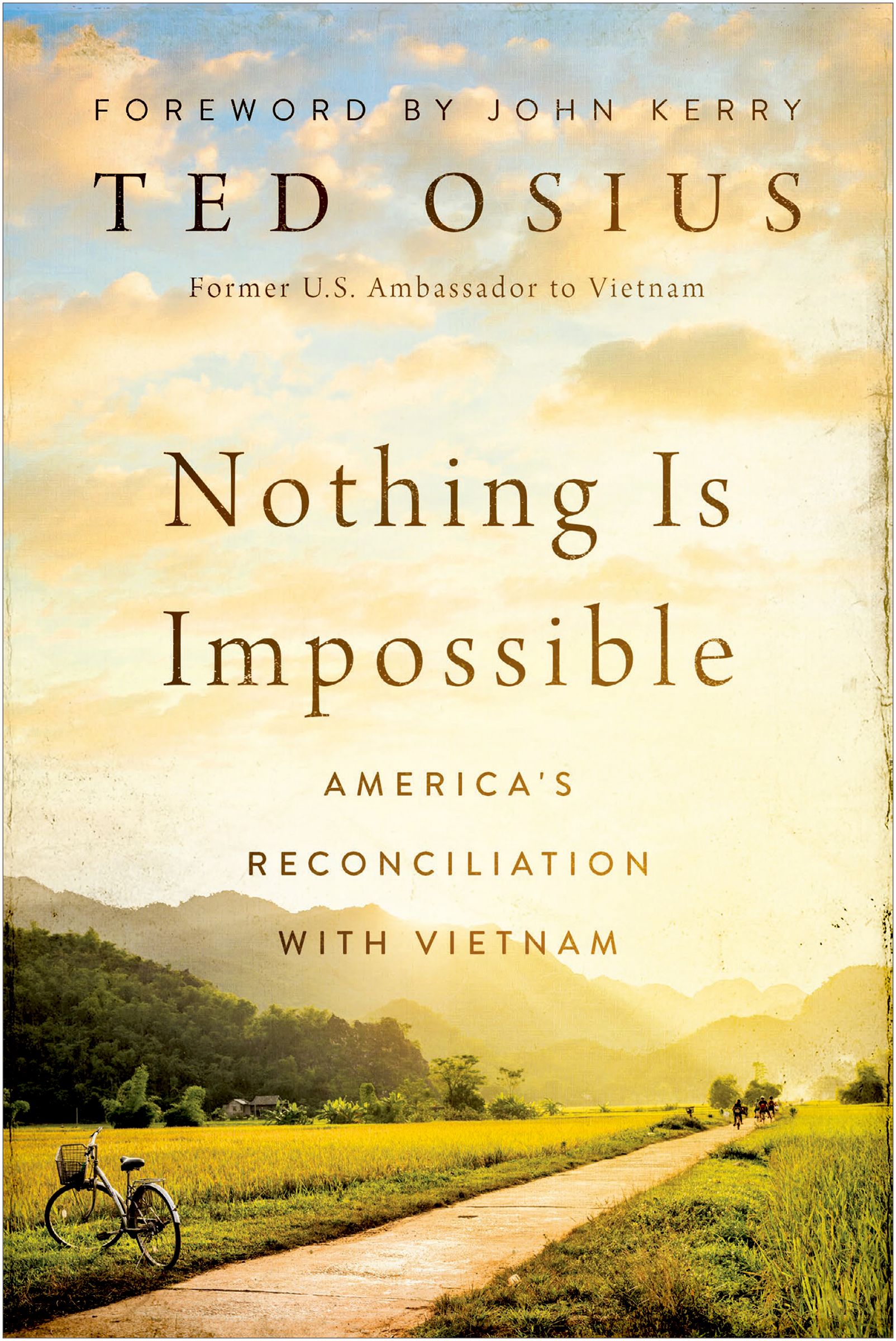
Nothing is Impossible
Today Vietnam is one of America’s strongest international partners, with a thriving economy and a population that welcomes American visitors. How that relationship was formed is a twenty-year story of daring diplomacy and a careful thawing of tensions between the two countries after a lengthy war that cost nearly 60,000 American and more than two million Vietnamese lives. Ted Osius, former ambassador during the Obama administration, offers a vivid account, starting in the 1990s, of the various forms of diplomacy that made this reconciliation possible. He considers the leaders who put aside past traumas to work on creating a brighter future, including senators John McCain and John Kerry, two Vietnam veterans and ideological opponents who set aside their differences for a greater cause, and Pete Peterson—the former POW who became the first U.S. ambassador to a new Vietnam. Osius also draws upon his own experiences working first-hand with various Vietnamese leaders and traveling the country on bicycle to spotlight the ordinary Vietnamese people who have helped bring about their nation’s extraordinary renaissance. With a foreword by former Secretary of State John Kerry, Nothing Is Impossible tells an inspiring story of how international diplomacy can create a better world.
eBook


Lord Lyons
The British ambassador in Washington during the US Civil War and ambassador in Paris before and after the Franco-Prussian war, Lord Lyons (1817-1887) was one of the most important diplomats of the Victorian period. Although frequently featured in histories of the United States and Europe in the second half of the nineteenth century, and in discussions and analyses of British foreign policy, he has remained an ill-defined figure. In Lord Lyons: A Diplomat in an Age of Nationalism and War, Brian Jenkins explains the man and examines his career. Based on a staggering study of primary sources, he presents a convincing portrait of a subject who rarely revealed himself personally. Though he avoided publicity, Lyons came to be regarded as his nation's premier diplomat as his career took him to the heart of the great international issues and crises of his generation. As minister to the United States he played a vital role in preserving Anglo-American peace and was a powerful voice opposing Anglo-French intervention in the Civil War. While ambassador to the Ottoman Empire, he helped to prevent French control of the Suez Canal then under construction. In France, he maintained an amiable and constructive relationship with a bitter nation struggling to reorganize itself and its constitution after the Franco-Prussian War. For many historians Lord Lyons has been difficult to ignore but hard to admire. In rescuing him as a truly important historical figure, Jenkins details for the first time the personal and public strategies Lyons employed through decades of exemplary diplomatic service on both sides of the Atlantic.
eBook

Symbolic insult in diplomacy : a subtle game of diplomatic slap
In this volume, Alisher Faizullaev analyses how diplomatic actors can use obscure but symbolically meaningful assaults as a means of exploiting the opponent's acute sense of Self for achieving their political objectives.
Book

America Unbound: The Bush Revolution in Foreign Policy
George W. Bush has launched a revolution in American foreign policy. He has redefined how America engages the world, shedding the constraints that friends, allies, and international institutions impose on its freedom of action. He has insisted that an America unbound is a more secure America. How did a man once mocked for knowing little about the world come to be a foreign policy revolutionary? In America Unbound, Ivo H. Daalder and James M. Lindsay dismiss claims that neoconservatives have captured the heart and mind of the president. They show that George W. Bush has been no one's puppet. He has been a strong and decisive leader with a coherent worldview that was evident even during the 2000 presidential campaign. Daalder and Lindsay caution that the Bush revolution comes with significant risks. Raw power alone is not enough to preserve and extend America's security and prosperity in the modern world. The United States often needs the help of others to meet the challenges it faces overseas. But Bush's revolutionary impulse has stirred great resentment abroad. At some point, Daalder and Lindsay warn, Bush could find that America's friends and allies refuse to follow his lead. America will then stand alone-a great power unable to achieve its most important goals.
eBook

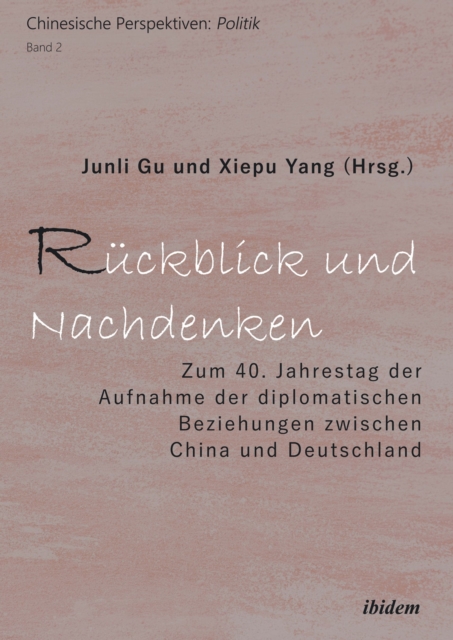
Ruckblick und Nachdenken: Zum 40. Jahrestag der Aufnahme der diplomatischen Beziehungen zwischen China und Deutschland
Mit der Reihe Chinesische Perspektiven sollen grundlegende Werke chinesischen Denkens einem groeren deutschen Publikum zuganglich gemacht werden. Mit dem vorliegenden Band, der anlsslich des 40. Jahrestages der Aufnahme der diplomatischen Beziehungen zwischen China und Deutschland verfasst wurde, halten uns die Herausgeber einen faszinierenden Spiegel vor. Der chinesische, auf jeden Fall gut gemeinte Blick auf Deutschland ist auch und gerade fr uns reich an Informationen und gibt Anlass, uns zu besinnen: Sind wir wirklich so? Was an unseren Positionen sollten wir noch besser erklren, selbst besser verstehen? Wo ergeben sich Anhaltspunkte fr ein neugieriges, von Interesse und Sympathie getriebenes groes Gesprch der Kulturen, zum Beispiel ber Ethik, Wissenschaft und Gesundheit? Knnen wir einander gut verstehen, wenn es um die geistigen Koordinatensysteme geht? Welche Debatten sollten wir fhren, um das Wissen und den Reichtum unserer kulturellen Horizonte gemeinsam zu erweitern? Welche bergeordneten Interessen wollen wir zusammen verfolgen? Gibt es unvershnliche Differenzen? Wir gewinnen konkrete Einblicke in die Wahrnehmung deutscher Auen- und Hochschulpolitik, sehen die ausgestreckte Hand eines potentiell Verbndeten in Sachen Klima- und Umweltschutz und globaler Diplomatie, erinnern uns an eine kulturell reflektierte Bildung als Grundlage fr Wissenschaft und Technologie, erhalten Hinweise auf Potentiale fr Werte- und Rechtsstaats-Entwicklung - und freundliche Anregungen fr ein strkeres Engagement deutscher Geisteskultur. Die Win-win-Perspektiven der wirtschaftlichen Wertschpfung bilden wiederum einen bergeordneten gemeinsamen Bezugspunkt. Das Buch bietet eine wichtige Orientierungshilfe bei der Wrdigung der Konstellation, in der sich die Beziehungen zwischen China und - dem zunchst zweigeteilten - Deutschland entwickelt haben.
eBook


Diplomatic and corporate networks
Firms and governments operate in broad networks in which the home government and its diplomatic service are a critical node–or a “referral point” – between firms and potential partners in foreign locations. Thus diplomatic relations between countries matter for the choice of foreign investment location. Using a network perspective, we argue that the extent to which good diplomatic relations induce firms to invest in friendly host countries depends on their political connections to home governments. Those with stronger ties to home governments can better access and leverage intergovernmental diplomatic connections, thus benefiting potentially from enhanced access to information, reduced political risks, and increased legitimacy. Such ability of politically connected firms is more useful where weak institutional impartiality in the host country inhibits neutral treatment of foreign investors. Empirically, using overseas investment location decisions by Chinese firms, we find that the types of home government ties (i.e., whether they are organizational or personal and whether those relationships are with central or local goverments) and the impartiality of host institutions are both important contingencies affecting firms’ utilization of diplomatic relations. We discuss the implications of our study to research on network theory, political ties, and internationalization of emerging market firms.
Journal Article