
Catalogue Search | MBRL


Are you sure you want to remove the book from the shelf?

{{itemTitle}}
24
result(s) for
"Diplomatic efforts"
Sort by:
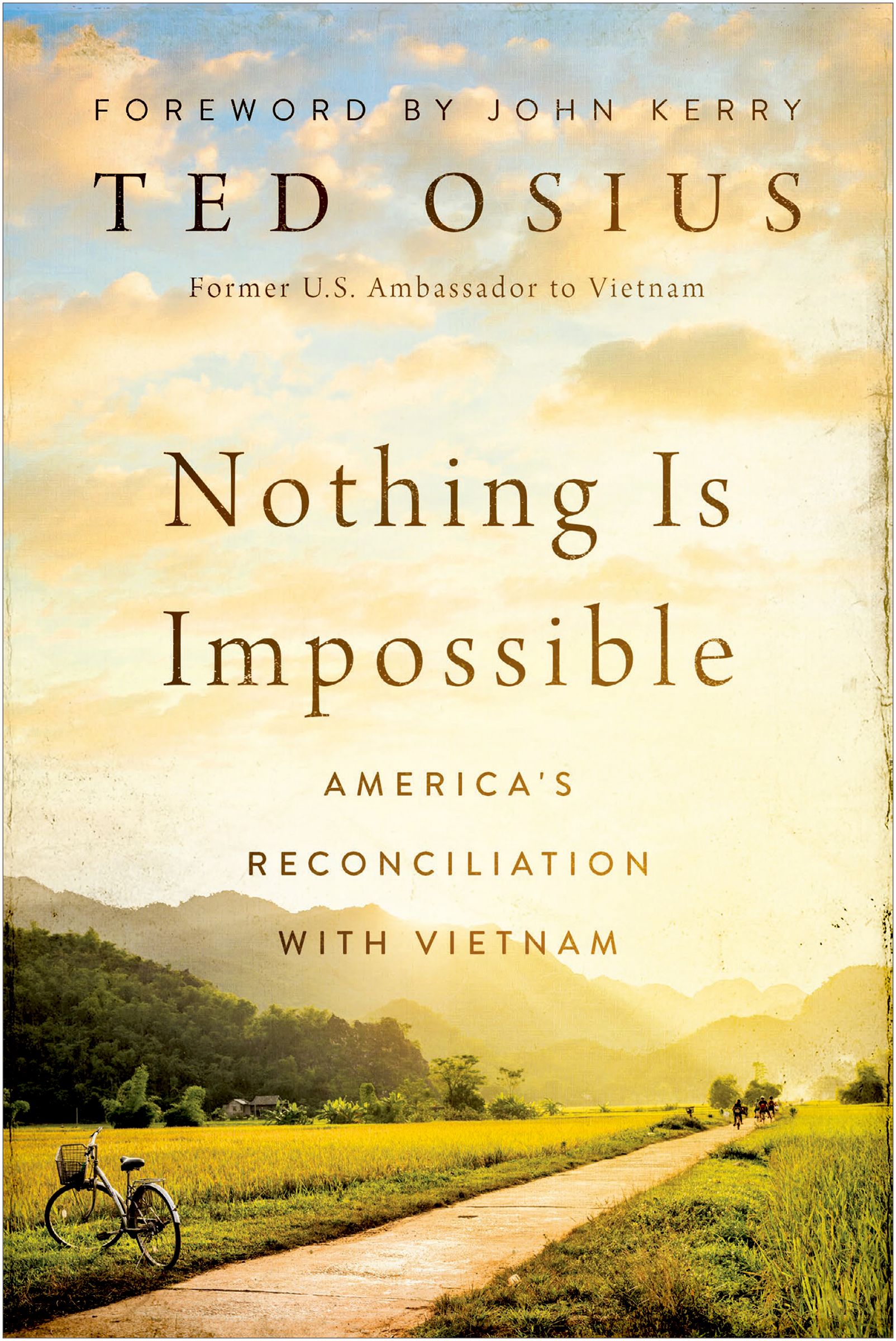
Nothing is Impossible
Today Vietnam is one of America’s strongest international partners, with a thriving economy and a population that welcomes American visitors. How that relationship was formed is a twenty-year story of daring diplomacy and a careful thawing of tensions between the two countries after a lengthy war that cost nearly 60,000 American and more than two million Vietnamese lives. Ted Osius, former ambassador during the Obama administration, offers a vivid account, starting in the 1990s, of the various forms of diplomacy that made this reconciliation possible. He considers the leaders who put aside past traumas to work on creating a brighter future, including senators John McCain and John Kerry, two Vietnam veterans and ideological opponents who set aside their differences for a greater cause, and Pete Peterson—the former POW who became the first U.S. ambassador to a new Vietnam. Osius also draws upon his own experiences working first-hand with various Vietnamese leaders and traveling the country on bicycle to spotlight the ordinary Vietnamese people who have helped bring about their nation’s extraordinary renaissance. With a foreword by former Secretary of State John Kerry, Nothing Is Impossible tells an inspiring story of how international diplomacy can create a better world.
eBook

Exploring Conflict Escalation: Power Imbalance, Alliances, Diplomacy, Media, and Big Data in a Multipolar World
The analysis in this study covers how power imbalance, alliance cohesion, diplomatic and media framing, and big data analytics affect scaling up in the conflict in a multipolar world. This research applies the Constructivist International Relations Theory to examine survey data of 250 international relations experts, policymakers, and analysts using Survey Structured Equation Modeling (SEM) via SMART-PLS. Power imbalance and the way the media frames the situation are found to lead to an escalation of conflicts, but strong alliance cohesion, diplomatic effort, and big data analytics can mitigate the risk of the escalation. Strategic diplomacy, media regulation, and real-time data monitoring have thus shown their capacity to prevent conflict. These contribute to conflict studies by incorporating political IR models, data science knowledge, and policy advice on global security governance. This means they can support the prediction and prevention of conflicts by means of diplomatic transparency, ethical media practice, and AI early warning systems. This study is limited by the use of self-reported data; however, the results of this study indicate that this topic is under-explored in cultural and geopolitical terms. The results help inform policymakers and security entities on ways to address conflict resolution as a matter of discretion and from a multidimensional perspective. Survey Structured Equation Modeling (SEM) via SMART-PLS is a technique used for analyzing structural relationships between measured variables and latent constructs, providing valuable insights into complex models. Survey Structured Equation Modeling (SEM) via SMART-PLS is a technique used for analyzing structural relationships between measured variables and latent constructs, providing valuable insights into complex models.
Journal Article
Endgame: Dayton, November 11–21
Dayton’s second weekend was a moment of transition. It had taken ten days to clear away such issues as the Federation and Eastern Slavonia, and the parties had become comfortable with the surroundings and each other. Yet despite hours of intense negotiating and prodding by the Americans, the core issues remained largely untouched. There had been some discussion about territory—such as the status of Sarajevo—with little success. The Bosnian government had done little more than restate their previous positions, and Milosevic remained defiant. With the two-week mark approaching fast, the Americans wanted to use the weekend to jump-start things. “Saturday,” Kerrick informed Lake, “is a day of maps.”1
Book Chapter
Tragedy as Turning Point: The First Shuttle, Mt. Igman, and Operation Deliberate Force
The new American envoy and his team—Bob Frasure from State, Army Lt. General Wesley Clark from the Joint Chiefs of Staff, Joe Kruzel from the Defense Department, the NSC’s Nelson Drew, and Holbrooke’s indispensable assistant, Rosemarie Pauli—left London the afternoon of August 14 to fly to Split, Croatia. With a credible threat of NATO airstrikes, Croatia’s military success, and now a unified diplomatic front with Europe, the Americans had considerable momentum behind them—perhaps more than any previous attempt to end the Bosnia war. But the Balkans were littered with failed diplomatic initiatives far less ambitious than the one they carried. Depending on how this mission went, the American effort could end quickly. Holbrooke’s team knew that they wouldn’t end the war with one trip. What they needed was a strong start.
Book Chapter

Christian Communities During Russia’s War Against Ukraine: Perception of the Churches’ Aid Involvement Through the Eyes of Poles from Lviv—A Pilot Study
The purpose of this study is to present the perceptions of Poles from Lviv regarding the aid involvement of Christian churches during Russia’s war against Ukraine. Christian churches appear privileged and effective sites of aid delivery in the narratives of respondents. However, this does not mean that they have a monopoly on aid activities. The foundation that underpins these activities is particularly evident in the categories highlighted in this article: the role of clergy in local communities (leaders), personal knowledge of society, church infrastructure, and the churches’ experience gained during the USSR’s persecution of religion. The assistance identified by respondents boils down to material and emotional support, experiencing religious practices, and involvement in direct activity on the war front. The research was based on individual in-depth interviews (IDIs), conducted in December 2023.
Journal Article

Role of international sister-city partnerships in facilitating sustainable urbanisation: practices between Manchester and Wuhan
Non-technical summary To explore how city-level international partnerships can succeed, this study focuses on the sister-city relationship between Wuhan (China) and Manchester (UK), which has demonstrated strong outcomes in sustainability collaboration. Through a detailed analysis of this case, the study identifies three key factors for enduring international collaboration – sustained mutual benefit, broad partnership areas, and deep grassroots engagement – and reveals how they adapt and consolidate over time. These results suggest that international partnerships need to be designed not only to ensure mutual benefit but also to promote inclusiveness and multi-level participation. Technical summary The importance of global collaborations in achieving sustainable development is widely recognised. However, establishing and maintaining international partnerships remains a significant challenge. To understand how effective international partnerships can be developed to address sustainability challenges, this study conducts a case study of the Manchester–Wuhan sister-city relationship, a highly successful and representative example of international cooperation on sustainable development. Drawing on insights from 27 semi-structured interviews with stakeholders involved in organising and participating in the initiative, the study shows that the longevity of international partnerships is determined by three core factors: the preservation of mutual benefit, the breadth of cooperation, and profound grassroots involvement. These factors generate both economic and emotional capital, which incentivises governmental and non-governmental actors to deepen their engagement in sustainable urbanisation. This engagement also serves as a buffer against bilateral tensions between the UK and China. These results offer implications for how local initiatives can serve as effective mechanisms for fostering international cooperation in advancing sustainable development. Social media summary Building international partnerships for global sustainability requires mutual benefit, inclusiveness, and engagement at multiple levels.
Journal Article

Narrative Landmines
Islamic extremism is the dominant security concern of many contemporary governments, spanning the industrialized West to the developing world.Narrative Landminesexplores how rumors fit into and extend narrative systems and ideologies, particularly in the context of terrorism, counter-terrorism, and extremist insurgencies. Its concern is to foster a more sophisticated understanding of how oral and digital cultures work alongside economic, diplomatic, and cultural factors that influence the struggles between states and non-state actors in the proverbial battle of hearts and minds. Beyond face-to-face communication, the authors also address the role of new and social media in the creation and spread of rumors.
As narrative forms, rumors are suitable to a wide range of political expression, from citizens, insurgents, and governments alike, and in places as distinct as Singapore, Iraq, and Indonesia-the case studies presented for analysis. The authors make a compelling argument for understanding rumors in these contexts as \"narrative IEDs,\" low-cost, low-tech weapons that can successfully counter such elaborate and expansive government initiatives as outreach campaigns or strategic communication efforts. While not exactly the same as the advanced technological systems or Improvised Explosive Devices to which they are metaphorically related, narrative IEDs nevertheless operate as weapons that can aid the extremist cause.
eBook

The Rationales for the First Joint Accounting Efforts for US Prisoners of War/Missing in Action in Laos: A Lao Perspective
This article discusses the sovereignty concerns of the government of the Lao People's Democratic Republic (LPDR) ahead of a 1985 joint cooperation agreement with the United States to account for US Prisoners of War/Missing in Action (POW/MIA) lost in Laos during the Vietnam War. It attempts to demonstrate that from the Laotian side, domestic security concerns and diplomatic factors were the main drivers of cooperation with the United States. The domestic security factor was the perceived threat of violence arising from American-supported subversive activities conducted by Thailand-based anti-LPDR resistance groups as well as private groups searching for alleged live POWs inside Laos. The diplomatic factor stemmed from Laos' desire for the United States to respect the country's independent foreign policymaking vis-a-vis its ally Vietnam. Drawing on primary sources, this article posits two arguments: first, the LPDR wanted to use the 1985 joint cooperation agreement to obtain compliance from the United States to end its support for both anti-LPDR resistance groups and private POW searchers; and second, to utilize POW/MIA negotiations with Washington to reaffirm Laos' sovereignty vis-à-vis Vietnam.
Journal Article

“Noise and Flutter”: American Propaganda Strategy and Operation in India during World War II
It seems impossible that Americans could have crafted a policy to please Indian nationalists and British imperialists during World War II. The development of an information strategy did not come from policymakers.
Journal Article

The European Union and the Arab Spring
The European Union and the Arab Spring: Promoting Democracy and Human Rights in the Middle East, edited by Joel Peters, analyzes the response of the European Union to recent uprisings in the Middle East. The past year has witnessed a wave of popular uprisings across North Africa and the Middle East which the Western media dubbed “the Arab Spring.” Demanding greater freedoms, political reform, and human rights, the protesters swept away many of the region’s authoritarian autocratic regimes. The events of the Arab Spring have been truly historic. They led to profound changes in the domestic order of Middle Eastern states and societies and impacted the international politics of the region. Additionally, these events necessitate a comprehensive reappraisal by the United States and most notably by the EU in their relations with the states and peoples of the region. This timely collection brings together nine leading authorities on European foreign policy and the Middle East, and investigates three central questions: What role did the European Union play in promoting democracy and human rights in the countries of North Africa and the Middle East? How did the EU respond to the uprisings of the Arab street? What challenges is Europe now facing in its relations with the region? Peters’ The European Union and the Arab Spring is at the forefront of scholarship on this historic socio-political shift in the Middle East and its wider implications for the West.
eBook